 Indietro
Modification and Evidence for Evolution Exam#2
Guida di studio - Note intelligenti
 Appunti personalizzati basati sui tuoi materiali, ampliati con definizioni chiave, esempi e contesto.
Descent with Modification and Evolution
Introduction to Evolutionary Theory
Evolution is a central concept in biology, explaining the diversity and unity of life. The theory of evolution describes how species change over time through descent with modification, a process first articulated by Charles Darwin.
Evolution: The process by which species undergo genetic change over generations, leading to diversity and adaptation.
Descent with Modification: Darwin's phrase summarizing the idea that current species are descendants of ancestral species, modified by adaptation.
Adaptation: Traits that enhance survival and reproduction in a particular environment.
Historical Perspectives on Evolution
The development of evolutionary theory was influenced by earlier ideas about the nature of species and change over time.
Aristotle's Scala Naturae: Species were viewed as fixed and arranged in a hierarchy of complexity.
Linnaeus' Classification: Introduced a nested classification system and binomial nomenclature (e.g., Homo sapiens).
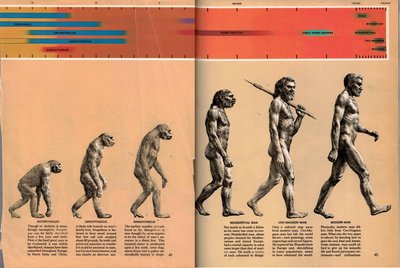
Fossils and Paleontology: Fossils provided evidence for change over time; Georges Cuvier noted extinctions and differences in fossil strata.
Gradualism: Hutton and Lyell proposed that geological changes occur gradually, influencing Darwin's thinking about biological change.
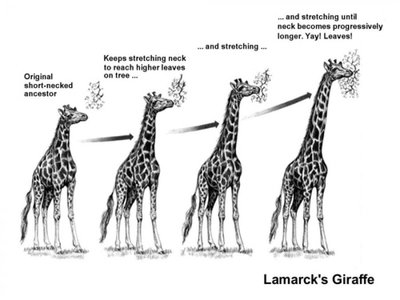
Lamarck's Hypothesis: Suggested evolution through use and disuse and inheritance of acquired traits, but lacked experimental support.
Darwin's Voyage and Observations
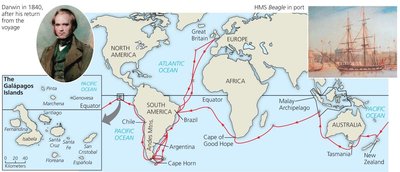
Darwin's journey on the HMS Beagle provided key insights into the mechanisms of evolution.
He observed geological processes and species distributions, especially in the Galápagos Islands.
He hypothesized that species from the mainland colonized islands and diverged through adaptation.
Natural Selection: Mechanism of Evolution
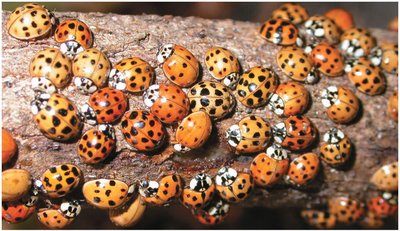
Natural selection is the process by which individuals with favorable traits are more likely to survive and reproduce, leading to the accumulation of adaptations.
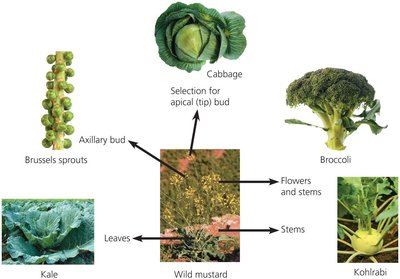
Artificial Selection: Humans breed organisms for desired traits (e.g., crops, animals).
Natural Selection: Occurs in nature when environmental pressures favor certain traits.
Key observations: Variation in traits and overproduction of offspring.
Key inferences: Differential survival and reproduction leads to accumulation of favorable traits.
Features of Natural Selection
Individuals with certain heritable traits survive and reproduce at higher rates.
Populations evolve, not individuals.
Natural selection acts only on heritable variation.
Adaptive traits vary with environment and time.

Evidence for Evolution
Four main types of evidence support the theory of evolution:
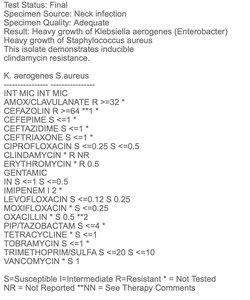
Direct Observations: Evolutionary change observed in real time (e.g., drug-resistant bacteria).
Homology: Similarities among species due to shared ancestry, including anatomical, embryological, and molecular homologies.
The Fossil Record: Documents the pattern of evolution and transitions between groups.
Biogeography: Geographic distribution of species provides clues to evolutionary history.
Direct Observations: Drug-Resistant Bacteria
Staphylococcus aureus evolved resistance to antibiotics such as penicillin and methicillin.
MRSA strains use different proteins for cell wall synthesis, surviving antibiotic treatment.
Natural selection selects for traits already present; evolution can occur rapidly in species with short generation times.

Homology
Anatomical Homologies: Similar bone structures in mammals (e.g., forelimbs).
Embryological Homologies: Shared features in embryos (e.g., post-anal tail, pharyngeal arches).
Vestigial Structures: Remnants of ancestral features (e.g., pelvic bones in snakes).
Molecular Homologies: Shared genes among diverse organisms.
Convergent Evolution
Analogous traits arise independently in distantly related groups due to similar environmental pressures.
Convergent evolution does not indicate common ancestry.
The Fossil Record
Fossils show changes in species over time and document important transitions (e.g., land to sea in cetaceans).
Living cetaceans and their relatives are more different today than their early ancestors.
Biogeography
Continental drift and the breakup of Pangaea explain the distribution of species.
Island endemics are closely related to mainland species, supporting the idea of colonization and adaptation.
Scientific Theory and Evolution
A scientific theory explains and integrates a wide range of observations.
The theory of evolution by natural selection is supported by extensive evidence and ongoing research.
Summary Table: Types of Evidence for Evolution
Type of Evidence | Description | Example |
|---|---|---|
Direct Observation | Evolutionary change observed in real time | Drug-resistant bacteria |
Homology | Similarity due to shared ancestry | Forelimb bones in mammals |
Fossil Record | Pattern of evolution and transitions | Land-to-sea transition in cetaceans |
Biogeography | Geographic distribution of species | Galápagos finches |
Key Terms and Definitions
Evolution: Genetic change in a population over generations.
Natural Selection: Differential survival and reproduction of individuals with favorable traits.
Homology: Similarity due to common ancestry.
Convergent Evolution: Independent evolution of similar traits in distantly related groups.
Fossil: Remains or traces of organisms from the past.
Biogeography: Study of the geographic distribution of species.
Important Equations
Hardy-Weinberg Equation (for population genetics): where p and q are the frequencies of two alleles in a population.
Examples and Applications
Artificial Selection: Breeding of wild mustard to produce cabbage, broccoli, kale, etc.
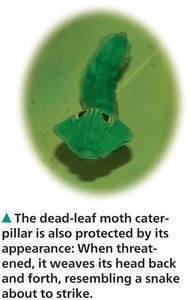
Natural Selection: Camouflage in moths and caterpillars increases survival by avoiding predation.
Drug Resistance: Rapid evolution of antibiotic resistance in bacteria.

Additional info:
Evolutionary evidence is continually updated with new discoveries in genetics, paleontology, and biogeography.
Understanding evolution is fundamental for fields such as medicine, agriculture, and conservation biology.
