 Indietro
Eukaryotes, Microbial Genetics, and Virology: Study Guide
Guida di studio - Note intelligenti
 Appunti personalizzati basati sui tuoi materiali, ampliati con definizioni chiave, esempi e contesto.
Eukaryotes
Characteristics of Eukaryotic Cells
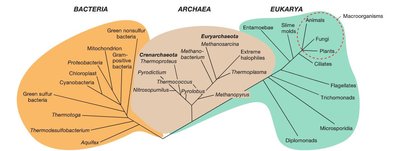
Eukaryotes are organisms whose cells contain a nucleus and various membranous organelles. They arose approximately 2.7 billion years ago and are typically larger than prokaryotes, ranging from 10 to 100 μm.
Nucleus: Surrounded by a double membrane (envelope) with pores and ribosomes. Contains inner lamina, matrix, nucleolus, and chromosomes (DNA coiled with histones).
Cellular Replication: Includes interphase (DNA duplication), mitosis (division of duplicated chromosomes), and cytokinesis (cellular division).
Mitosis Stages: Prophase (chromosomes condense, nuclear envelope degrades), prometaphase (chromosomes sort), metaphase (align), anaphase (separate), telophase (decondense, nuclei reform).
Meiosis: Produces four haploid gametes through two divisions (2n → n → n).
Organelles and Functions
Eukaryotic cells contain specialized organelles for various functions.
Mitochondrion, Chloroplast, Hydrogenosome: Endosymbionts providing energy; have multiple membranes, circular DNA, and ribosomes.
Endoplasmic Reticulum: Rough ER (ribosomes for protein synthesis), Smooth ER (Ca2+ storage, lipid production).
Golgi Apparatus: Glycosylation and sorting of proteins.
Lysosomes: Acidic hydrolase digestion; fuse with phagosomes/endosomes.
Endocytosis: Includes phagocytosis (engulfing targets), pinocytosis (membrane recycling), and receptor-mediated endocytosis (clathrin-dependent).
Cytoskeleton: Microtubules, microfilaments, intermediate filaments for motility, transport, and rigidity; flagella and cilia (9+2 microtubule arrangement).
Fungi
Fungi are eukaryotic organisms including molds and yeast.
Cell Wall: Composed of chitin, β-glucans, mannoproteins, and sometimes cellulose.
Cell Membrane: Contains ergosterols.
Hyphae: Septate (divided) or aseptate (continuous); form macroscopic mycelium.
Spores: Sporangiospores (from sporangium), conidiospores (from vegetative cells).
Pathogenicity: Mycoses (infections), mycotoxins, allergens; dimorphism (mold in cold, yeast in heat).
Protists
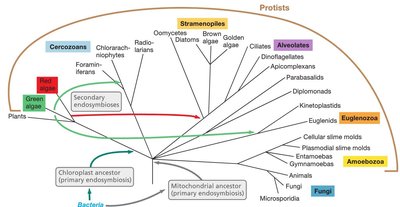
Protists are diverse eukaryotes, often unicellular, with vegetative trophozoites and dormant cysts.
Cercozoans: Foraminiferans (calcium shells), radiolarians (silica shells).
Stramenopiles: Diatoms (silicon frustule), oomycetes (water molds), brown/golden algae.
Alveolates: Ciliates (Balantidium), dinoflagellates (red tides, neurotoxins), apicomplexans (Plasmodium, Toxoplasma).
Parabasalids: Hydrogenosome, anoxic (Trichomonas).
Diplomonads: Bi-nucleate (Giardia).
Euglenozoa: Single mitochondrion, flagella (Euglena, Trypanosoma).
Amoebozoa: Amoeba, slime molds.
Helminths
Helminths are parasitic worms, including flatworms (Platyhelminthes) and roundworms (Aschelminthes).
Flatworms: Often segmented, suckers, monoecious, lack or have rudimentary GI tract. Includes cestodes (tapeworms, e.g., Taenia) and trematodes (flukes, e.g., Clonorchis).
Roundworms: Cylindrical, teeth, dioecious, complete GI tract. Includes nematodes (Ascaris, Enterobius).
Microbial Genetics
Genes and Genomes
Microbial genetics studies the structure and function of genes and genomes.
Gene: Functional segment of DNA; allelic variants (dominant/recessive).
Genome: Sum of all genetic elements.
DNA Structure and Replication
DNA: Double helix, antiparallel strands, phosphate-deoxyribose backbone, base pairs (A=T, C≡G).
Replication: DNA polymerase builds 5'→3'; primase generates RNA primers; leading and lagging strands (Okazaki fragments); ligase seals gaps; gyrase unwinds DNA; helicase separates strands; SSB stabilizes single-stranded DNA.
Bacterial Replication: Bidirectional, θ (theta) structure.
Central Dogma
DNA → RNA → Protein: Fundamental flow of genetic information.
Transcription
Initiation: Promoter, RNA polymerase, transcription factors.
Elongation: RNA polymerase builds RNA 5'→3' (U replaces T, ribose sugars).
Termination: Rho proteins or stem-loop (hairpin).
Processing (Eukaryotes): mRNA cap, tail, splicing (introns removed).
Translation
tRNA: Cloverleaf structure, anticodon loop, amino acid binding.
Aminoacyl-tRNA synthetases: Attach amino acids to tRNA.
Genetic Code: Universal and redundant (codons).
Ribosome: Small and large subunits, catalytic rRNA, proteins; E-P-A sites.
Initiation: 16S rRNA binds mRNA, tRNAmet binds start codon (AUG), large subunit attaches.
Elongation: tRNA cycles A→P→E, peptide grows amino→carboxyl terminus.
Termination: Release factors bind stop codon, hydrolysis, ribosome dissociation.
Polyribosomes: Multiple ribosomes translate mRNA simultaneously.
Gene Expression Regulation
Operons: Trp operon (corepressor activates repressor), Lac operon (inducer inactivates repressor).
Regulation: DNA accessibility, transcriptional, post-transcriptional, translational, post-translational, RNA/protein half-lives.
Horizontal Gene Transfer
Transformation: Uptake of DNA from surroundings.
Transduction: DNA transfer via bacteriophage.
Conjugation: Exchange via F plasmid or Hfr.
Transposition: Jumping elements (transposons).
Mutations
Point Mutations: Base substitution (silent, nonsense, missense).
Frameshift: Base additions or deletions.
UV Damage: Thymine dimers, error-prone excision repair.
Molecular Biology Techniques
Restriction Endonucleases: Create compatible ends for cloning.
Plasmid Vectors: Used in transformation.
RFLP Mapping: Restriction fragment length polymorphism.
Sequencing: Determining DNA sequence.
PCR: Polymerase chain reaction for DNA amplification.
Virology
Virus Structure and Classification
Viruses are obligate intracellular parasites, ranging from 20–300 nm, relying on host metabolism.
Naked Virus: Nucleocapsid (capsid proteins surround nucleic acid); symmetry can be helical, icosahedral, or complex.
Enveloped Virus: Lipids/proteins surround nucleocapsid.
Baltimore & Temin Classification: Based on genome and replication mode:
I: dsDNA
II: +ssDNA
III: dsRNA
IV: +ssRNA
V: –ssRNA
VI: +ssRNA-RT
VII: dsDNA-RT
Viral Gene Expression and Life Cycle
Gene Expression: Must produce viral +ssRNA; encode capsid, envelope proteins, polymerases, RNA replicases, reverse transcriptase.
Host-derived: Metabolic enzymes, lipid membranes, ribosomes, tRNA, rRNA.
Life Cycle: Adsorption (viral protein + host receptor), penetrance/uncoating, synthesis (DNA virus in nucleus, RNA virus in cytoplasm), assembly, release (exocytosis/cellular lysis).
Cytopathic Effects and Infection Phases
Cytopathic Effects: Inclusion bodies, membrane fusion (syncytia), lysis.
Phases: Lysogenic (integration, dormancy), lytic (replication, release), chronic latent (periodic lytic), oncogenic (tumorigenesis).
Bacteriophage
Temperate: Lytic and lysogenic integration as prophage.
Lysogenic Conversion: Phage genes add pathogenicity (toxins: diphtheria, cholera, botulinum).
Virus Cultivation and Pathogens
Cultivation: Chicken eggs (pocks), cell culture (PFU), in vivo (animal models).
Pathogens: Common cold, flu, hepatitis, chicken pox, herpes, rabies, Ebola, dengue fever, AIDS, etc.
Prions, Satellite Viruses, and Viroids
Prions: Proteinaceous infectious particles; cause diseases like BSE and Creutzfeldt-Jakob.
Satellite Viruses: Depend on another virus for replication (e.g., Hepatitis D).
Viroids: Smallest infectious organisms; ssRNA, no capsid.
Treatments
Antibiotics: Ineffective against viruses.
Antivirals: Disrupt viral replication/assembly.
Vaccination: Attenuated viruses used for immunization.
