 Indietro
Eukaryotic and Prokaryotic Cell Structure and Function: Study Notes
Guida di studio - Note intelligenti
 Appunti personalizzati basati sui tuoi materiali, ampliati con definizioni chiave, esempi e contesto.
Cell Structure and Function
Overview of Cell Types
Cells are the fundamental units of life, and their structure determines their function. There are two main cell types: prokaryotic and eukaryotic cells. Eukaryotic cells are generally larger and more complex, containing membrane-bound organelles, while prokaryotic cells lack these structures.
Prokaryotes: Include bacteria and archaea; lack a nucleus and membrane-bound organelles.
Eukaryotes: Include protists, fungi, plants, and animals; possess a nucleus and various organelles.
Cell size: Prokaryotes are typically 10 times smaller in diameter and 1000 times smaller in volume than eukaryotes.
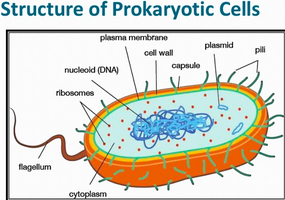
Prokaryotic Cell Structure
Prokaryotic cells have a simple internal structure but are highly efficient. Their DNA is organized in a nucleoid, and they may contain plasmids. The cell wall provides structural support, and external appendages like flagella and fimbriae aid in movement and attachment.
Nucleoid: Region containing the cell's DNA, not enclosed by a membrane.
Plasmids: Small, circular DNA molecules that carry additional genes.
Cell wall: Composed mainly of peptidoglycan in bacteria; provides rigidity.
Flagella: Long filaments for movement.
Fimbriae: Needlelike projections for attachment.
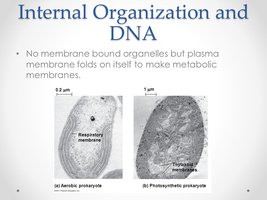
Metabolic Membranes in Prokaryotes
Although prokaryotes lack membrane-bound organelles, their plasma membrane can fold to form metabolic membranes, which house proteins for respiration and photosynthesis.
Respiratory membranes: Site of cellular respiration in aerobic prokaryotes.
Photosynthetic membranes: Site of photosynthesis in photosynthetic prokaryotes.
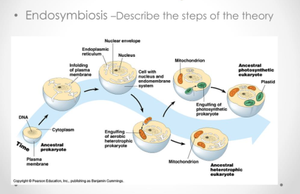
Endosymbiosis Theory
The endosymbiosis theory explains the origin of mitochondria and chloroplasts in eukaryotic cells. It proposes that these organelles were once free-living bacteria engulfed by ancestral eukaryotes, leading to a mutually beneficial relationship.
Mitochondria and chloroplasts: Contain their own DNA and ribosomes; grow and divide independently.
Evidence: Similarities to bacteria, double membranes, and genetic material.
Eukaryotic Cell Structure
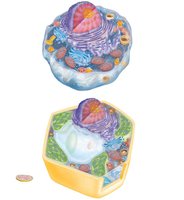
Comparison of Animal and Plant Cells
Eukaryotic cells can be animal or plant cells, each with unique structures. Animal cells lack cell walls and chloroplasts, while plant cells contain these structures and a large central vacuole.
Animal cells: Have centrioles and lysosomes.
Plant cells: Have cell walls, chloroplasts, and vacuoles.
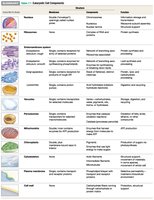
Eukaryotic Cell Components and Their Functions
Eukaryotic cells contain various organelles, each with specialized functions. The compartmentalization of these organelles increases efficiency and separates incompatible reactions.
Organelle | Structure | Function |
|---|---|---|
Nucleus | Double membrane, nuclear pores | Information storage and processing |
Endoplasmic Reticulum (Rough) | Membrane with ribosomes | Protein synthesis and processing |
Endoplasmic Reticulum (Smooth) | Membrane without ribosomes | Lipid synthesis and detoxification |
Golgi Apparatus | Stacked membranes | Protein, lipid, and carbohydrate processing |
Lysosome | Membrane-bound vesicle | Digestion and recycling |
Peroxisome | Membrane-bound vesicle | Oxidation of fatty acids |
Mitochondrion | Double membrane | ATP production |
Chloroplast | Double membrane, thylakoids | Photosynthesis |
Plasma Membrane | Lipid bilayer | Selective permeability |
Cell Wall | Fibrous layer | Protection and support |
Specialized Cell Functions
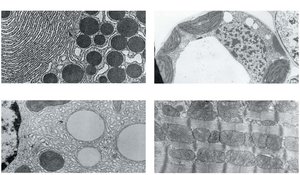
Different cell types have specialized functions based on their organelle composition. For example, pancreatic cells export digestive enzymes, leaf cells manufacture ATP and sugar, testis cells export lipid-soluble signals, and cardiac muscle cells use ATP to generate the heartbeat.
Chloroplast Structure and Function
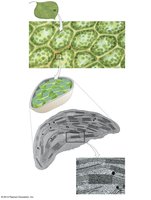
Chloroplasts are the site of photosynthesis in plant cells. They contain their own DNA and ribosomes and are surrounded by a double membrane. The internal structure includes thylakoids, which are stacked into grana.
Mitochondrial Structure and Function
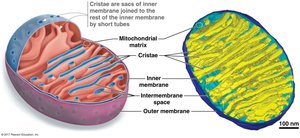
Mitochondria are the powerhouses of the cell, responsible for ATP production. They have a double membrane, with the inner membrane folded into cristae to increase surface area for energy production.
Ribosomes: Protein Synthesis
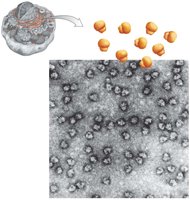
Ribosomes are found in all cells and are responsible for protein synthesis. They can be free in the cytosol or attached to the rough endoplasmic reticulum. Ribosomes lack a membrane and are not considered organelles.
The Endomembrane System
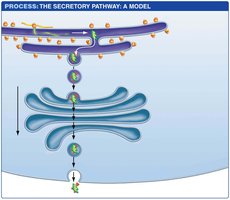
The endomembrane system includes the endoplasmic reticulum, Golgi apparatus, and lysosomes. It is central to the production, processing, and transport of proteins, carbohydrates, and lipids.
Rough ER: Synthesizes proteins for export or membrane insertion.
Golgi apparatus: Processes and sorts proteins.
Lysosomes: Digest and recycle cellular materials.
Protein Sorting and Vesicle Transport
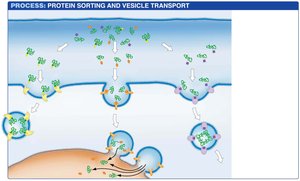
Proteins are sorted and transported via vesicles within the cell. Distinct tags direct proteins to their destinations, and vesicles fuse with target membranes to deliver their contents.
The Central Dogma of Molecular Biology
The central dogma describes the flow of genetic information in cells: DNA codes for RNA, which codes for proteins. Genes are stretches of DNA that determine the sequence of amino acids in proteins.
DNA → RNA → Protein
Genes: Stretches of DNA coding for proteins.
Equation:
Summary Table: Eukaryotic vs. Prokaryotic Cells
Feature | Eukaryotic Cells | Prokaryotic Cells |
|---|---|---|
Size | Larger | Smaller |
Nucleus | Present | Absent |
Organelles | Membrane-bound | None |
DNA Location | Nucleus | Nucleoid |
Cell Wall | Plants, fungi | Most |
Examples | Animals, plants, fungi, protists | Bacteria, archaea |
Additional info: Some details and context were inferred to ensure completeness and clarity for exam preparation.
