 Indietro
Eukaryotic and Prokaryotic Cell Structure and Function
Guida di studio - Note intelligenti
 Appunti personalizzati basati sui tuoi materiali, ampliati con definizioni chiave, esempi e contesto.
Eukaryotic Cell Structures and Their Functions
Overview of Eukaryotic Cells
Eukaryotic cells are highly organized and dynamic, ranging in size from microscopic algae to towering redwood trees. They include protists, fungi, plants, and animals, and may be multicellular or unicellular. Most eukaryotic cells are larger than prokaryotic cells and contain numerous specialized organelles that perform distinct functions.
Size and Complexity: Eukaryotic cells are typically 5-10 times larger in diameter and about 1000 times larger in volume than prokaryotic cells.
Specialization: The size and number of organelles correlate with the cell’s specialized function.
Dynamic Nature: Cells are dynamic, with constantly moving molecules and interacting parts.
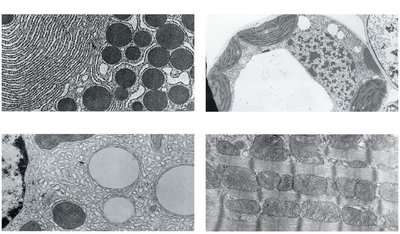
Image shows electron micrographs of specialized eukaryotic cells, illustrating structural diversity and specialization.
Comparison of Animal and Plant Cells
Animal and plant cells share many organelles but also have unique structures that reflect their functions.
Animal Cells: Contain centrioles and lysosomes, lack cell walls and chloroplasts.
Plant Cells: Contain cell walls, chloroplasts, and large central vacuoles, lack centrioles and lysosomes.
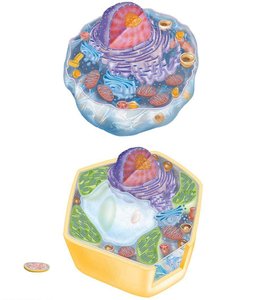
Image compares the internal structures of animal and plant cells.
Summary Table of Eukaryotic Cell Components
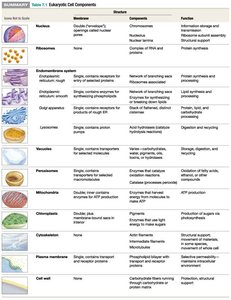
The following table summarizes the main organelles found in eukaryotic cells, their structure, and their function.
Organelle | Structure | Components | Function |
|---|---|---|---|
Nucleus | Double membrane, nuclear pores | Chromosomes, nucleolus | Information storage and processing |
Ribosomes | No membrane | Complexes of RNA and protein | Protein synthesis |
Endoplasmic Reticulum (Rough) | Network of branching sacs, ribosomes attached | Ribosomes | Protein synthesis and processing |
Endoplasmic Reticulum (Smooth) | Network of branching sacs, no ribosomes | Enzymes for synthesizing lipids | Lipid synthesis and processing |
Golgi Apparatus | Stacks of flattened sacs | Enzymes for processing proteins | Protein, lipid, and carbohydrate processing |
Lysosomes | Membrane-bound vesicles | Acid hydrolases | Digestion and recycling |
Peroxisomes | Single membrane | Enzymes for oxidation | Oxidation of fatty acids |
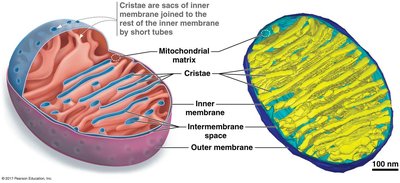
Mitochondria | Double membrane | Enzymes for ATP production | ATP production |
Chloroplasts | Double membrane, internal stacks | Enzymes for photosynthesis | Photosynthesis |
Cytoskeleton | Protein fibers | Actin, microtubules | Structural support, movement |
Cell Wall | Carbohydrate fibers | Cellulose, chitin | Protection, structural support |
Prokaryotic Cell Structure
Overview of Prokaryotic Cells
Prokaryotic cells, including bacteria and archaea, are generally smaller and simpler than eukaryotic cells. They lack membrane-bound organelles but possess specialized structures for essential functions.
Nucleoid: Region containing the cell’s DNA, not enclosed by a membrane.
Plasmids: Small, circular DNA molecules carrying extra genes, often for antibiotic resistance.
Cell Wall: Provides structural support and protection; composed of peptidoglycan in bacteria.
Flagella and Fimbriae: Enable movement and attachment to surfaces.
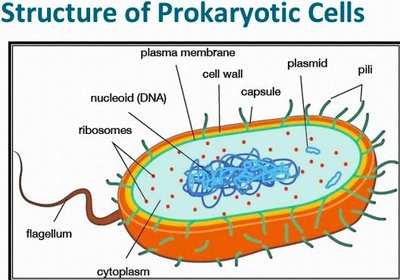
Image illustrates the main structural features of a prokaryotic cell.
Organization of Prokaryotic DNA
Prokaryotic DNA is organized in a single, circular chromosome and may include plasmids. DNA is often supercoiled to fit within the cell.
Supercoiling: Compacts DNA for efficient storage.
Plasmids: Carry genes not essential for life but beneficial under certain conditions.
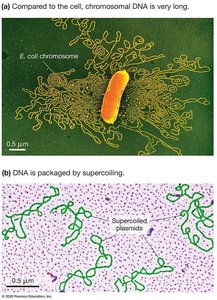
Image shows the supercoiling of DNA and the presence of plasmids in prokaryotes.
Internal Organization and Metabolic Membranes
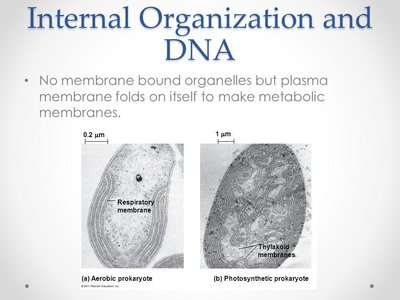
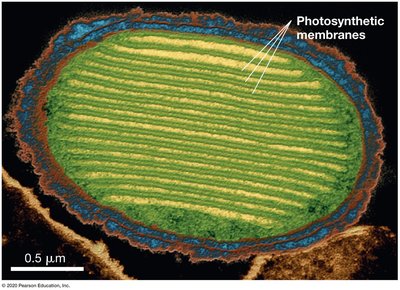
Although prokaryotes lack membrane-bound organelles, their plasma membrane can fold to form specialized metabolic membranes for processes such as respiration and photosynthesis.
Respiratory Membranes: In aerobic prokaryotes, membrane folds house proteins for cellular respiration.
Photosynthetic Membranes: In photosynthetic prokaryotes, membrane folds contain proteins for photosynthesis.
External Structures for Movement and Attachment
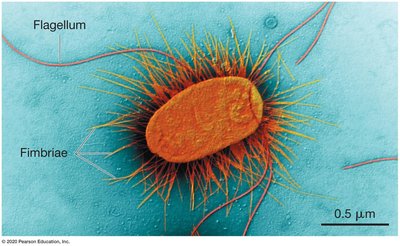
Prokaryotes interact with their environment using external structures such as flagella and fimbriae.
Flagella: Long filaments that rotate to propel the cell.
Fimbriae: Needlelike projections that promote attachment to surfaces.
Endosymbiosis Theory and Evolution of Eukaryotes
Endosymbiosis Theory
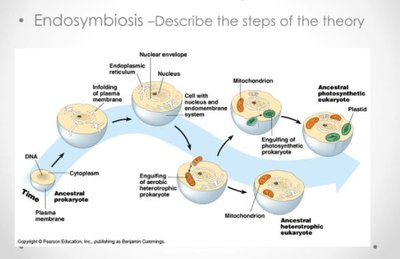
The endosymbiosis theory proposes that mitochondria and chloroplasts originated as free-living bacteria that were engulfed by ancestral eukaryotic cells. This mutually beneficial relationship led to the evolution of modern eukaryotes.
Evidence: Mitochondria and chloroplasts contain their own DNA, are similar in size to prokaryotes, divide independently by binary fission, and manufacture their own proteins.
Eukaryotic Cell Structure: Key Organelles
The Nucleus
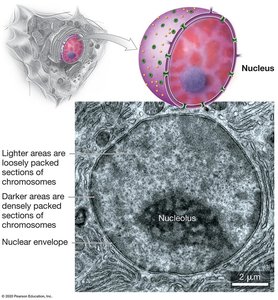
The nucleus is a large, highly organized compartment surrounded by a double-membrane nuclear envelope. It stores and transmits genetic information and contains the nucleolus, where ribosomal RNA is synthesized and ribosome subunits are assembled.
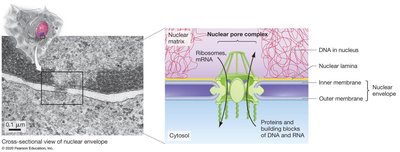
Nuclear Envelope: Separates the nucleus from the cytosol, perforated with nuclear pore complexes.
Nuclear Lamina: Lattice-like sheet of fibrous proteins supporting the envelope.
Nucleolus: Site of ribosome assembly.
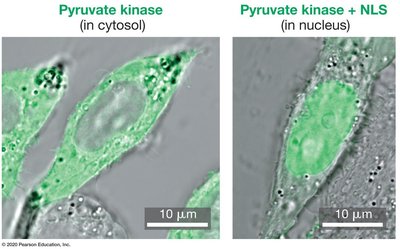
Nuclear Localization Signals
Import of large molecules into the nucleus is selective. Nuclear proteins contain a nuclear localization signal (NLS), a 17-amino-acid sequence that directs them to the nucleus.
NLS: Acts as a molecular address for transport through the nuclear pore complex.
Endoplasmic Reticulum (ER)
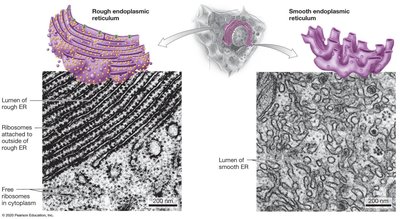
The endoplasmic reticulum is an extensive membrane-enclosed factory, continuous with the nuclear envelope. It has two distinct regions: rough ER (RER) and smooth ER (SER).
Rough ER: Studded with ribosomes, synthesizes proteins destined for secretion, membrane insertion, or organelle targeting.
Smooth ER: Lacks ribosomes, synthesizes lipids and processes toxins.
Golgi Apparatus
The Golgi apparatus processes, sorts, and ships proteins synthesized in the rough ER. The cis side receives products, and the trans side ships them out to other organelles or the cell surface.
Membranous Vesicles: Carry materials to and from the Golgi apparatus.
*Additional info: The Golgi apparatus is essential for post-translational modification and sorting of proteins.*
Lysosomes
Lysosomes are recycling centers found only in animal cells. They contain enzymes specialized for hydrolyzing different macromolecules, working best at pH 5.0 maintained by proton pumps.
Acid Hydrolases: Digestive enzymes inside lysosomes.
*Additional info: Lysosomes play a key role in autophagy and cellular waste management.*
The Endomembrane System
The endomembrane system includes the ER, Golgi apparatus, and lysosomes. It is the center for producing, processing, and transporting proteins, carbohydrates, and lipids.
Protein Production: Proteins are synthesized in the RER, processed in the Golgi, and shipped to their destinations.
Central Dogma: DNA → RNA → Protein summarizes the flow of information in cells.
*Additional info: Signal sequences target proteins to specific organelles within the endomembrane system.*
Summary Table: Differences Between Eukaryotic and Prokaryotic Cells
Feature | Eukaryotic Cells | Prokaryotic Cells |
|---|---|---|
Size | Larger (5-10x diameter) | Smaller |
Organelles | Membrane-bound organelles | No membrane-bound organelles |
DNA Location | Enclosed in nucleus | Nucleoid region |
Cell Wall | Plants: cellulose; Fungi: chitin | Bacteria: peptidoglycan |
Movement Structures | Cilia, flagella (complex) | Flagella, fimbriae (simple) |
