 Indietro
General Biology Exam & Worksheet Study Guidance
Guida di studio - Note intelligenti
 Appunti personalizzati basati sui tuoi materiali, ampliati con definizioni chiave, esempi e contesto.
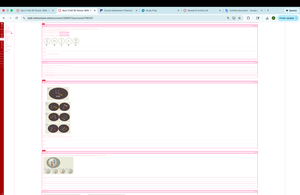
Q1. (Image: Glycolysis Pathway Diagram) - What are the main steps and products of glycolysis?
Background
Topic: Cellular Respiration - Glycolysis
This question tests your understanding of the glycolysis pathway, which is the first step in cellular respiration. Glycolysis breaks down glucose into pyruvate, generating ATP and NADH in the process.
Key Terms and Formulas
Glycolysis: A metabolic pathway that converts glucose (6C) into two molecules of pyruvate (3C each).
ATP: Adenosine triphosphate, the cell's energy currency.
NADH: Electron carrier produced during glycolysis.
Step-by-Step Guidance
Identify the starting molecule of glycolysis (glucose) and the number of carbons it contains.
List the two main phases of glycolysis: the energy investment phase and the energy payoff phase.
Describe what happens to ATP and NAD+ during glycolysis (how many are used and produced).
Determine the final products of glycolysis, including the number of pyruvate molecules, ATP, and NADH generated per glucose molecule.
Try solving on your own before revealing the answer!
Final Answer:
Glycolysis converts one glucose (6C) into two pyruvate (3C each), producing a net gain of 2 ATP and 2 NADH per glucose molecule. The process occurs in the cytoplasm and does not require oxygen.
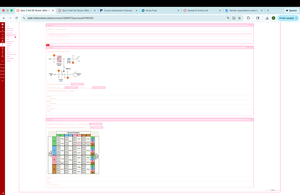
Q2. (Image: DNA Strands with Promoter) - In which direction does RNA polymerase synthesize mRNA, and which strand serves as the template?
Background
Topic: Transcription in Molecular Biology
This question tests your understanding of how RNA polymerase reads DNA to synthesize mRNA, including the directionality of synthesis and the concept of template and coding strands.
Key Terms and Formulas
Template strand: The DNA strand that RNA polymerase reads to synthesize mRNA.
Coding strand: The DNA strand with the same sequence as the mRNA (except T/U).
Directionality: RNA is synthesized in the 5' to 3' direction.
Step-by-Step Guidance
Identify the 5' and 3' ends of both DNA strands in the diagram.
Determine which strand is labeled as the template strand (the one RNA polymerase reads).
Recall that RNA polymerase synthesizes mRNA in the 5' to 3' direction, using the template strand as a guide.
Match the direction of mRNA synthesis to the orientation of the template strand.
Try solving on your own before revealing the answer!
Final Answer:
RNA polymerase synthesizes mRNA in the 5' to 3' direction, using the 3' to 5' DNA strand as the template.
Q3. (Image: Cell Cycle Phases) - What are the main phases of the cell cycle, and what key events occur in each?
Background
Topic: Cell Cycle and Mitosis
This question tests your knowledge of the stages of the cell cycle, including interphase (G1, S, G2) and mitosis (M phase), and the major events in each phase.
Key Terms and Formulas
G1 phase: Cell growth and preparation for DNA replication.
S phase: DNA synthesis (replication).
G2 phase: Preparation for mitosis.
M phase: Mitosis and cytokinesis.
Step-by-Step Guidance
List the main phases of the cell cycle in order: G1, S, G2, and M.
Describe what happens in each phase, focusing on DNA content and cell growth.
Identify checkpoints that regulate progression through the cycle.
Explain the significance of mitosis and cytokinesis in the M phase.
Try solving on your own before revealing the answer!
Final Answer:
The cell cycle consists of G1 (growth), S (DNA replication), G2 (preparation for mitosis), and M (mitosis and cytokinesis). Key events include DNA synthesis in S phase and chromosome separation in M phase.
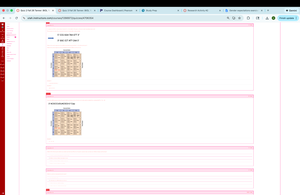
Q4. (Image: Codon Table) - How do you use a codon table to translate an mRNA sequence into an amino acid sequence?
Background
Topic: Genetic Code and Translation
This question tests your ability to use a codon table to determine which amino acids are encoded by specific mRNA codons during translation.
Key Terms and Formulas
Codon: A sequence of three mRNA nucleotides that codes for a specific amino acid.
Start codon: AUG (codes for methionine, signals start of translation).
Stop codons: UAA, UAG, UGA (signal end of translation).
Step-by-Step Guidance
Break the mRNA sequence into codons (groups of three nucleotides).
Locate each codon in the codon table to find the corresponding amino acid.
Start translation at the first AUG codon and continue until a stop codon is reached.
Write out the amino acid sequence as you translate each codon.
Try solving on your own before revealing the answer!
Final Answer:
To translate an mRNA sequence, divide it into codons, use the codon table to find each amino acid, and assemble the sequence, starting at AUG and ending at a stop codon.
