 Indietro
General Biology Study Notes: Exploring Life, Evolution, and Biological Diversity
Guida di studio - Note intelligenti
 Appunti personalizzati basati sui tuoi materiali, ampliati con definizioni chiave, esempi e contesto.
Exploring Life: The Scientific Study of Biology
What is Life?
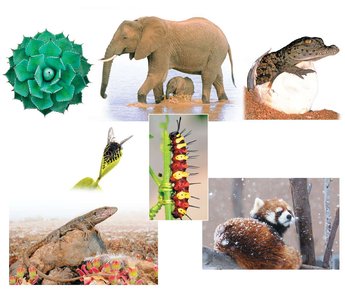
Biology is the scientific study of life, focusing on the properties and processes that distinguish living organisms from non-living matter. Life is characterized by several key properties:
Order: Living things exhibit complex and ordered structures, such as the geometric arrangement of leaves in plants.
Reproduction: Organisms reproduce their own kind, ensuring the continuation of their species.
Growth and Development: Organisms grow and develop according to genetic instructions inherited from their parents.
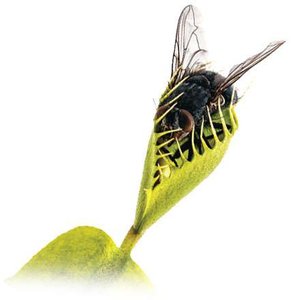
Response to the Environment: Living things respond to environmental stimuli, such as a Venus flytrap closing its leaves when touched.
Energy Processing: Organisms take in energy and use it to power their activities and maintain their internal order.
Regulation: Internal mechanisms regulate an organism's body processes, maintaining homeostasis.
Evolutionary Adaptation: Traits evolve over time, allowing organisms to survive and reproduce in changing environments.
Living vs. Non-Living Matter
Living organisms are distinguished from non-living objects by their ability to carry out the above processes. For example, a garden rock with a face is not alive, despite its appearance.

Biological Organization and Diversity
Levels of Biological Organization
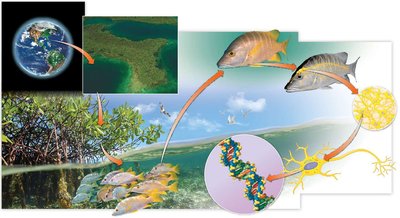
Biologists study life at multiple levels, from molecules to the entire biosphere. Each level exhibits emergent properties—new characteristics that arise from the arrangement and interaction of parts.
Biosphere: All life on Earth and its environments.
Ecosystem: All living and non-living components in a particular area.
Community: All organisms in an ecosystem.
Population: Individuals of the same species in a given area.
Organism: An individual living entity.
Organ and Organ Systems: Structures with specific functions.
Tissues: Groups of similar cells performing a function.
Cells: Basic unit of life.
Organelles: Functional components within cells.
Molecules: Chemical structures that make up organelles and cells.
Emergent Properties
Emergent properties are new traits that arise at each level of organization due to the arrangement and interaction of components. For example, individual bicycle parts do not function as a bicycle until assembled; similarly, organs together form a functioning digestive system.
Classification of Life: Three Domains
Taxonomy and Domains
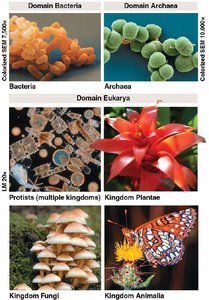
Taxonomists classify organisms into three domains based on cell structure and genetic evidence:
Domain Bacteria: Prokaryotes with simple cells.
Domain Archaea: Prokaryotes with unique genetic and biochemical traits, often found in extreme environments.
Domain Eukarya: Eukaryotes, including protists, fungi, plants, and animals.
The Scientific Method in Biology
Science as Inquiry
Science is an evidence-based process for understanding the natural world. The scientific method involves:
Observation: Noticing phenomena.
Hypothesis: Proposing a testable explanation.
Prediction: Forecasting outcomes based on the hypothesis.
Experiment: Testing predictions through controlled experiments.
Analysis: Interpreting data.
Conclusion: Drawing inferences and developing theories.
Controlled Experiments
Controlled experiments manipulate one variable (independent variable) and measure its effect on another (dependent variable), comparing experimental and control groups.
Unifying Themes in Biology
Five Unifying Themes
Evolution: The core theme explaining unity and diversity of life.
Information: Life depends on the flow of information, primarily through DNA.
Organization: Structure and function are related at all levels.
Energy and Matter: Life depends on the transfer and transformation of energy and matter.
Interactions: Life depends on interactions within and between systems.
Properties of Life: Examples and Applications
Order in Living Things
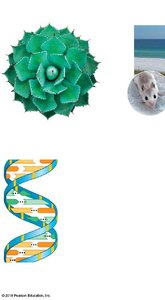
Living organisms display highly ordered structures, such as the geometric arrangement of leaves in a cactus.
Reproduction and Growth
Organisms reproduce their own kind and grow according to genetic instructions. For example, seed germination leads to the development of a mature plant.
Response to Environment
Organisms respond to environmental stimuli. The Venus flytrap closes its leaves in response to touch, capturing prey.
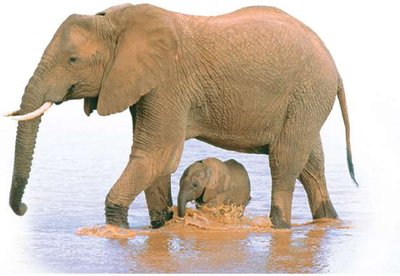
Energy Processing
Living things process energy to fuel their activities. For example, animals consume food and convert it into usable energy.
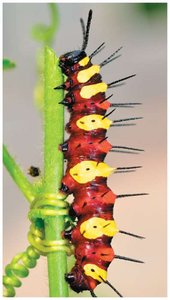
Evolutionary Adaptation
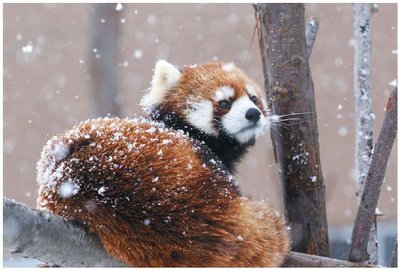
Organisms evolve traits that enhance survival and reproductive success in their environments. For example, the red panda has adaptations for life in mountainous forests.
Summary Table: Domains of Life
Domain | Cell Type | Key Features | Examples |
|---|---|---|---|
Bacteria | Prokaryotic | Simple cells, peptidoglycan cell wall | Escherichia coli |
Archaea | Prokaryotic | Unique genetics, extremophiles | Halophiles, thermophiles |
Eukarya | Eukaryotic | Complex cells, membrane-bound organelles | Plants, animals, fungi, protists |
Key Terms and Definitions
Emergent Properties: New traits that arise at each level of biological organization due to the arrangement and interaction of parts.
Hypothesis: A testable explanation for a set of observations.
Scientific Theory: A broad explanation supported by a large body of evidence.
Taxonomy: The science of classifying organisms.
Domain: The highest taxonomic rank, grouping organisms based on fundamental cell structure.
Example Equation: Hardy-Weinberg Equilibrium
The Hardy-Weinberg equation describes allele and genotype frequencies in a population:
Where p and q are the frequencies of two alleles, and the terms represent the frequencies of the three possible genotypes.
Conclusion
Biology is a dynamic science that explores the diversity, organization, and processes of life. Understanding the properties of life, levels of biological organization, and the scientific method provides a foundation for studying more advanced topics in biology.
