 Indietro
Immune System Cells: Structure, Function, and Classification
Guida di studio - Note intelligenti
 Appunti personalizzati basati sui tuoi materiali, ampliati con definizioni chiave, esempi e contesto.
Immune System Cells
Overview of Immune System Cells
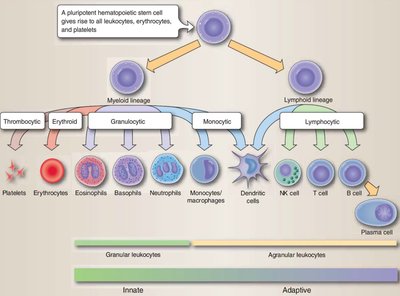
The immune system is composed of a variety of specialized cells that defend the body against infection and disease. These cells are primarily classified as white blood cells (WBCs) or leukocytes, and are found in lymphoid organs, blood, and at sites of infection. Leukocytes are further categorized based on their morphology, including the number of lobes in their nuclei and the presence or absence of cytoplasmic granules.
Granular leukocytes: Contain granules in their cytoplasm (e.g., neutrophils, basophils, eosinophils).
Agranular leukocytes: Lack visible granules (e.g., lymphocytes, monocytes, dendritic cells).
Formation of Leukocytes
Leukocytes originate from pluripotent hematopoietic stem cells in the bone marrow. These stem cells differentiate into two main lineages:
Myeloid lineage: Gives rise to granulocytes (neutrophils, eosinophils, basophils), monocytes/macrophages, dendritic cells, erythrocytes, and platelets.
Lymphoid lineage: Produces lymphocytes (B cells, T cells, NK cells) and plasma cells.
Granular Leukocytes
Neutrophils
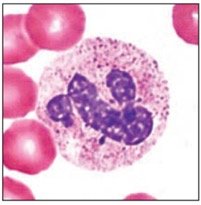
Neutrophils are the most abundant type of WBCs, accounting for approximately 60% of leukocytes. Also known as polymorphonuclear neutrophils (PMNs), they possess a multilobed nucleus (2-5 lobes) and pale violet-stained granules. Neutrophils are highly effective at killing bacteria and are elevated during acute infections.
Function: Phagocytosis and destruction of bacteria.
Clinical relevance: Increased neutrophil count indicates acute infection.
Basophils and Mast Cells
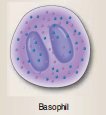
Basophils are the least common WBCs (0.5-1%). Their granules stain blue/purple with basic dyes and contain vasoactive amines that cause smooth muscle contraction. Basophils circulate in the blood, while mast cells are fixed in tissues. Both play important roles in allergic reactions and adaptive immunity.
Function: Release histamine and other mediators during allergic responses.
Granules: Contain vasoactive amines.
Eosinophils
Eosinophils comprise 2-4% of WBCs. Their granules stain bright red with eosin and they have a bilobed nucleus. Eosinophils are active in both innate and adaptive immune responses, particularly against parasitic infections.
Function: Defense against parasites and modulation of allergic responses.

Agranular Leukocytes
Lymphocytes
Lymphocytes are the second most abundant WBCs (20-25%). They originate from the bone marrow and develop in primary lymphatic tissues. Lymphocytes are central to adaptive immunity and are classified as T cells, B cells, and NK cells.
T cells (65-80%): Mature in the thymus; involved in cell-mediated immunity.
B cells (10-30%): Mature in the bone marrow; responsible for humoral immunity.
NK cells (2-10%): Non-specific cytotoxic cells.

Clonal Selection of Lymphocytes
Clonal selection is the process by which lymphocytes proliferate and differentiate in response to a specific antigen, forming a population of identical cells (clones). This occurs in secondary lymphatic organs and tissues.
Effector cells: Carry out immune responses, leading to destruction or inactivation of antigens.
Memory cells: Respond rapidly to subsequent exposures to the same antigen.

B Cells
B cells transform into plasma cells, which synthesize and secrete antibodies (immunoglobulins). Memory B cells provide rapid response upon second exposure to the same antigen. B cells are involved in humoral immunity, targeting extracellular pathogens.
Function: Antibody production and humoral immunity.
Targets: Viruses, bacteria, fungi in body fluids.

T Cells
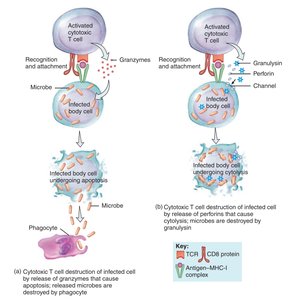
T cells are involved in cell-mediated immunity. Activated helper T cells (CD4+) secrete cytokines, while cytotoxic T cells (CD8+) attack infected body cells. Memory T cells provide long-term immunity. T cells are particularly effective against intracellular pathogens, cancer cells, and foreign tissue transplants.
Function: Cell-mediated immunity; destruction of infected or abnormal cells.
Types: Helper T cells, cytotoxic T cells, memory T cells.
Natural Killer (NK) Cells
NK cells are large, nonphagocytic, agranular lymphocytes that kill a wide variety of infected and cancerous cells. Unlike cytotoxic T cells, NK cells are non-specific and do not require antigen presentation.
Function: Non-specific killing of infected and cancer cells.
Comparison: Cytotoxic T cells are antigen-specific; NK cells are not.
Monocytes
Monocytes are large mononuclear cells (3-8% of WBCs) with a kidney-shaped nucleus. They are phagocytic in the blood and differentiate into macrophages upon entering tissues, where they reside for months. Monocytes/macrophages are important in the innate immune system.
Function: Phagocytosis of bacteria, dead cells, and debris.
Lifecycle: Circulate for 1-2 days, then become tissue macrophages.
Dendritic Cells
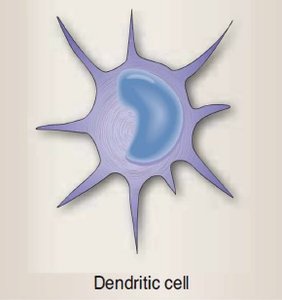
Dendritic cells are phagocytic cells with branchlike cytoplasmic projections. They are found throughout the body, especially at portals of microbial entry, and are crucial for innate immune defenses.
Function: Engulf cells and particles by phagocytosis; present antigens to lymphocytes.

Innate vs. Adaptive Immunity
Innate Immune System
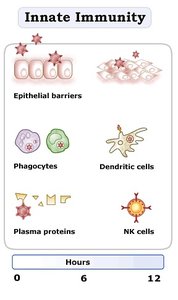
The innate immune system provides immediate, non-specific defense against pathogens. It includes epithelial barriers, phagocytes, dendritic cells, plasma proteins, and NK cells.
Leukocytes involved: Neutrophils, eosinophils, basophils, monocytes/macrophages, dendritic cells, NK cells.
Adaptive Immune System
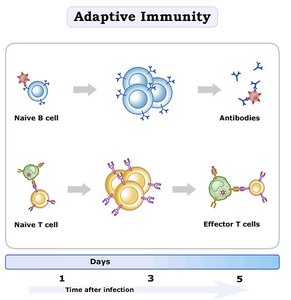
The adaptive immune system is characterized by specificity and memory. It involves B and T lymphocytes, which respond to specific antigens and provide long-lasting immunity.
Leukocytes involved: B cells, T cells (helper and cytotoxic), memory cells.
Key features: Clonal selection, antibody production, cell-mediated responses.
Summary Table: Leukocyte Classification and Functions
Cell Type | Granularity | Main Function | Innate/Adaptive |
|---|---|---|---|
Neutrophil | Granular | Bacterial phagocytosis | Innate |
Basophil | Granular | Allergic response | Innate/Adaptive |
Eosinophil | Granular | Parasitic defense | Innate/Adaptive |
Lymphocyte (B cell) | Agranular | Antibody production | Adaptive |
Lymphocyte (T cell) | Agranular | Cell-mediated immunity | Adaptive |
NK cell | Agranular | Non-specific cytotoxicity | Innate |
Monocyte/Macrophage | Agranular | Phagocytosis | Innate |
Dendritic cell | Agranular | Antigen presentation | Innate |
Self-Test Example
A subset of which of the following undergoes further differentiation within the thymus?
A. Basophils
B. Eosinophils
C. Lymphocytes (Correct answer: T lymphocytes mature in the thymus)
D. Monocytes
E. Neutrophils
Key Terms and Definitions
Leukocyte: White blood cell; defender against infection.
Granular leukocyte: WBC with cytoplasmic granules (neutrophils, basophils, eosinophils).
Agranular leukocyte: WBC without visible granules (lymphocytes, monocytes, dendritic cells).
Clonal selection: Process of lymphocyte proliferation and differentiation in response to antigen.
Humoral immunity: Immunity mediated by antibodies produced by B cells.
Cell-mediated immunity: Immunity mediated by T cells attacking infected or abnormal cells.
Additional info:
Memory cells are long-lived and provide rapid response upon re-exposure to the same antigen.
Effector cells are short-lived and actively participate in immune responses.
Monocytes differentiate into macrophages in tissues, which are key phagocytic cells.
Dendritic cells are the most effective antigen-presenting cells, bridging innate and adaptive immunity.
