 Indietro
Information Flow: Genes, Mutations, and Inheritance in General Biology
Guida di studio - Note intelligenti
 Appunti personalizzati basati sui tuoi materiali, ampliati con definizioni chiave, esempi e contesto.
Information Flow in Biology
Properties of Life
Living organisms exhibit several fundamental properties that distinguish them from non-living matter. These include the ability to self-replicate, store and follow genetic instructions, maintain membrane boundaries, store and utilize energy, regulate internal functions, respond to environmental changes, and evolve through heritable changes over time.
Self-replication: Organisms reproduce, passing genetic information to offspring.
Genetic instructions: DNA encodes instructions for cellular function.
Membrane delimited: Cells are bounded by membranes, maintaining internal environments.
Energy management: Cells store and use energy for metabolism.
Regulation and response: Organisms control functions and respond to stimuli.
Evolution: Populations change over time via heritable genetic variation.
Central Dogma: Information Flow from DNA to Protein
Transcription and Translation
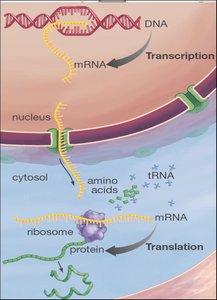
The central dogma of molecular biology describes the flow of genetic information: DNA is transcribed into messenger RNA (mRNA), which is then translated into protein. This process is fundamental to gene expression and cellular function.
Transcription: DNA sequence is copied into mRNA in the nucleus.
Translation: mRNA is decoded by ribosomes in the cytoplasm to synthesize proteins.
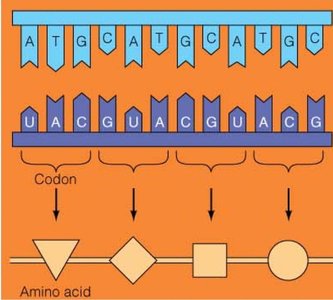
Codons: mRNA is read in sets of three nucleotides (codons), each specifying an amino acid.
Proteins: Chains of amino acids fold into functional proteins, determining phenotype.
Genetic Mutations and Their Effects
Types of Mutations
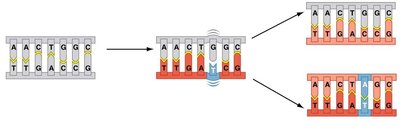
Mutations are changes in the DNA sequence that can arise from replication errors or environmental factors. They are the ultimate source of genetic variation and new alleles. Mutations can have various effects on an organism's fitness and protein function.
Point mutations: Change a single nucleotide.
Missense mutations: Alter an amino acid in the protein.
Silent mutations: Do not change the amino acid sequence due to redundancy in the genetic code.
Frameshift mutations: Shift the reading frame, affecting all downstream codons.
Nonsense mutations: Change a codon to a stop codon, truncating the protein.
Impact of Mutations
Deleterious mutations: Decrease fitness.
Neutral mutations: No effect on fitness.
Beneficial mutations: Increase fitness.
Most point mutations are neutral, some are deleterious, and a few are beneficial.
Alleles and Genetic Variation
Definition and Origin of Alleles
Alleles are alternative forms of a gene, often differing by one or more nucleotides. Mutation is the ultimate source of new alleles, while processes like crossing over, independent assortment, and random fertilization shuffle alleles during sexual reproduction.
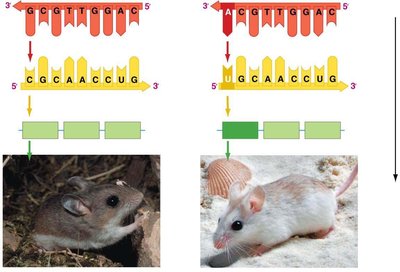
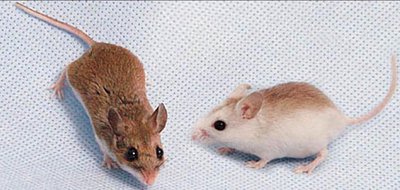
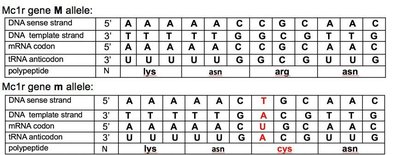
Example: The Mc1r gene in mice has M and m alleles, differing by a single nucleotide, resulting in different amino acids and phenotypes.
Gene Expression: From Genotype to Phenotype
Transcription, Translation, and Protein Function
The sequence of nucleotides in DNA determines the sequence of nucleotides in mRNA, which in turn determines the sequence of amino acids in a protein. Changes in DNA sequence (mutations) can alter protein function and thus phenotype.
Genotype: The genetic makeup (DNA sequence).
Phenotype: The observable traits, determined by proteins produced.
Example: A single nucleotide change in the Mc1r gene alters coat color in mice.
Mutations and Protein Function: Case Studies
Cystic Fibrosis Example
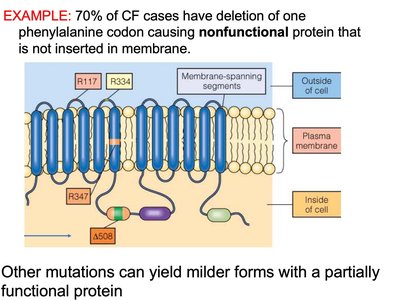
Mutations can cause diseases by altering protein function. For example, 70% of cystic fibrosis cases are due to the deletion of a phenylalanine codon, resulting in a nonfunctional protein that is not inserted into the membrane.
Nonfunctional protein: Severe disease phenotype.
Partially functional protein: Milder disease forms.
Hemoglobin Alleles and Malaria Resistance
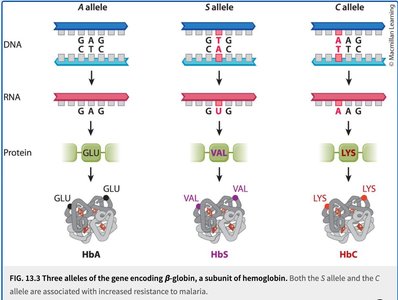
Different alleles of the β-globin gene result in different amino acids and protein variants, affecting disease resistance.
Allele | DNA | RNA | Protein |
|---|---|---|---|
A allele | GAG | GAG | GLU (HbA) |
S allele | GTG | GUG | VAL (HbS) |
C allele | AAG | AAG | LYS (HbC) |
Mendelian Inheritance and Pedigrees
Genotype and Phenotype Ratios
Mendel's laws describe inheritance patterns for single and multiple traits. Dominant and recessive alleles determine phenotype ratios in offspring.
Genotypic ratio: For a cross Mm x Mm, the expected ratio is 1:2:1 (MM:Mm:mm).
Phenotypic ratio: For dominant/recessive traits, the expected ratio is 3:1 (dominant:recessive).
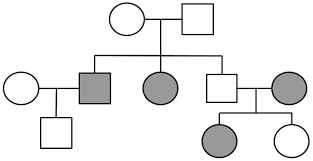
Pedigrees are used to track inheritance of traits across generations.
Codon Tables and Amino Acid Translation
Using Codon Tables
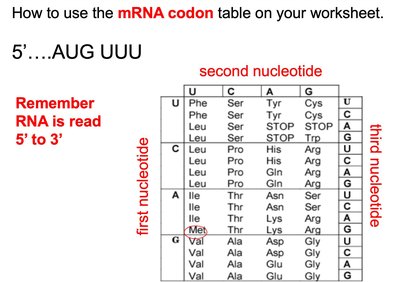
Codon tables are used to translate mRNA sequences into amino acids. Each codon specifies a particular amino acid, and the process is read 5' to 3'.
Example: AUG codes for methionine (Met), UUU codes for phenylalanine (Phe).
Worksheet Example: Mc1r Alleles in Mice
Comparing Allele Sequences
In Florida Gulf coast mice, the Mc1r gene has two alleles (M and m) with different sequences. Comparing these sequences helps identify nucleotide differences, potential shifts in reading frame, and early stop codons.
Allele | DNA Sense Strand | DNA Template Strand | mRNA Codon | tRNA Anticodon | Polypeptide |
|---|---|---|---|---|---|
M allele | 5' A A A A C G C G C G | 3' T T T T G C G C G C | 5' A A A C G C | 3' U U U G C G | lys asn arg asn |
m allele | 5' A A A T G C G C G C | 3' T T T A C G C G C G | 5' A A A U G C | 3' U U U A C G | lys asn cys asn |
Amino Acid Properties
Classification of Amino Acids
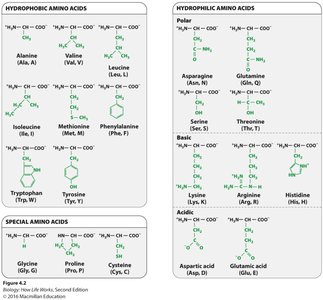
Amino acids are classified based on their chemical properties, which affect protein structure and function.
Hydrophobic: Alanine, Valine, Leucine, etc.
Hydrophilic: Serine, Threonine, Asparagine, etc.
Special: Glycine, Proline, Cysteine.
Summary of Exam Topics
DNA replication
Transcription
Translation
Central dogma and information flow
Regulation of gene expression
Cell cycle and ploidy
Mitosis
Meiosis and advantage of sexual reproduction
Mendel’s laws of inheritance
Mutations and their impact
Pedigrees and inheritance
