 Indietro
Metabolism, Growth, and Energetic Allocation in Animals
Guida di studio - Note intelligenti
 Appunti personalizzati basati sui tuoi materiali, ampliati con definizioni chiave, esempi e contesto.
The Energetic Problem of Being Alive
Growth and Development in Animals
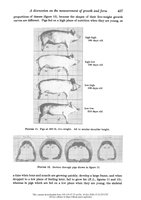
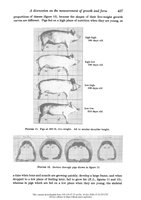
Growth in animals is not simply an increase in size; it involves the construction of new tissues and organs, requiring both matter and energy. The way an organism grows is influenced by its nutritional history, which can affect body proportions even if final body mass is identical.
Key Point 1: Nutritional manipulation at different developmental stages can alter tissue growth and final body composition.
Key Point 2: Growth requires acquisition of carbon, nitrogen, minerals, and other raw materials, as well as energy for biosynthesis and maintenance.
Example: Two pigs of the same weight may have different body forms due to differences in nutrient allocation during development.
Metabolism: Catabolism and Anabolism
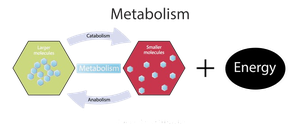
Metabolism encompasses all chemical reactions in the cell, divided into two main types:
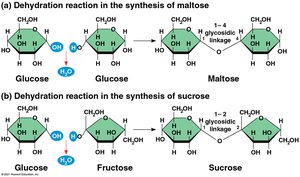
Catabolism: Breakdown of molecules to release energy.
Anabolism: Synthesis of complex molecules from simpler ones, requiring energy.
ATP: The Cellular Energy Currency
ATP (adenosine triphosphate) is the primary molecule used by cells to transfer energy.
Key Point 1: Fuel molecules (such as glucose and fatty acids) are catabolized to regenerate ATP.
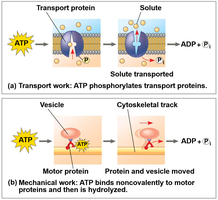
Key Point 2: ATP hydrolysis () is coupled to cellular work, including biosynthesis, transport, and mechanical processes.
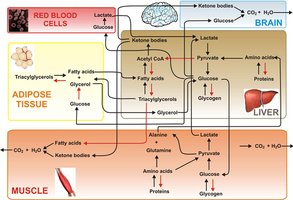
Example: Cardiac muscle primarily uses fatty acids for ATP regeneration, while skeletal muscle switches between fats and glucose depending on activity.
Energetic Allocation and Growth Constraints
Resource Allocation Among Tissues
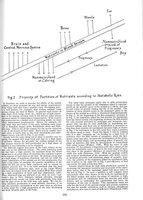
Nutrients circulate throughout the organism, but different tissues have distinct metabolic and developmental requirements. When supply is limited, tissues compete for resources, leading to changes in growth and body composition.
Key Point 1: Hammond's priority diagram illustrates how tissues such as the brain, bone, muscle, and fat receive nutrients based on developmental and metabolic priorities.
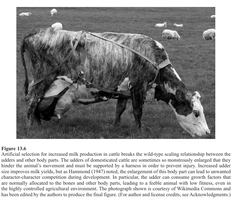
Key Point 2: Physiological states (e.g., lactation) can shift nutrient allocation, making certain tissues (like mammary glands) major nutrient sinks.
Example: During lactation, cows allocate more nutrients to mammary tissue, sometimes at the expense of other body reserves.
Dynamic Allocation and Developmental Programs
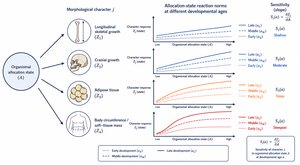
Allocation of nutrients is not static; it changes with developmental stage, hormonal signals, and tissue-specific metabolic capacity.
Key Point 1: Tissue response to nutrients depends on developmental timing and hormonal regulation.
Key Point 2: Morphological characters (e.g., bone, adipose tissue) exhibit different sensitivities to allocation state at various ages.
Cellular and Molecular Basis of Growth
Cellular Work: Chemical, Transport, and Mechanical
Cells perform three main types of work:
Chemical Work: Synthesis of DNA, RNA, proteins, lipids, and other cellular components.
Transport Work: Maintenance of ion gradients and import of nutrients, often using ATP-dependent pumps.
Mechanical Work: Movement of molecular motors, chromosome segregation, and cell division.
Thermodynamics in Biological Systems
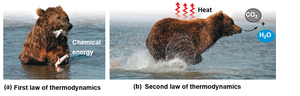
First Law: Energy is transformed, not created. Cells use chemical energy from fuels or light.
Second Law: Every energy conversion increases entropy; not all energy remains available for work.
Free Energy and Reaction Coupling
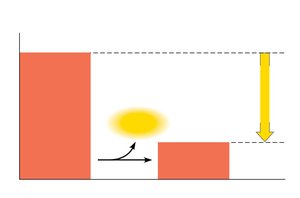
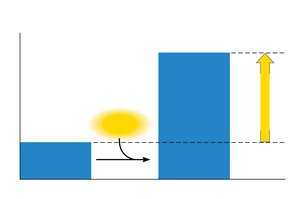
Gibbs free energy () determines whether a reaction can do work.
Exergonic Reactions: Release free energy (), are spontaneous.
Endergonic Reactions: Require energy input (), are nonspontaneous.
Coupling: Cells couple exergonic and endergonic reactions to drive biosynthesis and growth.
Summary Table: Catabolism vs. Anabolism
Process | Description | Energy Flow | Example |
|---|---|---|---|
Catabolism | Breakdown of molecules | Releases energy | Glucose oxidation |
Anabolism | Synthesis of molecules | Requires energy | Protein synthesis |
Conclusion
Growth and metabolism in animals are governed by the principles of energy transformation, resource allocation, and cellular work. Nutritional history, developmental timing, and tissue-specific demands all contribute to the final form and function of the organism. Understanding these processes is fundamental to General Biology, especially in the context of metabolism, cell biology, and physiology.
