 Indietro
The Cell Cycle and Molecular Biology of Cancer: Study Notes for General Biology
Guida di studio - Note intelligenti
 Appunti personalizzati basati sui tuoi materiali, ampliati con definizioni chiave, esempi e contesto.
Chapter 12: The Cell Cycle
Big Idea
Understanding cell division is fundamental to comprehending human reproduction and the generation of life in all organisms. The cell cycle governs how cells grow, replicate, and divide, ensuring genetic continuity and enabling development, maintenance, and repair.
Key Roles of Cell Division
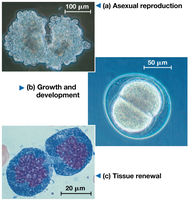
Asexual reproduction: Single-celled organisms reproduce by cell division, creating new organisms.
Growth and development: Multicellular organisms develop from a single cell through repeated cell divisions.
Tissue renewal and repair: Cell division replaces damaged or dead cells in multicellular organisms.
Cellular Organization of Genetic Material
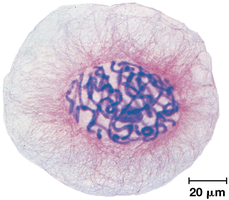
Genome: All DNA in a cell; prokaryotes typically have a single DNA molecule, eukaryotes have multiple.
Chromosomes: DNA molecules packaged with proteins; each carries hundreds to thousands of genes.
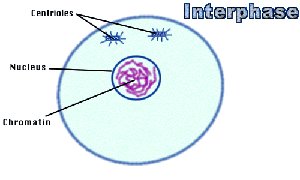
Chromatin: Complex of DNA and protein in eukaryotic chromosomes; condenses during cell division.
Somatic cells: Non-reproductive cells with two sets of chromosomes.
Gametes: Reproductive cells (sperm and eggs) with half the chromosome number of somatic cells.
Distribution of Chromosomes During Eukaryotic Cell Division
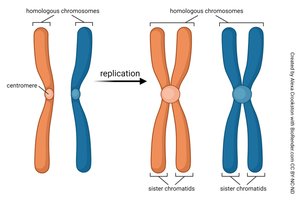
DNA is replicated before cell division; chromosomes condense.
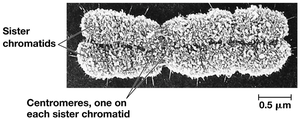
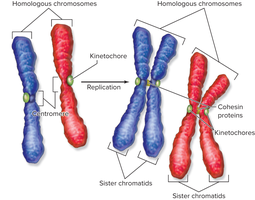
Each duplicated chromosome has two sister chromatids, joined by cohesins at the centromere.
During cell division, sister chromatids separate and become individual chromosomes.
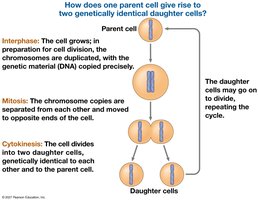
How One Parent Cell Gives Rise to Two Genetically Identical Daughter Cells
Interphase: Cell grows, chromosomes are duplicated, DNA is copied precisely.
Mitosis: Chromosome copies are separated to opposite ends of the cell.
Cytokinesis: Cell divides into two genetically identical daughter cells.
Phases of the Cell Cycle
Interphase: Consists of G1 (growth), S (DNA replication), and G2 (preparation for division).
Mitotic (M) phase: Includes mitosis (nuclear division) and cytokinesis (cytoplasmic division).
Phases of Mitosis
Prophase: Chromosomes condense, spindle apparatus assembles, nuclear envelope breaks down.
Prometaphase: Microtubules attach to kinetochores, chromosomes begin moving to cell center.
Metaphase: Chromosomes align along metaphase plate.
Anaphase: Centromeres split, sister chromatids pulled to opposite poles.
Telophase: Spindle disassembles, nuclear envelope reforms, chromosomes uncoil.
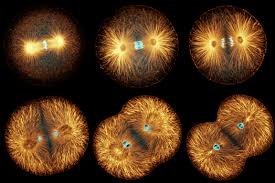
The Mitotic Spindle and Chromosome Movement
Mitotic spindle: Structure made of microtubules controlling chromosome movement.
Centrosome: Microtubule-organizing center; replicates and migrates to opposite cell ends.
Kinetochore: Protein complex at centromere; spindle microtubules attach here.
Cytokinesis
Animal cells: Occurs by cleavage, forming a cleavage furrow.
Plant cells: Occurs by formation of a cell plate.
Binary Fission in Bacteria
Prokaryotes reproduce by binary fission: chromosome replicates, daughter chromosomes move apart, cell divides.
Cell Cycle Regulation and Checkpoints
Cell division frequency varies by cell type, regulated at the molecular level.
Checkpoints: G1 (restriction point), G2, and M checkpoints control progression.
Cyclins and Cdks: Regulatory proteins; cyclin-dependent kinases must bind cyclins to be active.
MPF: Maturation-promoting factor, a cyclin-Cdk complex triggering entry into M phase.
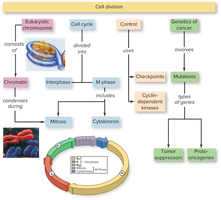
Internal and External Signals
Internal signals: Ensure chromosomes are properly attached before anaphase.
External signals: Growth factors stimulate cell division; PDGF is required for fibroblast division.
Loss of Cell Cycle Controls in Cancer Cells
Cancer cells ignore normal cell cycle regulation, divide without growth factors, and may form tumors.
Benign tumors: Remain at original site; malignant tumors: invade tissues and metastasize.
Metastatic tumors treated with chemotherapy; side effects due to impact on normal dividing cells.
Concept 18.5: Molecular Biology of Cancer
Types of Genes Associated with Cancer
Proto-oncogenes: Code for proteins stimulating normal cell growth and division.
Oncogenes: Mutated proto-oncogenes leading to excessive cell division.
Tumor-suppressor genes: Inhibit cell division, repair DNA, control cell adhesion, and act in cell-signaling pathways.
Mutations and Cancer Development
Mutations in ras proto-oncogene and p53 tumor-suppressor gene are common in cancers.
Mutated ras gene produces hyperactive Ras protein, stimulating cell division.
Mutated p53 gene prevents suppression of cell cycle, allowing damaged cells to proliferate.
Multiple mutations are needed for full-fledged cancer; incidence increases with age.
Inherited mutations (e.g., BRCA1/BRCA2) can predispose individuals to certain cancers.
Summary Table: Cell Cycle Regulation and Cancer Genes
Gene Type | Normal Function | Cancer Effect |
|---|---|---|
Proto-oncogene | Stimulates cell growth | Mutation leads to oncogene, excessive division |
Tumor-suppressor | Inhibits cell cycle, repairs DNA | Mutation disables inhibition, allows uncontrolled growth |
ras | Signal transduction for growth | Mutation causes hyperactive signaling |
p53 | DNA repair, cell cycle arrest, apoptosis | Mutation prevents repair/apoptosis, promotes cancer |
Key Terms and Definitions
Chromosome: DNA molecule with associated proteins, carrying genetic information.
Chromatid: One of two identical halves of a duplicated chromosome.
Chromatin: DNA-protein complex forming chromosomes.
Centromere: Region joining sister chromatids.
Kinetochore: Protein structure at centromere for spindle attachment.
Mitotic spindle: Microtubule structure guiding chromosome movement.
Binary fission: Prokaryotic cell division.
Checkpoints: Regulatory points in cell cycle.
Cyclin/Cdk: Proteins regulating cell cycle progression.
Oncogene: Mutated gene causing cancer.
Tumor-suppressor gene: Gene inhibiting cell division.
Relevant Equations
Cell cycle progression is regulated by cyclin-Cdk complexes:
Chromosome number in somatic cells: (diploid), in gametes: (haploid)
Example: Human Cell Division
Human somatic cells have 46 chromosomes (23 pairs). During mitosis, each chromosome is duplicated, forming sister chromatids. After division, each daughter cell receives 46 chromosomes, identical to the parent cell.
Additional info:
Cell cycle checkpoints ensure genomic integrity and prevent propagation of damaged DNA.
Cancer arises from the breakdown of these regulatory systems, often involving multiple genetic mutations.
