 Indietro
The Cell: Structure, Function, and Diversity
Guida di studio - Note intelligenti
 Appunti personalizzati basati sui tuoi materiali, ampliati con definizioni chiave, esempi e contesto.
The Cell: The Basic Unit of Life
Introduction to Cells
Cells are the fundamental units of life, responsible for carrying out all biological processes necessary for survival and function. Understanding cell structure and function is essential for grasping the principles of biology.
Cell: The smallest unit capable of independent life and reproduction.
Homeostasis: The ability of cells to regulate their internal environment to maintain stable, life-supporting conditions.
Cells operate through the coordinated action of their internal structures (organelles).
Macromolecules in Cells
Major Classes of Biological Macromolecules
All cells contain four major types of macromolecules, each with distinct roles:
Proteins: Perform most cellular functions, including catalysis, structure, and signaling.
Nucleic acids: Store, transmit, and process genetic information (DNA and RNA).
Carbohydrates: Provide chemical energy, structural support, and cellular identity.
Phospholipids: Form the selectively permeable membrane barrier that defines the cell boundary.
Discovery and Theory of Cells
Historical Perspective
The discovery of cells was a pivotal moment in biology, leading to the development of cell theory.
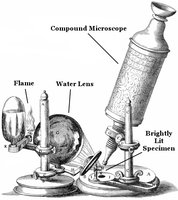
Cells were first described in 1665 by Robert Hooke using a compound microscope.
Microscopy enabled the observation of cells and their internal structures.

Cell Theory
The cell is the basic unit of life.
All living things are composed of one or more cells.
Cells arise only from the division of pre-existing cells.
Each cell can regulate its internal conditions (homeostasis).
Homeostasis at higher levels (tissues, organs, organisms) reflects the coordinated actions of many cells.
Cell Size and Surface Area-to-Volume Ratio
Why Are Cells Small?
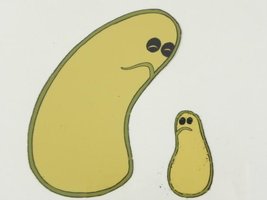
Cells are small to maximize their surface area-to-volume ratio, which is critical for efficient exchange of materials with the environment.
As a cell grows, its volume increases faster than its surface area.
A high surface area-to-volume ratio allows for efficient nutrient uptake and waste removal.
Cell Morphology: Prokaryotic vs. Eukaryotic Cells
Major Differences
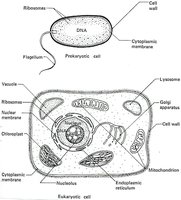
Cells are classified into two main types based on their structural features:
Feature | Prokaryotes | Eukaryotes |
|---|---|---|
Nucleus | No | Yes |
Organelles | Few/simple | Complex/many |
Size | Smaller | Larger |
Evolution | First (3.5 BYA) | Later (2.1 BYA) |
Cellularity | Almost entirely unicellular | Some unicellular, some multicellular |
The Tree of Life: Three Domains
Classification of Life
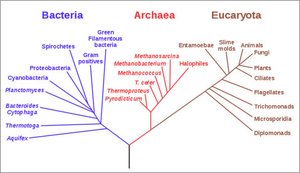
All life is classified into three domains based on genetic and cellular differences:
Bacteria (prokaryotes)
Archaea (prokaryotes)
Eukaryota (eukaryotes)
Prokaryotic Cell Structure
Major Characteristics
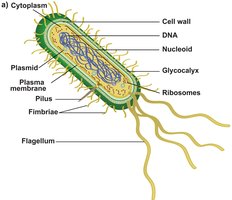
No nucleus; DNA is located in a region called the nucleoid.
DNA is typically circular and may include plasmids (small, extra-chromosomal DNA).
Cell wall made of peptidoglycan (in bacteria).
Simple cytoskeleton.
Some have flagella (for movement) and fimbriae (for attachment).
Simple organelles for photosynthesis or storage.
Eukaryotic Cell Structure
Major Characteristics
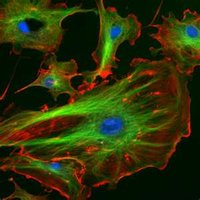
Nucleus stores DNA.
Many compartmentalized organelles (e.g., mitochondria, endoplasmic reticulum, Golgi apparatus).
Complex cytoskeleton for structure and movement.
Large diversity among kingdoms (animals, plants, fungi, protists).
Nucleus and DNA Packaging
Nucleus
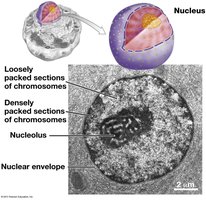
The nucleus is the control center of the cell, containing most of the genetic material.
Enclosed by a double membrane (nuclear envelope) with pores for transport.
Contains chromosomes (DNA + proteins).
Nucleolus: Site of ribosome biogenesis.
DNA Packaging
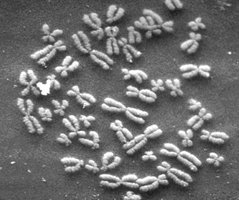
DNA is highly organized and compacted within the nucleus.
DNA wraps around histone proteins to form nucleosomes.
Further coiling and folding produce chromosomes.
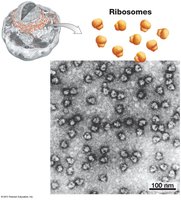
Ribosomes
Structure and Function
Ribosomes are the molecular machines that synthesize proteins by translating mRNA.
Composed of large and small subunits (protein and rRNA).
Can be free in the cytoplasm or attached to the rough endoplasmic reticulum (ER).
Follow the central dogma: DNA → RNA → Protein.
Mitochondria
Structure and Function
Mitochondria are the powerhouses of the cell, producing ATP through cellular respiration.
Double membrane structure.
Contain their own DNA and ribosomes.
Divide independently of the cell.
The Endomembrane System
Components and Functions
The endomembrane system is a network of membranes involved in protein and lipid synthesis, modification, and transport.
Nuclear envelope
Endoplasmic reticulum (ER): Rough ER (protein synthesis), Smooth ER (lipid synthesis)
Golgi apparatus: Receives, modifies, and ships proteins and lipids
Vesicles: Transport materials between organelles
Lysosomes: Digestive organelles (animal cells)
Peroxisomes: Break down toxins
Endoplasmic Reticulum (ER)
Rough and Smooth ER
Rough ER: Studded with ribosomes; site of protein folding, processing, and packaging for export.
Smooth ER: Lacks ribosomes; site of lipid synthesis and degradation.
Golgi Apparatus
Structure and Function
The Golgi apparatus is responsible for receiving, modifying, and shipping proteins and lipids.
cis-side: Receives vesicles from the ER.
Proteins and lipids are processed as they move through the cisternae to the trans-side, where they are shipped to their final destinations.
Lysosomes and Peroxisomes
Lysosomes (Animal Cells)
"Recycling centers" of the cell.
Hydrolyze macromolecules at acidic pH (~5).
Contain many hydrolytic enzymes.
Peroxisomes
Originate as vesicles from the ER.
Break down toxins and their byproducts (e.g., hydrogen peroxide).
Contain a large protein crystal core.
Cytoskeleton
Structure and Function
The cytoskeleton provides shape, support, and movement for the cell. It acts as both a skeleton and a system of tracks for intracellular transport.
Microfilaments (actin): Cell movement, muscle contraction, cytokinesis, cytoplasmic streaming.
Intermediate filaments: Structural support, cell shape, cell-cell anchoring.
Microtubules: Support, vesicle transport, chromosome movement during cell division, cilia/flagella movement.
Plant Cell Characteristics
Unique Features of Plant Cells
Chloroplasts: Site of photosynthesis; contain their own DNA and double membrane.
Central vacuole: Stores water, enzymes, pigments, and toxins; can occupy up to 80% of cell volume.
Cell wall: Provides structure and prevents dehydration; contains cellulose.
Plasmodesmata: Channels between plant cells for communication.
Endosymbiotic Theory
Origin of Mitochondria and Chloroplasts
Mitochondria and chloroplasts are believed to have originated from free-living prokaryotes that were engulfed by ancestral eukaryotic cells.
Both have double membranes, their own DNA, and divide by binary fission.
Summary Table: Key Differences Between Prokaryotic and Eukaryotic Cells
Feature | Prokaryotes | Eukaryotes |
|---|---|---|
Nucleus | No | Yes |
DNA Form | Circular | Linear (chromosomes) |
Organelles | Few/simple | Many/complex |
Cell Wall | Peptidoglycan (bacteria) | Cellulose (plants), chitin (fungi), none (animals) |
Size | Small | Larger |
Examples | Bacteria, Archaea | Animals, plants, fungi, protists |
Practice Questions for Review
Why are cells small? How does surface area-to-volume ratio affect cell function?
What are the main differences between prokaryotic and eukaryotic cells?
Where is DNA located in each cell type, and what form does it take?
What is the endomembrane system, and what are the main functions of its organelles?
What are the differences between plant and animal cells?
What are the three main types of cytoskeletal fibers, and what are their functions?
Which organelles are most abundant in cells with specific functions (e.g., energy production, protein synthesis)?
