 Indietro
The Endocrine System: Structure, Function, and Regulation
Guida di studio - Note intelligenti
 Appunti personalizzati basati sui tuoi materiali, ampliati con definizioni chiave, esempi e contesto.
The Endocrine System
Functions and Mechanisms of Hormones
The endocrine system is responsible for coordinating body systems and maintaining homeostasis through the secretion of hormones. It works in conjunction with the nervous system, but communicates more slowly.
Endocrine glands contain secretory cells that release hormones into the extracellular fluid, which then diffuse into the bloodstream.
Hormones are chemical messengers that travel throughout the body, affecting only target cells with specific receptors.
Exocrine glands secrete their products into ducts that lead to body surfaces or cavities (e.g., oil and salivary glands).
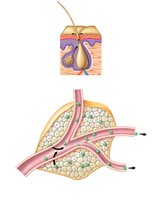
Major endocrine glands: pituitary, thyroid, parathyroid, adrenal, pineal.
Organs with endocrine tissue: hypothalamus, thymus, pancreas, ovaries, testes, heart, placenta, stomach, small intestine, kidneys.
Hormone Action and Target Cells
Hormones travel in the bloodstream and interact with target cells, which possess specific protein receptors for each hormone. Cells without these receptors are unaffected.
Target cells have receptors that recognize and bind specific hormones.
Hormones are classified as lipid-soluble or water-soluble.
Lipid-Soluble Hormones
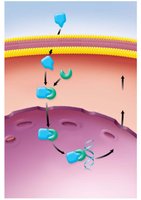
Lipid-soluble hormones, such as steroid hormones, are derived from cholesterol and are secreted by the ovaries, testes, and adrenal glands.
They move easily through the plasma membrane and bind to receptors inside the target cell (cytoplasm or nucleus).
The hormone-receptor complex attaches to DNA and activates genes to synthesize specific proteins.
Water-Soluble Hormones
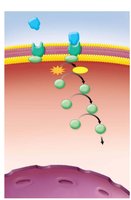
Water-soluble hormones are made of amino acids and cannot pass through the plasma membrane.
They bind to receptors on the cell surface and act as first messengers.
They stimulate second messengers (such as cAMP) within the cell, which activate proteins already present.
Summary of Hormone Mechanisms
Lipid-soluble hormones must be bound to proteins in plasma, enter cells, and stimulate protein synthesis.
Water-soluble hormones travel freely in plasma, do not enter cells, and activate existing proteins.
Feedback Mechanisms
Negative feedback: Increased hormone levels or actions inhibit further release (e.g., insulin secretion stops when blood glucose declines).
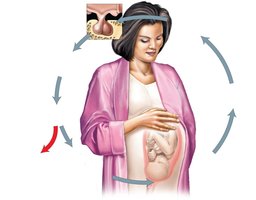
Positive feedback: The outcome stimulates further hormone release (e.g., oxytocin during childbirth).
Hormone Interactions
Antagonistic: One hormone opposes another.
Synergistic: Combined effect is greater than individual effects.
Permissive: One hormone enables another to exert its effect.
Hypothalamus and Pituitary Gland
Structure and Function
The pituitary gland, located at the base of the brain, consists of two lobes: anterior (circulatory connection to hypothalamus) and posterior (neural connection to hypothalamus).
The anterior pituitary is controlled by releasing and inhibiting hormones from the hypothalamus via a portal system.
The hypothalamus synthesizes and secretes these regulatory hormones.
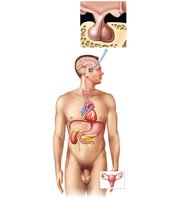
Anterior Pituitary Hormones
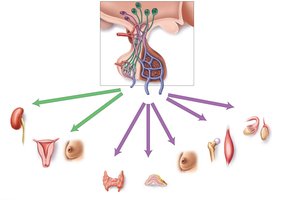
The anterior pituitary synthesizes and secretes seven main hormones:
Growth hormone (GH): Stimulates cell division and growth, especially in bone, muscle, and cartilage during puberty.
Prolactin (PRL): Stimulates milk production in females; involved in sperm production in males.
Thyroid-stimulating hormone (TSH): Stimulates synthesis and release of thyroid hormones.
Adrenocorticotropic hormone (ACTH): Controls synthesis and secretion of glucocorticoid hormones from the adrenal cortex.
Follicle-stimulating hormone (FSH): Promotes development of egg cells and estrogen secretion in females; sperm production in males.
Luteinizing hormone (LH): Causes ovulation and secretion of estrogen/progesterone in females; stimulates testosterone production in males.
Melanocyte stimulating hormone (MSH): Stimulates pigment production; minor effects in humans.
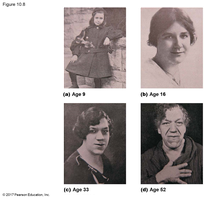
Growth Hormone Disorders
Gigantism: Excess GH in childhood leads to abnormal growth.
Acromegaly: Excess GH in adulthood causes bone thickening.
Pituitary dwarfism: Insufficient GH in childhood; treatable with GH administration.


Posterior Pituitary Hormones
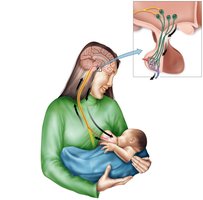
The posterior pituitary stores and releases hormones produced by the hypothalamus:
Antidiuretic hormone (ADH): Increases water reabsorption in kidneys; deficiency causes diabetes insipidus.
Oxytocin (OT): Stimulates uterine contractions and milk ejection; also facilitates sexual behavior and sperm transport in males.
Thyroid Gland
Structure and Hormones
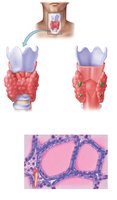
The thyroid gland is located at the anterior aspect of the neck and produces thyroid hormone (TH: T3, T4) and calcitonin (CT).
TH regulates metabolic rate, heat production, blood pressure, and normal organ function.
CT lowers blood calcium levels by inhibiting bone breakdown and promoting bone formation.
Thyroid Disorders
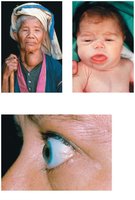
Simple goiter: Enlarged thyroid due to iodine deficiency.
Cretinism: Too little TH during development causes dwarfism and delayed development.
Myxedema: Too little TH in adulthood causes fluid accumulation and decreased alertness.
Graves' disease: Over-secretion of TH; autoimmune disorder with symptoms like increased metabolism and exophthalmos.
Parathyroid Glands
Structure and Function
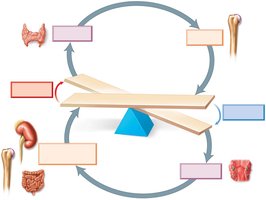
Four small glands on the posterior aspect of the thyroid secrete parathyroid hormone (PTH), which increases blood calcium levels.
PTH stimulates osteoclasts to break down bone, increases calcium reabsorption in kidneys, and stimulates vitamin D activation for increased GI absorption.
Undersecretion causes nervousness and muscle spasms; oversecretion causes weakened bones, kidney stones, and decreased nervous system activity.
Adrenal Glands
Structure and Hormones
The adrenal glands are located superior to the kidneys and consist of two regions:
Adrenal cortex: Secretes gonadocorticoids (androgens, estrogens), mineralocorticoids (aldosterone), and glucocorticoids (cortisol).
Adrenal medulla: Secretes epinephrine and norepinephrine for fight-or-flight response.
Adrenal Disorders
Addison's disease: Undersecretion of cortisol/aldosterone; causes skin bronzing, weight loss, fatigue.
Cushing's syndrome: Prolonged high cortisol; causes fat redistribution, fluid accumulation, increased appetite.


Stress Response
Short-term stress: Adrenal medulla releases epinephrine/norepinephrine.
Long-term stress: Hypothalamus stimulates anterior pituitary to release ACTH, which signals adrenal cortex to produce cortisol/aldosterone.
Pancreas
Structure and Hormones
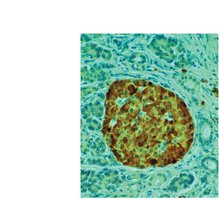
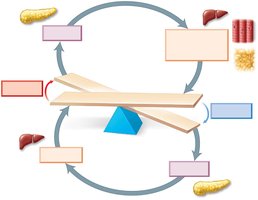
The pancreas, located posterior and inferior to the stomach, contains endocrine cells in clusters called islets of Langerhans. It produces glucagon and insulin.
Glucagon: Increases blood glucose by promoting glycogen breakdown and conversion of lactic/amino acids to glucose.
Insulin: Decreases blood glucose by stimulating glucose uptake, inhibiting glycogen breakdown, and preventing conversion of amino/fatty acids to glucose.
Diabetes Mellitus
Type 1: Autoimmune destruction of beta cells; requires insulin administration.
Type 2: Insulin resistance; associated with obesity and inactivity; may require insulin or other medications.
Gestational diabetes: Occurs during pregnancy due to placental hormones; usually resolves after delivery.
Thymus Gland
Structure and Function
The thymus lies superior to the heart and secretes hormones (thymopoietin, thymosin) that promote maturation of T lymphocytes, essential for immune health.
Pineal Gland
Structure and Function
The pineal gland, located at the center of the brain, produces melatonin, which regulates sleep and circadian rhythms.
Melatonin levels are higher at night; light inhibits secretion.
Excess melatonin can cause seasonal affective disorder (SAD).
Locally Acting Chemical Messengers
Types and Functions
Local signaling molecules act quickly on adjacent cells.
Neurotransmitters: Transmit signals between neurons.
Growth factors: Stimulate cell growth and development.
Nitric oxide (NO): Causes blood vessel dilation, aids peristalsis, acts as neurotransmitter.
Prostaglandins: Lipid molecules with diverse effects on reproduction, inflammation, blood clotting, and temperature regulation.
Summary Table: Major Endocrine Glands and Their Hormones
Gland | Hormone(s) | Main Effects |
|---|---|---|
Pituitary (anterior) | GH, PRL, TSH, ACTH, FSH, LH, MSH | Growth, milk production, thyroid/adrenal/gonadal regulation, pigment |
Pituitary (posterior) | ADH, OT | Water reabsorption, uterine contractions, milk ejection |
Thyroid | TH (T3, T4), CT | Metabolism, calcium regulation |
Parathyroid | PTH | Increase blood calcium |
Adrenal cortex | Cortisol, aldosterone, androgens/estrogens | Stress response, water/mineral balance, sex characteristics |
Adrenal medulla | Epinephrine, norepinephrine | Fight-or-flight response |
Pancreas | Insulin, glucagon | Blood glucose regulation |
Thymus | Thymopoietin, thymosin | T cell maturation |
Pineal | Melatonin | Sleep regulation |
Key Equations
Conversion of ATP to cAMP (second messenger):
Blood glucose regulation:
Calcium regulation:
Additional info:
Some disorders and hormone actions were expanded for clarity and completeness.
Tables and diagrams were recreated and summarized for academic context.
