 Indietro
Chapter 5
Guida di studio - Note intelligenti
 Appunti personalizzati basati sui tuoi materiali, ampliati con definizioni chiave, esempi e contesto.
Macromolecules: Structure and Function
Polymers and Monomers
Macromolecules are large molecules essential for life, constructed from smaller units called monomers. These monomers are linked together to form polymers through specific chemical reactions.
Polymer: A long molecule consisting of many similar or identical building blocks (monomers) linked by covalent bonds.
Monomer: The repeating unit that serves as the building block of a polymer.
Polymerization: The process of joining monomers to form a polymer.
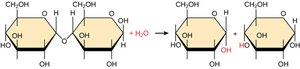
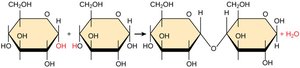
Dehydration Reaction: A chemical reaction in which two molecules are covalently bonded to each other with the removal of a water molecule.
Hydrolysis Reaction: A process that breaks the bonds between monomers by adding water, reversing the dehydration reaction.
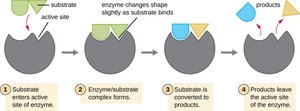
Enzyme: Biological catalysts that speed up chemical reactions, including those involved in polymerization and hydrolysis.
Carbohydrates: Fuel and Building Material
Classification and Structure
Carbohydrates are sugars and their polymers, serving as energy sources and structural components in cells.
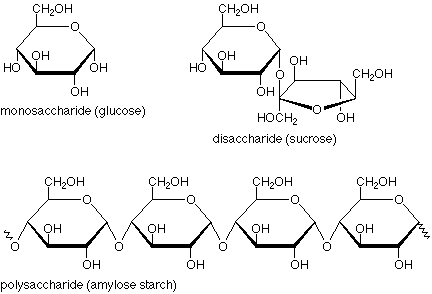
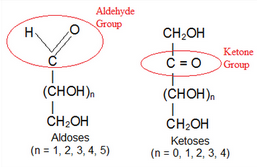
Monosaccharides: Simple sugars with the general formula (CH2O)x, such as glucose. They typically have 3-7 carbon atoms and often form rings in aqueous solutions.
Aldoses: Monosaccharides with a carbonyl group (C=O) at the end of the carbon skeleton (e.g., glucose).
Ketoses: Monosaccharides with a carbonyl group within the carbon skeleton (e.g., fructose).
Disaccharides and Glycosidic Linkages
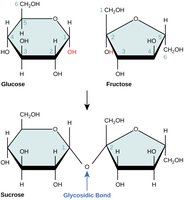
Disaccharides are formed by joining two monosaccharides via a dehydration reaction, creating a covalent bond known as a glycosidic linkage.
Disaccharide: Two monosaccharides joined by a glycosidic bond (e.g., sucrose = glucose + fructose).
Glycosidic Linkage: The covalent bond formed between two monosaccharides by a dehydration reaction.
Disaccharides can be broken down into monosaccharides by hydrolysis for energy conversion.
Polysaccharides: Storage and Structure
Polysaccharides are large polymers of monosaccharides, serving as storage forms of energy or as structural materials.
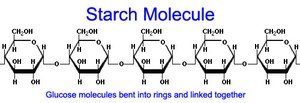
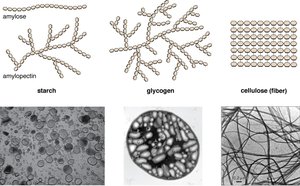
Starch: A storage polysaccharide in plants, composed of glucose monomers with α(1→4) linkages. It is helical in structure and can be hydrolyzed for energy.
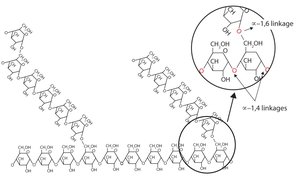
Glycogen: A storage polysaccharide in animals, similar to starch but more highly branched with α(1→6) linkages at branch points.
Cellulose: A structural polysaccharide in plant cell walls, composed of glucose monomers with β(1→4) linkages, forming straight, unbranched fibers that are difficult to digest for most organisms.
Chitin: A structural polysaccharide found in the exoskeletons of arthropods and the cell walls of fungi.
Lipids: Hydrophobic Molecules
General Properties
Lipids are a diverse group of hydrophobic molecules that do not form true polymers but are essential for energy storage, membrane structure, and signaling.
They are generally too small to be considered macromolecules but can organize into larger structures.
Fats (Triglycerides)
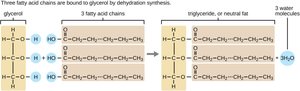
Fats are constructed from glycerol and fatty acids, joined by ester linkages through dehydration reactions.
Glycerol: A three-carbon alcohol with hydroxyl groups.
Fatty Acid: A long hydrocarbon chain with a carboxyl group at one end, making the molecule nonpolar and hydrophobic.
Triglyceride: Formed by joining one glycerol to three fatty acids.
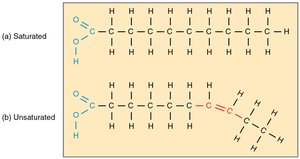
Saturated Fats: No double bonds in fatty acid chains; solid at room temperature.
Unsaturated Fats: One or more double bonds; liquid at room temperature (oils).
Main functions: Energy storage (more efficient than polysaccharides), insulation, and cushioning.
Phospholipids
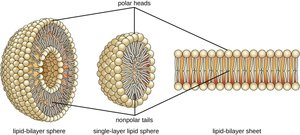
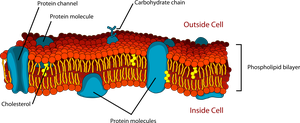
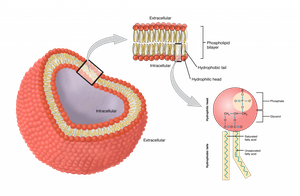
Phospholipids are major components of cell membranes, consisting of two fatty acid tails and a phosphate group attached to glycerol. Their amphipathic nature (hydrophobic tails, hydrophilic head) allows them to form bilayers in aqueous environments.
Steroids
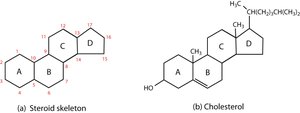
Steroids are lipids characterized by a carbon skeleton consisting of four fused rings. Cholesterol is a key steroid found in cell membranes and is a precursor for other steroids, including hormones.
Proteins: Structure and Function
Amino Acids and Polypeptides
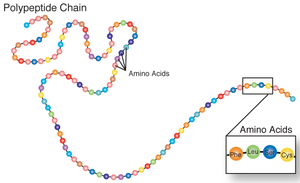
Proteins are polymers of amino acids, which are linked by peptide bonds to form polypeptides. The sequence and structure of amino acids determine protein function.
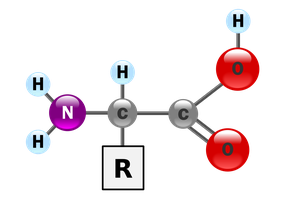
Amino Acid: Contains a central carbon, an amino group (NH2), a carboxyl group (COOH), a hydrogen atom, and a variable R group (side chain).
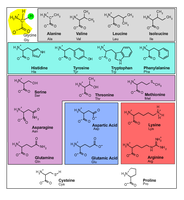
R groups determine the properties (nonpolar, polar, acidic, basic) of each amino acid.
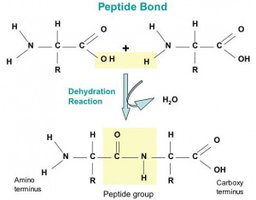
Peptide Bond: Covalent bond formed by dehydration between the amino group of one amino acid and the carboxyl group of another.
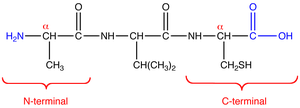
Polypeptides have directionality: N-terminus (amino end) and C-terminus (carboxyl end).
Protein Structure Levels
The function of a protein is determined by its structure, which is organized into four levels:
Primary Structure: The unique sequence of amino acids in a polypeptide chain.
Secondary Structure: Regular folding patterns (α-helix, β-sheet) stabilized by hydrogen bonds between backbone atoms.
Tertiary Structure: The overall 3D shape of a polypeptide, stabilized by interactions among R groups (hydrogen bonds, ionic bonds, van der Waals forces, disulfide bridges).
Quaternary Structure: The association of two or more polypeptide chains into a functional protein (not all proteins have this level).
Denaturation
Denaturation is the process in which a protein loses its native structure due to changes in temperature, pH, or salt concentration, resulting in loss of function. Sometimes, proteins can refold and regain function if normal conditions are restored.
Nucleic Acids: Information Storage and Transmission
Structure and Function
Nucleic acids are polymers of nucleotides that store, transmit, and help express hereditary information. The two main types are DNA (deoxyribonucleic acid) and RNA (ribonucleic acid).
Nucleotide: Composed of a nitrogenous base, a pentose sugar (deoxyribose or ribose), and one or more phosphate groups.
Pyrimidines: Single-ring bases (cytosine, thymine in DNA, uracil in RNA).
Purines: Double-ring bases (adenine, guanine).
Polynucleotide: Nucleotides joined by phosphodiester linkages, forming a sugar-phosphate backbone with nitrogenous bases as "rungs".
Directionality: 5’ end (phosphate group) to 3’ end (hydroxyl group).
DNA: Double helix, antiparallel strands, complementary base pairing (A-T, G-C) via hydrogen bonds.
RNA: Single-stranded, can fold into complex shapes via internal base pairing (A-U, G-C).
Additional info: The central dogma of molecular biology describes the flow of genetic information: DNA → RNA → Protein.
