 Indietro
Translation: Decoding mRNA into Protein
Guida di studio - Note intelligenti
 Appunti personalizzati basati sui tuoi materiali, ampliati con definizioni chiave, esempi e contesto.
Translation: mRNA to Protein
Overview of Translation
Translation is the process by which messenger RNA (mRNA) is decoded by ribosomes to synthesize a polypeptide (protein). This process occurs in the cytoplasm and is a fundamental step in gene expression, following transcription. The genetic code, composed of triplet codons, specifies the sequence of amino acids in the resulting protein.
Translation direction: mRNA is read from 5' to 3' by the ribosome.
Polypeptide direction: Proteins are synthesized from the N-terminus to the C-terminus.
Codons: Each codon consists of three nucleotides and codes for a specific amino acid or a stop signal.
Start codon: AUG (methionine) marks the beginning of translation.
Stop codons: UAA, UAG, and UGA signal termination.
The Genetic Code and Codon Tables
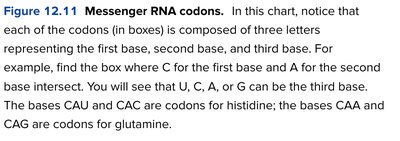
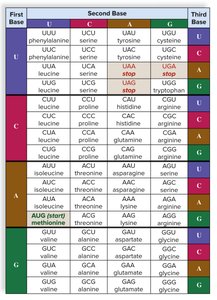
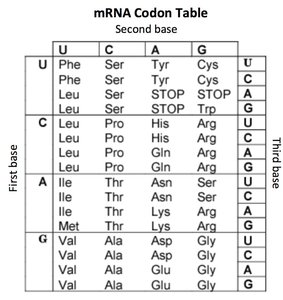
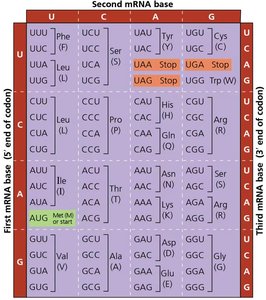
The genetic code is universal and redundant, meaning multiple codons can code for the same amino acid. Codon tables are used to determine which amino acid corresponds to each mRNA codon.
64 codons: 61 code for amino acids, 3 are stop codons.
Redundancy: Some amino acids are specified by more than one codon.
Example: CAU and CAC both code for histidine; CAA and CAG code for glutamine.
Transcription and Translation: From DNA to Protein
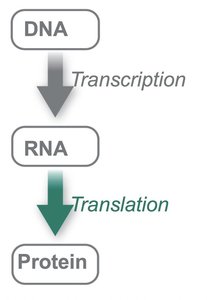
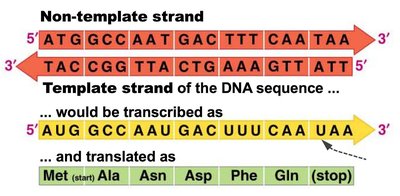
Transcription produces mRNA from a DNA template, which is then translated into protein. The non-template strand of DNA matches the mRNA sequence (except T is replaced by U), while the template strand is used for mRNA synthesis.
Transcription: DNA → mRNA
Translation: mRNA → Protein
Example: DNA sequence 5'-ATG GCC AAT GAC TTT CAA TAA-3' is transcribed to mRNA 5'-AUG GCC AAU GAC UUU CAA UAA-3' and translated to Met-Ala-Asn-Asp-Phe-Gln-(stop).
Components Required for Translation
Several molecular components are essential for translation, including three main types of RNA and various protein factors.
mRNA: Carries the genetic code from DNA.
tRNA: Brings amino acids to the ribosome; each tRNA has an anticodon complementary to the mRNA codon.
rRNA: Structural and catalytic component of ribosomes.
Initiation, elongation, and release factors: Proteins that facilitate the steps of translation.
Aminoacyl-tRNA synthetases: Enzymes that charge tRNAs with their specific amino acids.
Structure and Function of tRNA
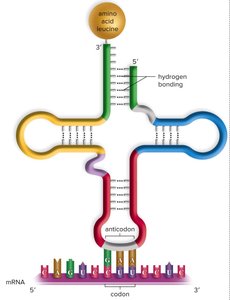
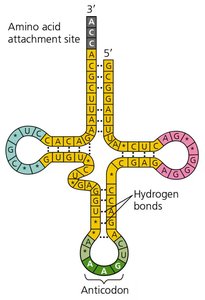
Transfer RNA (tRNA) is a key adaptor molecule in translation. Each tRNA has a specific anticodon that pairs with the mRNA codon and an amino acid attachment site.
Anticodon: Three-nucleotide sequence complementary and antiparallel to the mRNA codon.
Amino acid attachment: Each tRNA is charged with a specific amino acid by its corresponding aminoacyl-tRNA synthetase.
Hydrogen bonding: Anticodon pairs with codon via hydrogen bonds.
Ribosome Structure and Sites
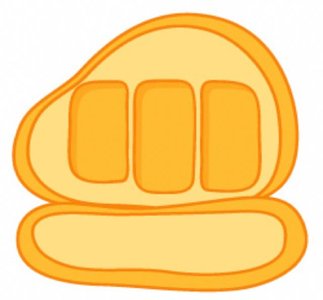
The ribosome is a complex of rRNA and proteins, consisting of a large and small subunit. It has three binding sites for tRNA: the A (aminoacyl), P (peptidyl), and E (exit) sites.
A site: Binds incoming charged tRNA.
P site: Holds tRNA with growing polypeptide chain.
E site: Releases uncharged tRNA.
Steps of Translation
Initiation
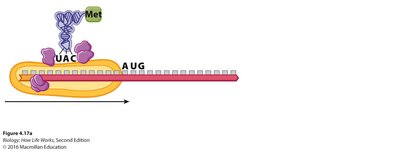
Translation initiation involves the assembly of the ribosome on the mRNA at the start codon (AUG).
Initiation complex: Includes initiation factors, small ribosomal subunit, and tRNAMet.
Start codon recognition: The complex scans for AUG, where the large subunit joins and the tRNAMet occupies the P site.
Elongation
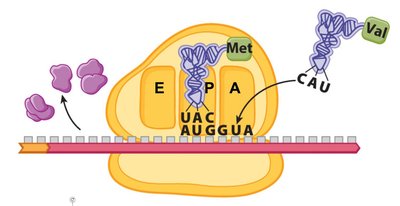
During elongation, the ribosome moves along the mRNA, adding amino acids to the growing polypeptide chain.
Codon recognition: tRNA anticodon pairs with mRNA codon in the A site.
Peptide bond formation: Catalyzed by the ribosome, transferring the polypeptide to the tRNA in the A site.
Translocation: Ribosome shifts, moving tRNAs through the E, P, and A sites.
Termination
Translation ends when a stop codon enters the A site. Release factors bind, causing the polypeptide to be released and the ribosome to dissociate.
Stop codons: UAA, UAG, UGA.
Release factor: Not a tRNA, but recognizes stop codon and triggers release.
Polyribosomes (Polysomes)
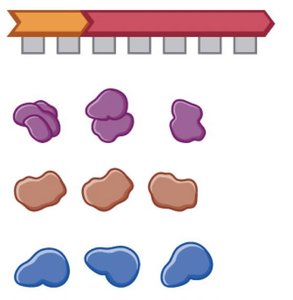
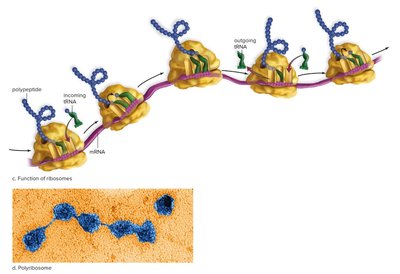
Multiple ribosomes can translate a single mRNA simultaneously, forming a polyribosome. This increases the efficiency of protein synthesis.
Polyribosome: Several ribosomes attached to one mRNA, each synthesizing a polypeptide.
Summary Table: Codon to Amino Acid Mapping
The following table summarizes the relationship between mRNA codons and their corresponding amino acids:
First Base | Second Base | Third Base | Amino Acid |
|---|---|---|---|
A | U | G | Methionine (Start) |
U | A | A | Stop |
C | A | U | Histidine |
C | A | A | Glutamine |
G | G | C | Glycine |
U | U | U | Phenylalanine |
A | A | G | Lysine |
G | A | A | Glutamic acid |
Key Concepts and Exam Questions
Each amino acid is specified by: One or more codons.
tRNA anticodon: Is antiparallel and base pairs with the mRNA codon via hydrogen bonds.
mRNA: Is read and made in the 5' to 3' direction; translation starts at the 5' cap.
Translation direction: Always 5' to 3' along the mRNA.
Polypeptide synthesis: N-terminus to C-terminus.
Summary
Translation is the process of decoding mRNA's triplet code (codons) into amino acids, resulting in the synthesis of proteins. This process is central to gene expression and the flow of genetic information from nucleic acids to functional proteins.
