Indietro
Crystal Field Theory: Spin States, Ligand Field Strength, and Applications
Guida di studio - Impara con i video
 Lezioni curate abbinate al materiale che hai caricato – impara ogni argomento passo dopo passo.
Intro to Crystal Field Theory
- Percorso guidato
 00:59
00:59
- Percorso guidato 02:37
- Percorso guidato 02:01
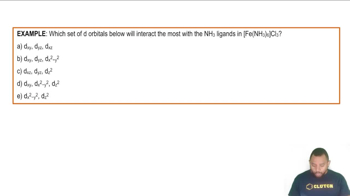
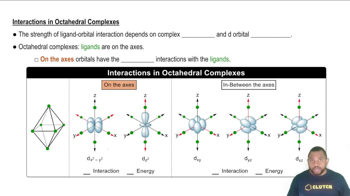
Crystal Field Theory: Octahedral Complexes
- Percorso guidato 00:43
- Percorso guidato 03:04
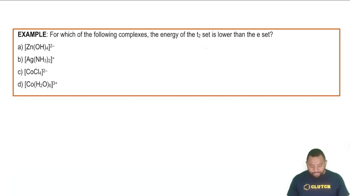
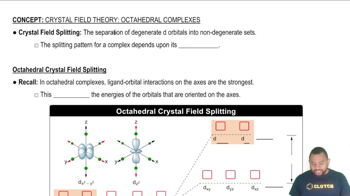
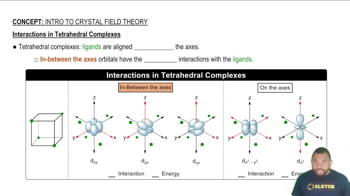
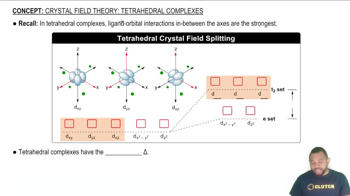
Crystal Field Theory: Tetrahedral Complexes
- Percorso guidato 01:38
- Percorso guidato 01:11
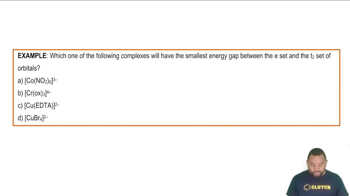
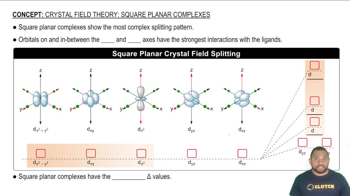
Crystal Field Theory: Square Planar Complexes
- Percorso guidato 02:07
- Percorso guidato 01:17
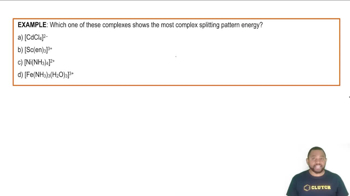
Crystal Field Theory Summary
- Percorso guidato 02:46
- Percorso guidato 03:01
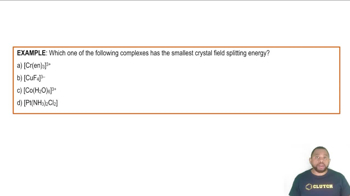
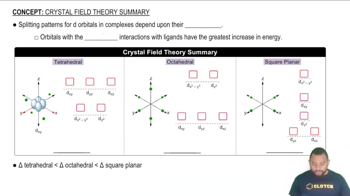
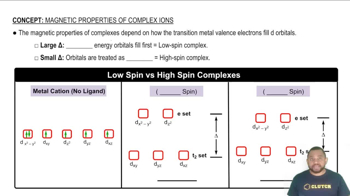
Magnetic Properties of Complex Ions
- Percorso guidato 04:23
- Percorso guidato 01:43
- Percorso guidato 02:14
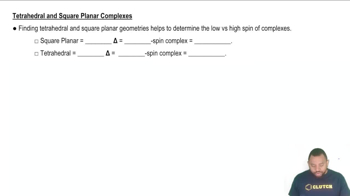
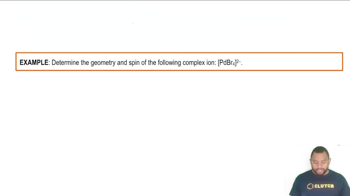
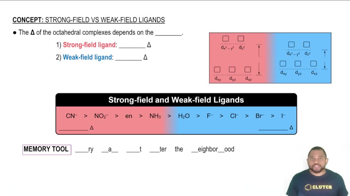
Strong-Field vs Weak-Field Ligands
- Percorso guidato 02:09
- Percorso guidato 02:40