 Indietro
Acids, Bases, and Buffers in Biological Systems: GOB Chemistry Study Notes
Guida di studio - Note intelligenti
 Appunti personalizzati basati sui tuoi materiali, ampliati con definizioni chiave, esempi e contesto.
Acid-Base Definitions
Arrhenius and Brønsted-Lowery Definitions
Acids and bases are fundamental concepts in chemistry, with several definitions used to describe their behavior in aqueous solutions.
Arrhenius Acid: Dissolves in water to release H+ ions.
Arrhenius Base: Dissolves in water to release OH- ions.
Brønsted-Lowery Acid: A hydrogen-containing molecule that donates a proton (H+) to another molecule.
Brønsted-Lowery Base: Any substance that can accept a proton.
When H+ is released in water, it forms a bond with H2O to create the hydronium ion (H3O+).
Conjugate Acid-Base Pairs
Conjugate acid-base pairs differ by a single proton. When an acid donates a proton, it forms its conjugate base; when a base accepts a proton, it forms its conjugate acid.
Example: HCl (aq) + H2O (l) → Cl- (aq) + H3O+ (aq)
Water: Can act as both an acid and a base (amphoteric).
Polyprotic Acids
Polyprotic acids can donate more than one proton. Examples include carbonic acid (H2CO3, diprotic) and phosphoric acid (H3PO4, triprotic).
Self-Ionization of Water and pH
Self-Ionization and Equilibrium
Water can self-ionize, acting as both an acid and a base:
Reaction: H2O (l) + H2O (l) ⇆ OH- (aq) + H3O+ (aq)
Ionization Constant:
In pure water: [H3O+] = [OH-] = 1 × 10⁻⁷ M
pH Scale
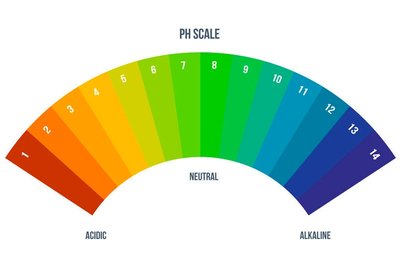
The pH scale is a logarithmic measure of hydronium ion concentration:
Formula:
Neutral: pH = 7
Acidic: pH < 7
Basic (Alkaline): pH > 7
Relationship Between pH and pOH
Formula:
As pH decreases, acidity increases; as pH increases, basicity increases.
Strength of Acids and Bases
Acid and Base Strength
The strength of an acid or base is determined by its dissociation in water, measured by the equilibrium constant (Ka for acids, Kb for bases).
Strong Acids: Ka > 1, dissociate completely (e.g., HCl, HBr, HNO3, H2SO4).
Weak Acids: Ka < 1, do not fully dissociate (e.g., acetic acid, formic acid).
pKa: ; smaller pKa means stronger acid.
Acid Strength Table
Acid | Ka | pKa |
|---|---|---|
HCl (strong) | 1.0 x 10⁶ | -6 |
H3PO4 | 7.5 x 10⁻³ | 2.12 |
CH3COOH | 1.8 x 10⁻⁵ | 4.74 |
NH4+ | 5.6 x 10⁻¹⁰ | 9.25 |
Reactions of Acids and Bases
Neutralization Reactions
Acids react with bases to form salts and water. This reaction is highly exothermic and goes to completion.
General Reaction: Acid + Base → Salt + Water
Example: HCl (aq) + NaOH (aq) → NaCl (aq) + H2O (l)
Other Acid-Base Reactions
Acids react with metals to produce hydrogen gas.
Acids react with metal carbonates/bicarbonates to produce CO2, water, and a salt.
Acids react with ammonia and amines to form ammonium salts.
Ka, pKa, and Buffers
Estimating Acid Species from Ka
The ratio of acid to conjugate base in solution depends on the pH and the acid's pKa.
If pH = pKa, equal amounts of acid and conjugate base are present.
If pH > pKa, mostly conjugate base (deprotonated).
If pH < pKa, mostly acid (protonated).
Henderson-Hasselbalch Equation
Formula:
Used to calculate the pH of buffer solutions.
Titration Curves and Buffering Capacity
Titration curves show how pH changes as H+ ions are dissociated from an acid, typically by adding a strong base. Buffers have the greatest capacity within 1 pH unit of their pKa.
Buffers
A buffer is a combination of substances that resists changes in pH when acid or base is added.
Usually consists of a weak acid and its conjugate base.
Buffering capacity is greatest when pH = pKa ± 1.
Buffering in the Body
Major Buffer Systems
The human body uses several buffer systems to maintain pH homeostasis:
Dihydrogen phosphate (H2PO4-) – Hydrogen phosphate (HPO42-)
Carbonic acid (H2CO3) – Bicarbonate (HCO3-)
Proteins (with pH-sensitive/ionizable groups)
Phosphate Buffering
Blood pH is ~7.4; ratio of HPO42- to H2PO4- is close to 2:1.
Effective buffering occurs near the pKa of 7.2.
Carbonic Acid Buffering
Blood pH = 7.4, pKa = 6.4; 10 times more HCO3- than H2CO3.
CO2 reacts with H2O to form H2CO3, catalyzed by carbonic anhydrase.
Blood Buffering and Homeostasis
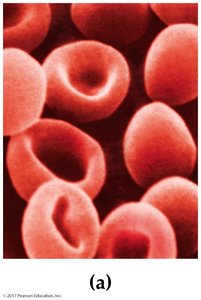
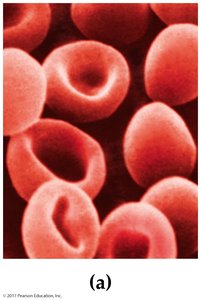
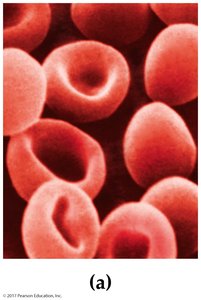
Red blood cells convert CO2 to bicarbonate for transport.
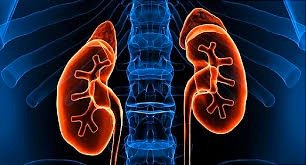
Kidneys filter excess H+ and return HCO3- to extracellular fluids.
Blood pH should remain between 7.35-7.45.
Acidosis: blood pH < 7.35
Alkalosis: blood pH > 7.45
Regulation of Blood pH
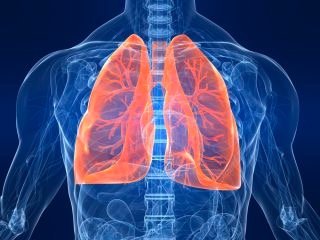
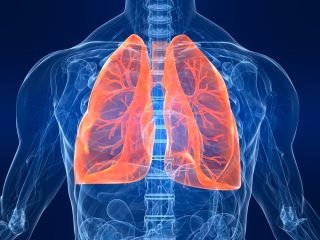
Respiratory changes affect CO2 concentration, shifting equilibrium and altering pH.
Metabolic changes affect [H+] and [HCO3-].
Loss of homeostasis can be respiratory or metabolic in origin.
Summary
Acids donate protons; bases accept protons.
Water can act as both an acid and a base.
pH is a logarithmic measure of hydronium ion concentration.
Strong acids/bases dissociate completely; weak acids/bases do not.
Buffers resist changes in pH and are crucial for biological systems.
Body buffer systems include phosphate, carbonic acid, and proteins, regulated by lungs and kidneys.
