 Indietro
Carboxylic Acids, Esters, Amines, Amides, Thiols, and Phosphate Compounds: Structure, Properties, and Reactions
Guida di studio - Note intelligenti
 Appunti personalizzati basati sui tuoi materiali, ampliati con definizioni chiave, esempi e contesto.
Carboxylic Acids
Structure and Properties
Carboxylic acids are organic compounds containing a carbonyl group (C=O) bonded to a hydroxyl group (–OH). The general formula is R–COOH, where R is a carbon-containing group. Carboxylic acids are more oxidized than aldehydes and ketones.
Intermolecular forces: Carboxylic acids form hydrogen bonds, acting as both donors and acceptors.
Solubility: Usually water-soluble unless the carboxyl group is a small percentage of the molecule's mass (e.g., fatty acids).
Acidity: Carboxylic acids are weak acids, with typical pKa values around 3–4. They can donate a proton to water.
Example: Acetic acid (CH3COOH) is a common carboxylic acid.
Carboxylate Salts
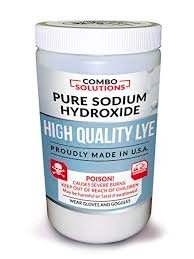
Carboxylate salts are formed by the neutralization of carboxylic acids with metal hydroxides. They are ionic and more water-soluble than their parent acids.
Reaction:
Properties: Ionic interactions replace hydrogen bonding, increasing solubility (e.g., soaps).
Condensation Reactions
Carboxylic acids undergo condensation reactions to form esters and amides.
Esterification:
Amide formation:
Esters
Structure and Properties
Esters are derived from carboxylic acids and alcohols. They have the general formula R–COOR'.
Intermolecular forces: Esters use dipole-dipole interactions and are hydrogen bond acceptors, but not donors.
Solubility: Esters can hydrogen bond with water, but have weaker IMFs than carboxylic acids (more volatile, lower boiling point).
Reactions
Esterification: Formation from carboxylic acids and alcohols.
Hydrolysis: Esters can be hydrolyzed by water or base (saponification) to yield carboxylic acids or carboxylate salts.
Saponification:
Example: Triacylglycerols (triglycerides) are esters formed from fatty acids and glycerol.

Amines
Structure and Classification
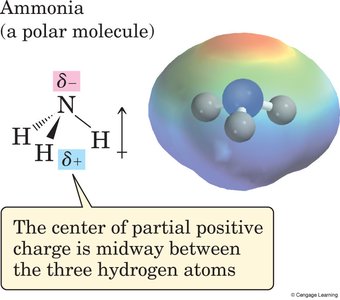
Amines are derivatives of ammonia (NH3) with one or more hydrogen atoms replaced by carbon groups. They are classified as primary (1°), secondary (2°), tertiary (3°), or quaternary (4°) based on the number of carbon groups attached to nitrogen.
Primary amine: R–NH2
Secondary amine: R2–NH
Tertiary amine: R3–N
Quaternary ammonium: R4–N+
Properties
Intermolecular forces: 1° and 2° amines can hydrogen bond (donor and acceptor), 3° amines only accept hydrogen bonds (dipole-dipole interactions).
Solubility: Usually water-soluble unless a large hydrophobic group is present.
Odor: Many amines have strong odors (e.g., putrescine, cadaverine).
Basicity and Amine Salts
Basicity: Amines act as weak bases, accepting protons.
Amine salts: Formed by reaction with acids, resulting in charged, water-soluble ions.
Reaction:
Biological Examples
Amino acids: Basic amino acids (e.g., lysine) contain amines.
Nucleotides: DNA/RNA bases contain heterocyclic amines.
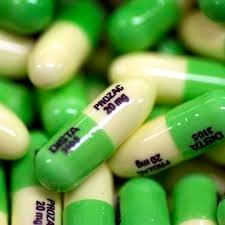
Drugs: Many drugs are amine salts for increased solubility (e.g., fluoxetine-HCl).
Amides
Structure and Formation
Amides are formed from the reaction of carboxylic acids and amines. The general formula is R–CONHR'.
Classification: Primary, secondary, and tertiary amides based on the number of carbon groups attached to nitrogen.
Formation:
Properties
Intermolecular forces: 1° and 2° amides can hydrogen bond; 3° amides use dipole-dipole interactions.
Solubility: Usually water-soluble unless a large hydrophobic group is present.
Basicity: Amides are not basic; the nitrogen lone pair is attracted to the carbonyl carbon.
Biological Example: Peptide Bonds
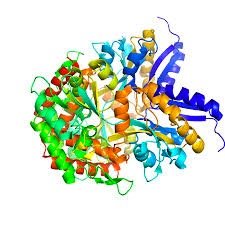
Proteins are synthesized by linking amino acids via amide bonds, called peptide bonds.
Hydrolysis of Amides
Acid hydrolysis: Produces amine salt.
Base hydrolysis: Produces carboxylate salt.
Thiols and Thioesters
Thiols
Thiols are similar to alcohols, but contain sulfur instead of oxygen. The general formula is R–SH.
Properties: Dipole-dipole interactions, do not form hydrogen bonds, less polar than alcohols, more reactive.
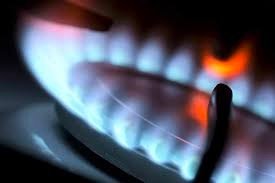
Odor: Characteristic "skunky" smell; used as odorant in natural gas.
Disulfide Formation
Thiols can be oxidized to form disulfides, a reversible reaction important in protein structure.
Reaction:

Thioesters
Thioesters are similar to esters, but contain sulfur in place of the single-bonded oxygen. They are formed from carboxylic acids and thiols.
Biological importance: Thioesters (e.g., acetyl-CoA) are high-energy compounds used in metabolism.
Phosphate Compounds
Phosphoesters and Phosphoanhydrides
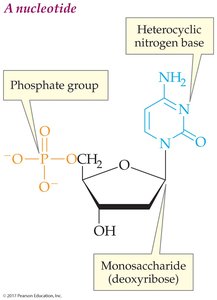
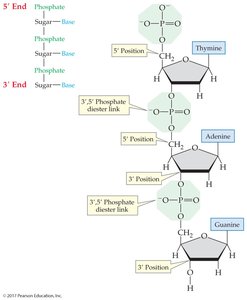
Phosphate compounds are essential in biochemistry. Phosphoesters contain a C–O–P bond, while phosphoanhydrides contain a P–O–P bond.
Phosphoester: Formed from reaction of phosphate with alcohol.
Phosphoanhydride: Formed from reaction of two phosphates, eliminating water.
ATP and Energy
ATP (adenosine triphosphate) contains phosphoanhydride bonds. Breaking these bonds releases energy for cellular processes.
Hydrolysis:
Phosphorylation: Transfer of phosphate from ATP to another molecule (e.g., glucose in glycolysis).
Summary Table: Carbonyl-Containing Groups
Group | Structure | Key Properties |
|---|---|---|
Aldehyde | R–CHO | Moderate polarity, no hydrogen bond donor |
Ketone | R–CO–R' | Moderate polarity, no hydrogen bond donor |
Carboxylic Acid | R–COOH | Hydrogen bond donor and acceptor, weak acid |
Ester | R–COOR' | Hydrogen bond acceptor, more volatile |
Amide | R–CONHR' | Hydrogen bond donor and acceptor (1°, 2°), not basic |
Thioester | R–COSR' | Contains sulfur, high energy in metabolism |
Phosphoester | R–O–P | Phosphate group, negative charge |
Phosphoanhydride | P–O–P | High energy, found in ATP |
Additional info: These notes cover the structure, properties, and reactions of carboxylic acids, esters, amines, amides, thiols, thioesters, and phosphate compounds, as relevant to GOB Chemistry. Biological examples and applications are included for context.
