 Indietro
Biochemical Identification of Bacteria: Enzyme Activity and Differential Media
Guida di studio - Note intelligenti
 Appunti personalizzati basati sui tuoi materiali, ampliati con definizioni chiave, esempi e contesto.
Biochemical Testing in Bacterial Identification
Overview of Biochemical Testing
Biochemical testing is a fundamental method for identifying bacterial species based on their unique metabolic activities. While staining techniques reveal cell morphology and structural features, biochemical tests provide insight into the enzymatic capabilities of bacteria, which are determined by their genetic makeup.
Key Point: Biochemical tests detect the presence or absence of specific enzymes, allowing differentiation between bacterial species.
Key Point: Differential media are used, containing additives that produce observable color changes when certain biochemical reactions occur.
Example: Starch agar and skim milk agar are examples of differential media used to test for enzyme activity.
Classification of Enzymes
Exoenzymes vs. Endoenzymes
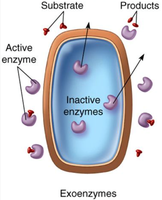
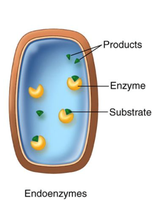
Bacterial enzymes are classified based on their location and function. Exoenzymes are secreted outside the cell to break down large molecules, while endoenzymes function within the cell to further process nutrients.
Exoenzymes: Break down large nutrients in the environment so they can enter the cell.
Endoenzymes: Catalyze reactions inside the cell, yielding energy or building blocks for cellular synthesis.
Starch Hydrolysis
Mechanism and Testing
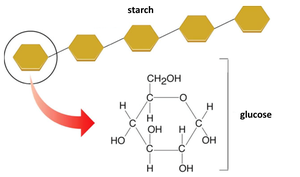
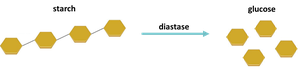
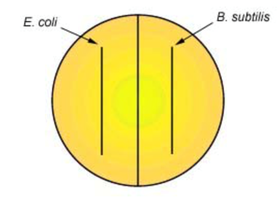
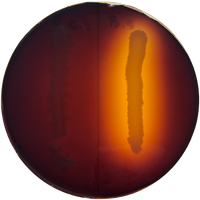
Starch is a polymer of glucose. Some bacteria produce exoenzymes such as alpha-amylase and alpha-1-6 glucosidase to hydrolyze starch into glucose monomers, which can then be utilized for energy.
Key Point: Starch hydrolysis is catalyzed by exoenzymes.
Key Point: The presence of these enzymes is tested by inoculating starch agar and adding iodine after growth.
Example: Bacillus subtilis produces amylase and hydrolyzes starch, while Escherichia coli does not.
Protein Hydrolysis (Proteolysis)
Mechanism and Testing
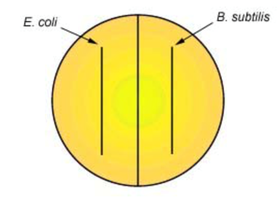
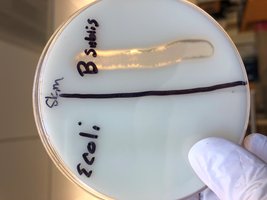
Proteins are hydrolyzed by proteases into peptides and amino acids. The ability to hydrolyze proteins is tested using skim milk agar, which contains casein, the protein responsible for milk's opacity.
Key Point: Proteolysis is the hydrolysis of proteins by proteases.
Key Point: A clear zone around bacterial growth indicates casein hydrolysis.
Example: Bacillus subtilis produces protease and hydrolyzes casein; Escherichia coli does not.
Carbohydrate Fermentation
Fermentation Pathways and Testing
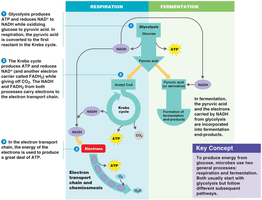
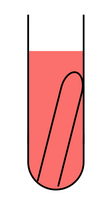
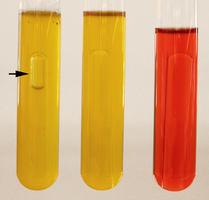
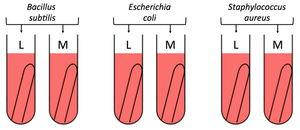
Bacteria metabolize carbohydrates for energy via respiration or fermentation. Facultative anaerobes and anaerobes often ferment carbohydrates, producing acid and/or gas as end products. These products are detected using media containing a carbohydrate, a pH indicator (phenol red), and a Durham tube for gas detection.
Key Point: Fermentation produces acid (detected by color change) and gas (detected in Durham tube).
Key Point: Positive fermentation turns phenol red yellow; negative remains red.
Example: Different bacteria ferment lactose or maltose, aiding identification.
Indole and Hydrogen Sulfide Production
SIM Medium Testing
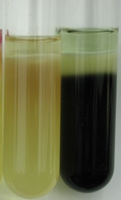
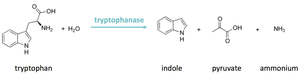
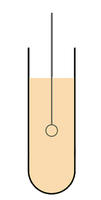
The SIM (Sulfide, Indole, Motility) medium is used to test for hydrogen sulfide (H2S) and indole production. H2S is produced by bacteria that degrade cysteine or use sulfur as an electron acceptor, resulting in a black precipitate. Indole is produced from tryptophan by the enzyme tryptophanase and detected by adding Kovac's reagent, which turns red if indole is present.
Key Point: H2S production is indicated by black color in SIM medium.
Key Point: Indole production is indicated by a red color after adding Kovac's reagent.
Example: Proteus mirabilis produces H2S; Escherichia coli produces indole.
Catalase Activity
Testing for Catalase
Catalase is an enzyme that protects bacteria from oxidative damage by breaking down hydrogen peroxide (H2O2) into water and oxygen. Catalase activity is tested by adding H2O2 to bacterial cells and observing bubble formation, which indicates oxygen release.
Key Point: Catalase-positive bacteria produce bubbles when exposed to hydrogen peroxide.
Key Point: Catalase protects cells from reactive oxygen species.
Example: Staphylococcus aureus is catalase-positive; Streptococcus lactis is catalase-negative.
Summary Table: Biochemical Tests for Bacterial Identification
Test | Enzyme | Medium | Positive Result | Negative Result |
|---|---|---|---|---|
Starch Hydrolysis | Amylase, Glucosidase | Starch agar + iodine | Clear zone | Dark brown/blue-black |
Protein Hydrolysis | Protease | Skim milk agar | Clear zone | White/opaque |
Carbohydrate Fermentation | Various | Phenol red broth + Durham tube | Yellow (acid), gas in tube | Red, no gas |
Indole Production | Tryptophanase | SIM medium + Kovac's reagent | Red color | No color change |
Hydrogen Sulfide Production | Various | SIM medium | Black precipitate | No black color |
Catalase Activity | Catalase | Slide/agar + H2O2 | Bubbles | No bubbles |
Additional info: These tests are essential for clinical and environmental microbiology, enabling rapid identification and differentiation of bacterial species based on their metabolic profiles.
