 Indietro
LAB 13-1-Biochemical Reactions in Microbial Identification: Carbohydrate Fermentation, Gelatin Hydrolysis, and Nitrate Reduction
Guida di studio - Note intelligenti
 Appunti personalizzati basati sui tuoi materiali, ampliati con definizioni chiave, esempi e contesto.
Lab 13 -1: Study guide - part 1 -Biochemical Reactions in Microbial Identification
Introduction
Biochemical tests are essential tools in microbiology for distinguishing bacterial species based on their metabolic activities. These tests exploit differences in enzyme production and substrate utilization, providing a biochemical fingerprint for microbial identification. Specialized media and indicators are used to detect specific reactions, aiding in the classification and identification of unknown organisms.
Carbohydrate Fermentation Reactions
Biological Basis
Carbohydrate fermentation tests assess a microbe's ability to metabolize specific sugars for energy. Bacteria may utilize carbohydrates via aerobic respiration or fermentation, depending on their oxygen requirements and genetic capabilities.
Strict aerobes oxidize sugars to CO2 and H2O using oxygen as the final electron acceptor.
Facultative anaerobes and strict anaerobes perform fermentation, using organic intermediates as electron acceptors.
Fermentation produces organic acids, alcohols, aldehydes, and gases (e.g., CO2), yielding less energy than aerobic respiration.
The ability to ferment specific carbohydrates and the nature of end products are genetically determined.
Phenol Red Carbohydrate Broth
This test medium contains a single sugar, non-fermentable nitrogen sources, phenol red pH indicator, and a Durham tube to collect gas.
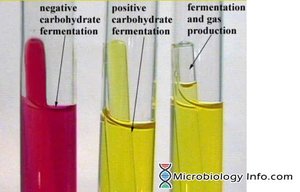
Phenol red color changes: Yellow (< pH 6.8) = acid production; Red (pH 6.8–7.4) = no reaction; Pink (> pH 7.4) = alkaline production.
Durham tube collects gas (CO2).
Growth is indicated by turbidity.
Positive fermentation: phenol red turns yellow due to acid production.
Negative fermentation: intense pink color from protein degradation and ammonia production.
Gas production: bubble in Durham tube.
Example: Escherichia coli ferments glucose, producing acid and gas (yellow color, bubble in Durham tube).
Interpretation and Applications
Patterns of fermentation across sugars (e.g., glucose, lactose, sucrose) help identify bacterial species.
Acid production lowers pH, turning phenol red yellow; gas production is indicated by a bubble.
Alkaline reaction (pink) indicates protein utilization rather than sugar fermentation.
Gelatin Hydrolysis
Biological Basis
Gelatin hydrolysis tests for the presence of gelatinase, an extracellular proteolytic enzyme that degrades gelatin into peptides and amino acids. This activity is associated with protein digestion and can be linked to tissue invasion in pathogenic bacteria.
Gelatin is a protein derived from collagen.
Bacteria secrete enzymes (e.g., amylases, lipases, gelatinases) to break down macromolecules for nutrient uptake.
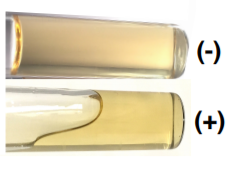
Positive result: liquefaction of the gelatin medium.
Negative result: medium remains solid.
Test Procedure
Inoculate nutrient gelatin deep with an inoculating needle.
Incubate at room temperature to prevent melting of gelatin.
Inspect for liquefaction by tilting the tube; results may take up to one week.
Example: Bacillus species are commonly positive for gelatin hydrolysis; Escherichia coli and Micrococcus luteus are often negative.
Interpretation and Applications
Gelatinase activity distinguishes species and may indicate pathogenic potential.
Incubation temperature is kept below 37°C to avoid melting gelatin; chilling can help confirm true hydrolysis.
Nitrate Reduction Test
Biological Basis
The nitrate reduction test identifies bacteria capable of using nitrate (NO3−) as a terminal electron acceptor in anaerobic respiration. Reduction may yield nitrite (NO2−), nitrogen gas (N2), or other products.
Nitrate-reducing organisms possess nitrate reductase and may further reduce nitrite to nitrogenous gases.
Test medium contains nitrate broth and a Durham tube for gas collection.
Test Procedure and Interpretation
Inoculate nitrate broth and incubate at 37°C.
Observe for gas in Durham vial (indicates reduction to N2).
If no gas, add sulfanilic acid and dimethyl-naphthylamine to test for nitrite.
Red color after reagents: positive for nitrate reduction to nitrite.
No color: add zinc powder.
Red after zinc: negative (zinc reduces remaining nitrate to nitrite).
No color after zinc: positive (nitrate reduced beyond nitrite).
Example: Escherichia coli may reduce nitrate to nitrite; Pseudomonas aeruginosa may reduce nitrate to nitrogen gas.
Applications
Distinguishes bacteria based on anaerobic respiration pathways.
Helps identify species with similar morphology but different metabolic capabilities.
Summary Table: Biochemical Tests and Their Interpretations
Test | Positive Result | Negative Result | Key Indicator |
|---|---|---|---|
Carbohydrate Fermentation | Yellow broth, bubble in Durham tube | Red or pink broth, no bubble | Phenol red color change, gas production |
Gelatin Hydrolysis | Medium liquefied | Medium solid | Physical state of gelatin |
Nitrate Reduction | Gas in Durham tube, red after reagents, no color after zinc | Red after zinc | Color change, gas production |
Key Equations
Fermentation:
Nitrate Reduction:
Conclusion
Biochemical tests such as carbohydrate fermentation, gelatin hydrolysis, and nitrate reduction are fundamental for microbial identification. They reveal metabolic capabilities, enzyme production, and respiration pathways, providing critical information for distinguishing bacterial species in clinical and environmental microbiology.
