 Indietro
Biotechnology and Recombinant DNA: Tools and Applications in Microbiology
Guida di studio - Note intelligenti
 Appunti personalizzati basati sui tuoi materiali, ampliati con definizioni chiave, esempi e contesto.
Biotechnology and Recombinant DNA
Introduction to Biotechnology
Biotechnology is the use of microorganisms, cells, or cell components to produce useful products. This field encompasses the production of foods, antibiotics, vitamins, and enzymes, and is foundational to modern microbiology and medicine.
Biotechnology: The application of biological systems or living organisms to develop or make products.
Recombinant DNA (rDNA) technology: The insertion or modification of genes to produce desired proteins or traits in organisms.
Examples: Production of human insulin, pest-resistant crops, and industrial enzymes.
Vectors and Cloning
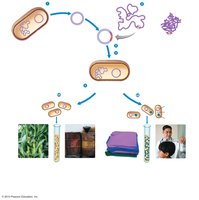
Vectors are self-replicating DNA molecules used to transfer foreign genetic material into a host cell. Cloning involves creating a population of cells, all carrying the new gene of interest.
Vector: A DNA molecule (e.g., plasmid, bacteriophage) used to carry foreign genetic material into another cell.
Clone: A group of identical cells or organisms derived from a single ancestor, each containing the recombinant DNA.
Genetic Modification Procedure
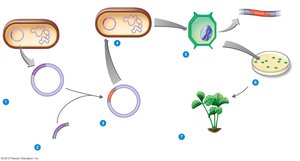
The process of genetic modification involves isolating a vector, inserting a gene of interest, and introducing the recombinant DNA into a host cell. The host cells are then cloned to produce either copies of the gene or the protein product.
Applications of rDNA Technology
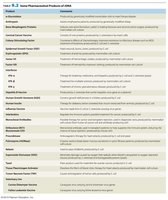
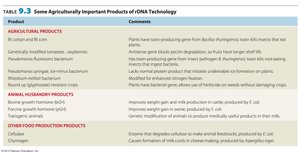
Recombinant DNA technology has enabled the production of a wide range of pharmaceutical and agricultural products.
Pharmaceuticals: Human insulin, growth hormone, vaccines, and clotting factors.
Agriculture: Pest-resistant crops, herbicide resistance, and improved nutritional content.
Tools of Biotechnology
Selection and Mutation
Selection involves culturing naturally occurring microbes that produce a desired product, while mutation uses mutagens to create new traits. Site-directed mutagenesis allows for precise changes in DNA to alter protein function.
Selection: Isolating organisms with naturally occurring beneficial traits.
Mutation: Inducing genetic changes to create new traits.
Site-directed mutagenesis: Targeted changes to specific DNA sequences.
Restriction Enzymes
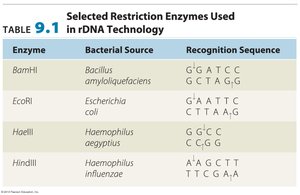
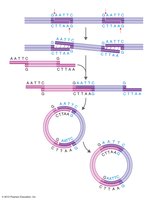
Restriction enzymes are proteins that cut DNA at specific sequences, enabling the manipulation of genetic material. They are essential for creating recombinant DNA molecules.
Function: Cut double-stranded DNA at specific recognition sites.
Host protection: Bacterial DNA is protected from its own restriction enzymes by methylation.
Mechanism of Restriction Enzymes
Restriction enzymes generate DNA fragments with 'sticky ends' that can be joined with fragments from other sources, facilitating the creation of recombinant DNA.
Vectors in Genetic Engineering
Vectors are used to transfer new DNA into host cells. Shuttle vectors can function in multiple species, and plasmids and viruses are common examples.
Shuttle vectors: Plasmids that can replicate in several different species.
Plasmids: Circular DNA molecules used extensively in cloning.
Polymerase Chain Reaction (PCR)
PCR is a technique used to amplify specific DNA sequences, making millions of copies from a small initial sample. It is essential for cloning, sequencing, diagnostics, and pathogen detection.
Steps: Denaturation, annealing, and extension, repeated in cycles.
Applications: Disease diagnosis, forensic analysis, and research.
Techniques of Genetic Modification
Genomic Libraries
Genomic libraries are collections of DNA fragments representing an organism's entire genome, stored in vectors such as plasmids or phages.
Construction: DNA is fragmented, inserted into vectors, and introduced into host cells.
Purpose: To store and access genetic information for cloning and analysis.
Complementary DNA (cDNA)
cDNA is synthesized from mRNA using reverse transcriptase and is important because it lacks introns, making it suitable for expression in prokaryotic systems.
Process: mRNA is reverse transcribed to DNA, which can then be cloned.
Advantage: Only coding sequences (exons) are present.
Inserting Foreign DNA into Cells
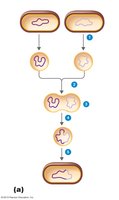
Several methods exist for introducing foreign DNA into host cells, including electroporation, transformation, protoplast fusion, gene gun, and microinjection.
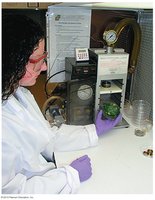
Electroporation: Uses electrical pulses to introduce DNA.
Transformation: Uptake of naked DNA by cells.
Protoplast fusion: Fusion of cells without cell walls.
Gene gun: Physically shoots DNA-coated particles into cells.
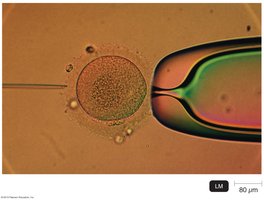
Microinjection: Direct injection of DNA into cells.
Screening for Recombinant Cells
Blue-white screening is a common method for identifying bacteria that have taken up recombinant plasmids. Colonies with foreign DNA disrupt the lacZ gene and appear white, while non-recombinant colonies are blue.
Colony Hybridization
Colony hybridization uses labeled DNA probes to identify colonies containing a gene of interest. This technique is essential for selecting successful recombinants from a large population.
Production and Applications of rDNA
Microbial Hosts for Production
Different organisms are used as hosts for producing recombinant products, each with specific advantages and limitations.
E. coli: Easy to grow, well-characterized genomics, but may produce endotoxins.
Saccharomyces cerevisiae (yeast): Suitable for expressing eukaryotic genes, easy to grow.
Plant and mammalian cells: Useful for expressing complex eukaryotic proteins, but may be harder to culture.
Therapeutic Applications
rDNA technology is used to produce human proteins, subunit vaccines, and for gene therapy. Gene silencing techniques, such as siRNA, can block the expression of harmful genes.
Scientific Applications
rDNA technology enables genome sequencing, DNA fingerprinting, and the study of gene function through reverse genetics.
DNA Fingerprinting
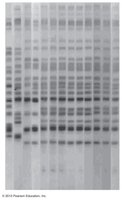
DNA fingerprinting involves digesting DNA with restriction enzymes, separating fragments by electrophoresis, and visualizing the pattern for identification purposes.
Forensic and Agricultural Applications
Forensic Microbiology
PCR and DNA analysis are used in forensic investigations to identify organisms and trace sources of infection or contamination. Proper evidence handling and chain of custody are critical.
Genetic Engineering in Plants
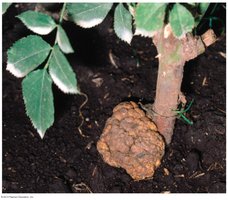
Agrobacterium tumefaciens and its Ti plasmid are used to introduce foreign genes into plants, creating genetically modified crops with desirable traits such as pest resistance or improved nutrition.
Safety and Ethical Issues
Considerations in rDNA Technology
There are important safety and ethical considerations in the use of recombinant DNA technology, including the potential for accidental release, the safety of genetically modified organisms, and privacy concerns regarding genetic information.
