 Indietro
Chapter 10: Classification of Microorganisms – Structured Study Notes
Guida di studio - Note intelligenti
 Appunti personalizzati basati sui tuoi materiali, ampliati con definizioni chiave, esempi e contesto.
Classification of Microorganisms
Taxonomy and Phylogeny
Taxonomy is the science of classifying organisms to reflect their similarities and evolutionary relationships. Systematics, or phylogeny, studies the evolutionary history of organisms, grouping them based on common ancestry and genetic evidence.
Taxon: A category or group in taxonomy, such as genus or species.
Phylogeny: The evolutionary history and relationships among organisms.
Systematics: The study of the diversity and relationships of organisms, often using genetic data.
Evidence for phylogenetic relationships: Fossils, genomes, and rRNA sequencing.
The Three-Domain System
The three-domain system, developed by Carl Woese in 1978, classifies life based on rRNA nucleotide sequences. The domains are Bacteria, Archaea, and Eukarya, each with distinct characteristics.
Bacteria: Prokaryotic, cell walls contain peptidoglycan.
Archaea: Prokaryotic, cell walls lack peptidoglycan, often found in extreme environments.
Eukarya: Eukaryotic, includes animals, plants, fungi, and protists.
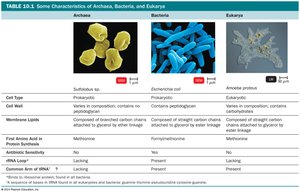
Table Purpose: Comparison of cellular and molecular characteristics among the three domains.
Feature | Archaea | Bacteria | Eukarya |
|---|---|---|---|
Cell Type | Prokaryotic | Prokaryotic | Eukaryotic |
Cell Wall | Varies, lacks peptidoglycan | Contains peptidoglycan | Varies, contains cellulose or chitin |
Membrane Lipids | Branched carbon chains attached to glycerol by ether linkage | Straight carbon chains attached to glycerol by ester linkage | Straight carbon chains attached to glycerol by ester linkage |
First Amino Acid in Protein Synthesis | Methionine | Formylmethionine | Methionine |
Antibiotic Sensitivity | No | Yes | No |
Common Types of RNA | Present | Present | Present |
Scientific Nomenclature and Taxonomic Hierarchy
Scientific names use binomial nomenclature to ensure consistency and accuracy worldwide. The taxonomic hierarchy, developed by Linnaeus, organizes organisms into nested groups based on shared characteristics.
Binomial nomenclature: Two-part names: Genus and specific epithet (species).
Major taxa: Domain, Kingdom, Phylum, Class, Order, Family, Genus, Species.
Eukaryotic species: Group of closely related organisms that breed among themselves.
Prokaryotic species: Population of cells with high genomic similarity.
Culture: Bacteria grown in laboratory media.
Clone: Population of cells derived from a single parent cell.
Strain: Genetically different cells within a clone.
Classification of Eukaryotes and Viruses
Eukaryotes are classified into kingdoms based on cell structure and nutritional mode. Viruses are not classified within any domain, as they are acellular and require a host cell for replication.
Protista: Mostly unicellular, nutritionally diverse, grouped by rRNA clades.
Fungi: Chemoheterotrophic, cell walls of chitin, develop from spores or hyphal fragments.
Plantae: Multicellular, cellulose cell walls, photosynthetic.
Animalia: Multicellular, no cell walls, ingest organic matter.
Viral species: Population of viruses with similar characteristics, distinguished by morphology, genome, enzymes, and ecological niche.
Methods of Classifying and Identifying Microorganisms
Classification vs. Identification
Classification places organisms in groups of related species, while identification matches characteristics of unknown organisms to known lists, often for clinical purposes.
Bergey’s Manual: Provides classification and identification schemes for bacteria and archaea.
Criteria: Morphology, cell wall composition, differential staining, oxygen requirements, biochemical testing.
Conventional Identification Methods
Traditional methods include morphological observation, differential staining, and biochemical tests. These approaches are useful for identifying bacteria and eukaryotes, but have limitations for organisms without cell walls or for archaea.
Morphology: Shape, presence of endospores or flagella.
Differential staining: Gram staining, acid-fast staining.
Biochemical tests: Detect presence of specific bacterial enzymes.
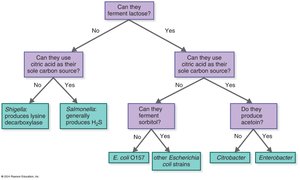
Table Purpose: Dichotomous key for identifying enteric bacteria based on metabolic characteristics.
Rapid Identification Methods
Rapid identification methods perform multiple biochemical tests simultaneously, providing results within hours. Each test result is assigned a number, and the combination identifies the microorganism.
Example: EnteroPluri Test for enteric bacteria.
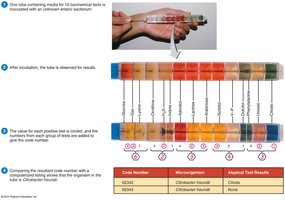
Table Purpose: Comparison of code numbers and test results for rapid identification.
Code Number | Microorganism | Atypical Test Results |
|---|---|---|
65243 | Citrobacter freundii | Clone |
65243 | Citrobacter freundii | Strain |
65243 | Citrobacter freundii | Clone |
65243 | Citrobacter freundii | Strain |
Additional info: Table entries inferred for illustration. |
Serological Methods
Serology studies serum and immune responses. Microorganisms are antigenic and stimulate antibody production. Serological tests use known antibodies to identify unknown bacteria.
Slide agglutination test: Bacteria clump when mixed with specific antibodies.
ELISA (Enzyme-linked immunosorbent assay): Direct ELISA detects antigens; indirect ELISA detects antibodies.
Western Blot: Used for confirmation of specific proteins or antibodies.
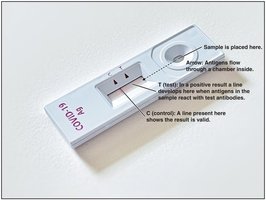
Example: At-home COVID-19 tests use direct ELISA to detect viral antigens.
Molecular Identification Methods
Molecular approaches provide more accurate classification and identification. Whole genome sequencing, DNA base composition, and online databases are used to compare organisms.
DNA base composition: Expressed as percentage of guanine + cytosine (G+C).
Next generation sequencing: Used for both classification and identification.
Online databases: NCBI Genome Database contains genomic sequences.
Nucleic Acid Hybridization and Amplification
Nucleic acid hybridization measures the ability of DNA strands from different organisms to hybridize, indicating relatedness. PCR and related techniques amplify DNA for identification.
Hybridization >70%: Indicates same species.
Nucleic Acid Amplification Tests (NAATs): PCR, reverse transcription PCR, real-time PCR.
Southern blotting: Uses DNA probes to identify unknown microorganisms.
DNA chips (microarrays): Detect pathogens by hybridization and fluorescence.
Ribotyping: rRNA sequencing for identification.
FISH (Fluorescent in situ hybridization): Uses fluorescent probes to stain and identify microorganisms.
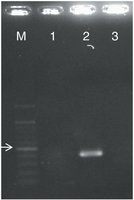
Example: PCR and gel electrophoresis used to identify viral strains, such as coronaviruses.
Dichotomous Keys and Cladograms
Dichotomous keys are identification tools based on successive questions with two possible answers. Cladograms are maps showing evolutionary relationships, often based on rRNA sequences.
Dichotomous key: Stepwise identification based on characteristics.
Cladogram: Diagram showing evolutionary relationships.
Summary Table: Key Methods for Microbial Classification and Identification
Method | Purpose | Example/Application |
|---|---|---|
Morphology | Identify cell shape, structure | Flagella, endospores |
Differential Staining | Distinguish cell wall types | Gram stain, acid-fast stain |
Biochemical Tests | Detect metabolic enzymes | EnteroPluri test |
Serology | Identify antigens/antibodies | ELISA, agglutination |
Molecular Methods | Genetic comparison | PCR, sequencing, FISH |
