 Indietro
Lecture Chpt 7 Microbial Genetics: Structure, Replication, and Expression of Genomes
Guida di studio - Note intelligenti
 Appunti personalizzati basati sui tuoi materiali, ampliati con definizioni chiave, esempi e contesto.
Microbial Genetics
Introduction to Genetics and Genomes
Genetics is the study of inheritance and inheritable traits as expressed in an organism’s genetic material. The genome refers to the entire genetic complement of an organism, including its genes and nucleotide sequences.
The Structure of Nucleic Acids
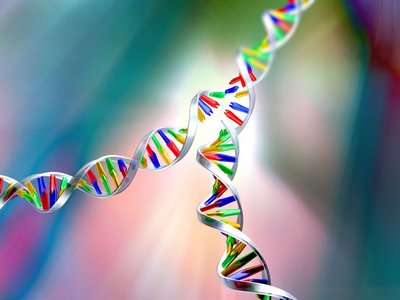
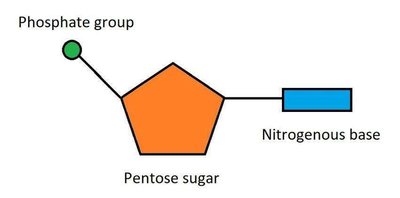
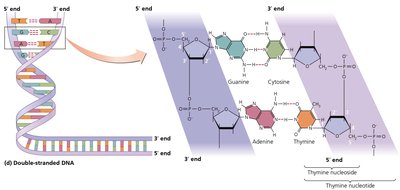
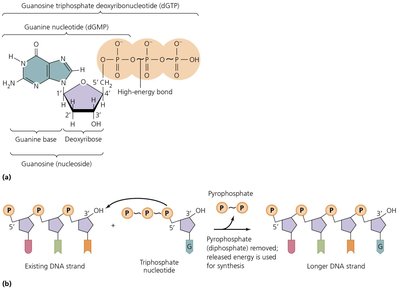
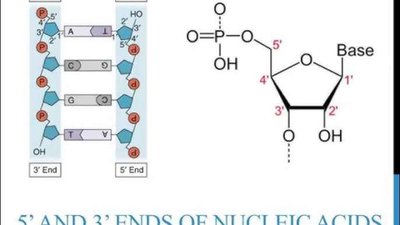
Nucleic acids are polymers of nucleotides, which are the fundamental units of genetic material. Each nucleotide consists of a phosphate group, a pentose sugar, and a nitrogenous base. The length of DNA is commonly expressed in base pairs.
Nucleotide: The basic building block of DNA and RNA, composed of a phosphate, pentose sugar (deoxyribose in DNA, ribose in RNA), and a nitrogenous base.
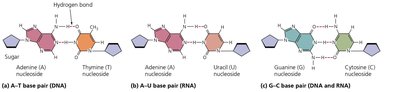
Base Pairing: In DNA, adenine (A) pairs with thymine (T), and cytosine (C) pairs with guanine (G). In RNA, uracil (U) replaces thymine.
Prokaryotic Genomes
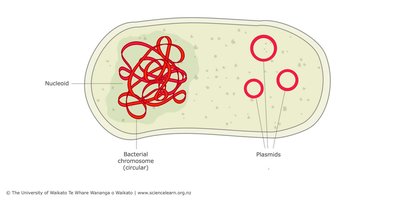
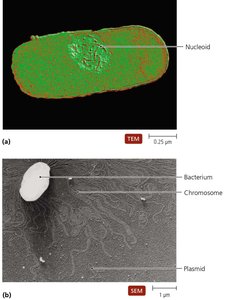
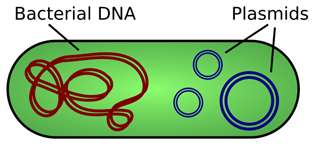
Prokaryotic genomes are typically composed of a single, circular chromosome located in the nucleoid region. Prokaryotic cells are haploid, meaning they possess only one chromosome copy. In addition to chromosomes, prokaryotes often contain plasmids—small, circular DNA molecules that replicate independently and can confer survival advantages.
Plasmids: Non-essential DNA molecules that may carry genes for antibiotic resistance, virulence, or other traits.
Types of Plasmids: Fertility plasmids, resistance plasmids, bacteriocin plasmids, and virulence plasmids.
Eukaryotic Genomes
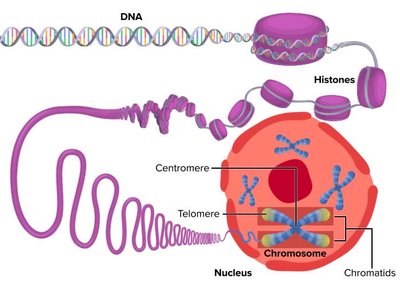
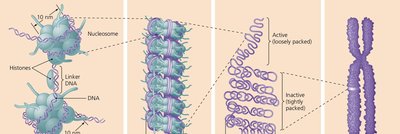
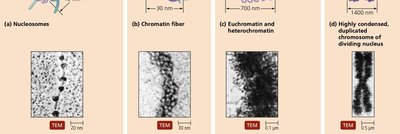
Eukaryotic genomes are more complex, typically consisting of multiple linear chromosomes sequestered within the nucleus. Eukaryotic cells are often diploid, containing two copies of each chromosome. DNA is tightly packaged with histone proteins to form chromatin.
Nuclear Chromosomes: Linear DNA molecules found in the nucleus.
Histones: Proteins around which DNA is wrapped for packaging.
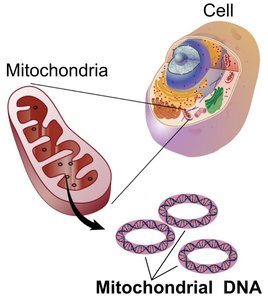
Extranuclear DNA: Found in mitochondria and chloroplasts, resembling prokaryotic chromosomes.
Comparison of Microbial Genomes
The following table summarizes key differences among Eukarya, Archaea, and Bacteria:
Characteristic | Eukarya | Archaea | Bacteria |
|---|---|---|---|
Number of Chromosomes | Two or more, typically diploid | One (haploid) | Single (haploid) copies of one or more |
Plasmids Present? | In some fungi, algae, and protozoa | In some cells | In some cells; frequently more than one per cell |
Type of Nucleic Acid | Linear dsDNA in nucleus and chloroplasts; circular dsDNA in mitochondria and plasmids | Circular dsDNA | Circular or linear dsDNA |
Location of DNA | In nucleus, mitochondria, chloroplasts, and plasmids in cytosol | In nucleoid of cytoplasm and in plasmids | In nucleoid of cytoplasm and in plasmids |
Histones Present? | Yes, in nuclear chromosomes | Yes | No, though chromosome is associated with a small amount of nonhistone protein |
DNA Replication
Semiconservative Replication
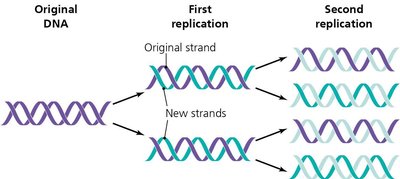
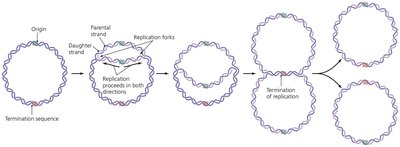
DNA replication is semiconservative, meaning each new DNA molecule consists of one original (parental) strand and one newly synthesized (daughter) strand. The complementary structure of the two strands is key to accurate replication.
Mechanism and Enzymes of DNA Replication
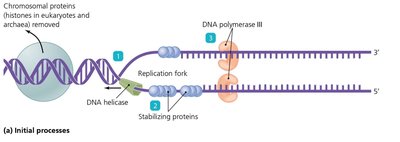
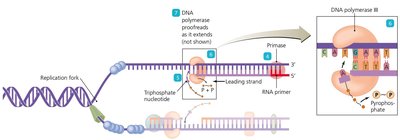
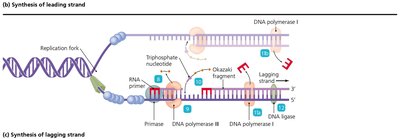
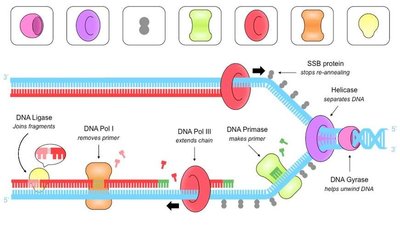
Replication begins at the origin and proceeds in the 5′ to 3′ direction. Because DNA strands are antiparallel, the leading strand is synthesized continuously, while the lagging strand is synthesized discontinuously in Okazaki fragments. Several enzymes are involved:
DNA Polymerase: Synthesizes new DNA strands.
Helicase: Unwinds the DNA helix.
Gyrase and Topoisomerase: Remove supercoils in DNA.
Ligase: Joins Okazaki fragments.
Differences in Eukaryotic DNA Replication
Uses four DNA polymerases
Thousands of replication origins
One direction (not bidirectional)
Shorter Okazaki fragments
Plant and animal cells methylate only cytosine bases
No gyrases
Gene Function: Genotype and Phenotype
Relationship Between Genotype and Phenotype
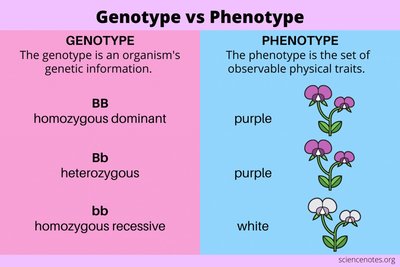
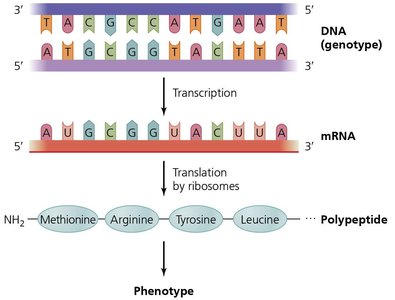
The genotype is the set of genes in the genome, while the phenotype refers to the physical features and functional traits of the organism. Genotype determines phenotype through the processes of transcription and translation.
Gene Expression: Transcription and Translation
The Central Dogma of Genetics
The central dogma describes the flow of genetic information: DNA is transcribed to RNA, which is then translated to form polypeptides.
Transcription: Information in DNA is copied as RNA.
Translation: Polypeptides are synthesized from RNA.
Transcription: Process and Types of RNA
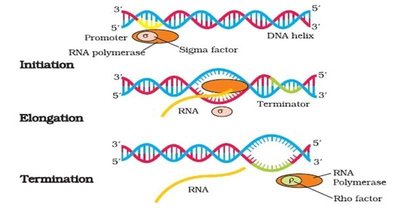
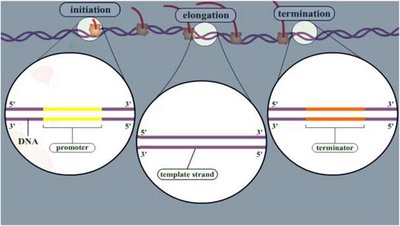
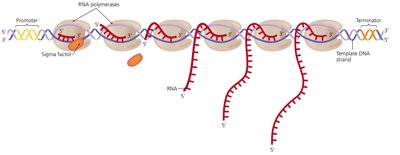
Transcription occurs in three steps: initiation, elongation, and termination. Six types of RNA are transcribed from DNA: RNA primers, messenger RNA (mRNA), ribosomal RNA (rRNA), transfer RNA (tRNA), regulatory RNA, and ribozymes.
Transcriptional Differences in Eukaryotes
Occurs in the nucleus (not nucleoid)
Also occurs in mitochondria and chloroplasts
Three types of nuclear RNA polymerases
Numerous transcription factors
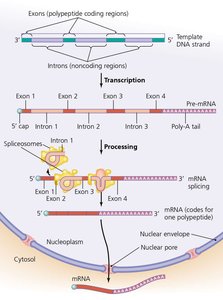
mRNA is processed before translation (capping, polyadenylation, splicing)
Translation: Genetic Code and Process
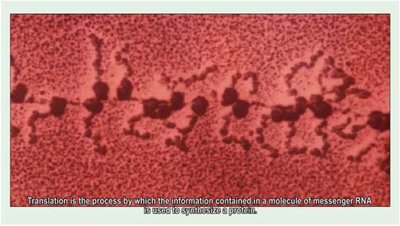
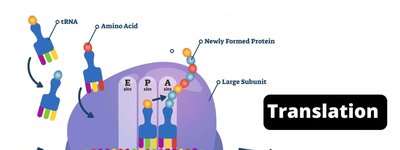
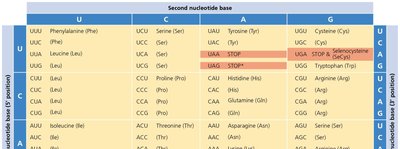
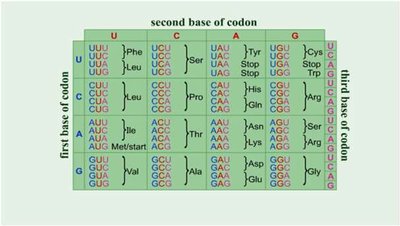
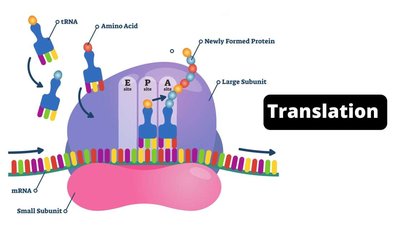
Translation is the process by which ribosomes use the genetic information in mRNA to synthesize polypeptides. The genetic code consists of codons—three-nucleotide sequences that specify amino acids.
Start Codon: AUG (codes for methionine in eukaryotes, formyl-methionine in prokaryotes)
Stop Codons: UAA, UAG, UGA


Stages of Translation
Initiation: Ribosome assembles on mRNA at the start codon.
Elongation: tRNAs bring amino acids to the ribosome, and the polypeptide chain grows.
Termination: Release factors recognize stop codons and release the completed polypeptide.
Comparison of Genetic Processes
Process | Enzyme | Template | Start Site | Fidelity Mechanism | Termination | Location | Product | Energy Source | Direction |
|---|---|---|---|---|---|---|---|---|---|
Replication | DNA polymerases | Both parental strands | Origin of replication | Polymerase proofreading, mismatch repair | Termination sequences | Prokaryotes: cytosol; Eukaryotes: nucleus | Two daughter DNA strands | Deoxyribonucleotides | 5′ to 3′ |
Transcription | RNA polymerases | One strand of DNA | Promoter | None | Termination sequences | Prokaryotes: cytosol; Eukaryotes: nucleolus | RNA, single stranded | Ribonucleotides | 5′ to 3′ |
Translation | Ribosomes | mRNA | AUG start codon | Specificity of tRNA charging | Stop codons | Prokaryotes: cytosol; Eukaryotes: cytosol or RER | Polypeptides | GTP; ATP for tRNA charging | N terminus to C terminus |
Regulation of Genetic Expression
Gene Regulation and Operons
Most genes are expressed at all times, but some are regulated to conserve energy. Regulation typically halts transcription or stops translation directly. An operon is a group of genes regulated together and transcribed into a single mRNA molecule. Operons can be inducible (activated by inducers, e.g., lactose operon) or repressible (transcribed continually until deactivated by repressors, e.g., tryptophan operon).
Mutations of Genes
Types and Effects of Mutations
A mutation is a change in the nucleotide base sequence of a genome. Mutations are rare and usually deleterious, but occasionally may improve survival. Types include:
Point Mutations: Affect one base pair (substitutions, frameshift mutations).
Gross Mutations: Include inversions, duplications, and transpositions.
Mutagens and Mutation Frequency
Mutagens such as radiation and chemicals increase mutation rates. Ionizing and nonionizing radiation, nucleotide analogs, and nucleotide-altering chemicals can disrupt DNA and RNA replication, leading to substitutions and missense mutations. Mutations are rare, but mutagens can increase the rate by 10 to 1000 times.
Horizontal Gene Transfer Among Prokaryotes
Mechanisms of Horizontal Gene Transfer
Horizontal gene transfer involves the movement of genetic material between cells of the same generation. Three main types:
Transformation: Uptake of free DNA from the environment by competent cells.
Transduction: Transfer of DNA via bacteriophage (virus).
Bacterial Conjugation: Transfer of genetic material requiring physical contact between donor and recipient cells.
Mechanism | Requirements |
|---|---|
Transformation | Free DNA in environment and competent recipient |
Transduction | Bacteriophage |
Conjugation | Cell-to-cell contact and F plasmid (in cytosol or chromosome of donor cell) |
Example: The transformation of Streptococcus pneumoniae provided conclusive proof that DNA is genetic material.
Additional info: These notes cover the essential concepts of microbial genetics, including genome structure, replication, gene expression, regulation, mutation, and horizontal gene transfer, as outlined in Chapter 7 of a standard microbiology textbook.
