 Indietro
Microbiology Exam 1 Study Guide: Foundations, Cell Structure, and Growth
Guida di studio - Note intelligenti
 Appunti personalizzati basati sui tuoi materiali, ampliati con definizioni chiave, esempi e contesto.
A Brief History of Microbiology
Respective Contributions to Microbiology
The development of microbiology as a scientific discipline was shaped by the discoveries and innovations of several key figures. Their work established foundational concepts and techniques still used today.
Leeuwenhoek: First to observe live microorganisms (“animalcules”) using a simple microscope.
Cohn: Discovered endospores, demonstrating microbial resistance.
Pasteur: Disproved spontaneous generation, supported biogenesis, and developed vaccines.
Koch: Developed Koch’s postulates, linking microbes to specific diseases (e.g., anthrax).
Gram: Developed the Gram stain, distinguishing Gram-positive and Gram-negative bacteria.
Linnaeus: Developed binomial nomenclature for classification.
Semmelweis: Promoted handwashing to prevent puerperal fever.
Lister: Introduced antiseptic surgery using phenol.
Nightingale: Improved hospital sanitation and nursing standards.
Snow: Linked cholera to contaminated water, founding epidemiology.
Jenner: Developed smallpox vaccination.
Ehrlich: Developed the “magic bullet” concept for chemotherapy (syphilis).
Fleming: Discovered penicillin, the first antibiotic.
Significance of Microbes
Microbial Roles in Nature and Society
Microbes are essential for life on Earth, playing critical roles in ecological processes, biotechnology, and human health.
Nitrogen fixation: Conversion of atmospheric nitrogen to usable forms by bacteria.
Oxygen production: Photosynthetic microbes contribute to global O2 levels.
Decomposition: Breakdown of organic matter, recycling nutrients.
Model organisms: E. coli, yeast used in research.
Industrial applications: Production of food, antibiotics, ethanol, bioremediation.
Normal microbiota: Microbes inhabit skin and mucous membranes, contributing to health.
Pathogenicity: Microbes cause infectious diseases and pandemics (e.g., Influenza, COVID-19).
Emerging diseases: Ebola, MERS/SARS, Hepatitis C, AIDS, MDR-TB, malaria, measles.

The Microbial World
Major Groups of Microbes
Microbes are classified into several major groups based on cellular structure and function.
Bacteria: Prokaryotic, unicellular, peptidoglycan cell wall, divide by binary fission.
Fungi: Eukaryotic, chitin cell wall, includes yeasts and molds.
Protozoa: Unicellular eukaryotes, no rigid cell wall, motile.
Viruses: Acellular infectious agents with DNA or RNA.
Viroids: Infectious RNA molecules.
Prions: Infectious proteins.

Principles of Taxonomy
Classification and Nomenclature
Taxonomy organizes living organisms into hierarchical groups based on shared characteristics.
Binomial nomenclature: Genus (capitalized) + species (lowercase), italicized (e.g., Staphylococcus aureus).
Species (prokaryotes): Group of closely related strains.
Taxonomic ranks: Domain → Phylum → Class → Order → Family → Genus → Species.
Three domains: Bacteria, Archaea, Eucarya.
Organism | Domain |
|---|---|
Staphylococcus aureus | Bacteria |
Penicillium chrysogenum | Eucarya (fungi) |
Giardia intestinalis | Eucarya (protozoa) |
Schistosoma mansoni | Eucarya (helminth) |
Cell Structure and Function
Prokaryotic Cell Morphology
Bacterial cells exhibit a variety of shapes and arrangements, which are important for identification and function.
Common shapes: Coccus, bacillus, vibrio, spirillum, spirochete, coccobacillus.
Multicellular arrangements: Diplococcus (pairs), Streptococcus (chains of cocci), Streptobacillus (chains of rods).
Plasma Membrane
The plasma membrane regulates transport of substances into and out of the cell.
Simple diffusion: Movement down concentration gradient, no energy required.
Facilitated diffusion: Uses protein channels, no energy required.
Active transport: Moves substances against gradient, requires energy (ATP or proton gradient).
LPS (Lipopolysaccharide)
LPS is a major component of the outer membrane of Gram-negative bacteria and acts as an endotoxin.
Lipid A: Endotoxin detected by the immune system.
Cell Wall
The bacterial cell wall provides structural support and protection.
Composition: Peptidoglycan (NAG + NAM).
Functions: Maintains shape, prevents osmotic lysis.
Acid-fast stain: Used for Mycobacterium (e.g., TB) due to mycolic acid (waxy wall).
Capsule/Slime Layer
Many bacteria produce a capsule or slime layer that enhances survival and pathogenicity.
Composition: Polysaccharides (sometimes polypeptides).
Functions: Prevents desiccation, aids adherence, biofilm formation, prevents phagocytosis.
Virulence factor: Helps bacteria evade the immune system.

Pili & Flagella
Pili and flagella are appendages that facilitate movement, attachment, and genetic exchange.
Pili: Attachment (fimbriae), conjugation, motility.
Flagella: Motility; arrangements include monotrichous, lophotrichous, amphitrichous, peritrichous.
Axial filament: Endoflagella in spirochetes (corkscrew movement).

Chromosome Location
Bacterial chromosomes are located in the nucleoid, which is not membrane-bound.
Ribosomes
Bacterial ribosomes (70S) are responsible for protein synthesis.
Endospores
Endospores are highly resistant structures produced by some bacteria for survival under adverse conditions.
Not metabolically active.
Resistant to: Heat, radiation, chemicals, desiccation.
Sporulation: Formation of spores.
Germination: Return to vegetative cell.
Location: Central, subterminal, or terminal within cell.

Storage
Bacteria store nutrients such as glycogen, PHB (carbon), phosphate, and sulfur for later use.

Microbial Nutrition and Growth
Microbial Nutrition Types
Microbes utilize various sources of carbon and energy, influencing their ecological roles and growth requirements.
Chemoorganoheterotroph: Uses organic molecules for carbon and energy.
Optimum growth temperature: Temperature at which growth rate is highest.
Mesophile: Grows best at moderate temperatures (~37°C).
Obligate anaerobes: Do not grow in presence of oxygen.
Catalase/SOD: Enzymes that detoxify reactive oxygen species.
Acidophile: Grows best in acidic pH.
Halophiles: Require high salt concentrations to grow.

Osmotic Conditions
Osmotic conditions affect microbial cell integrity and growth.
Isotonic: No net water movement.
Hypotonic: Water enters cell, may cause lysis.
Hypertonic: Water leaves cell, cell shrinks.
Culture Concepts
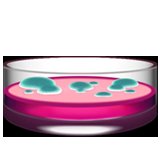
Microbiologists use cultures to isolate and study microbial species.
Pure culture: Contains one species.
Mixed culture: Contains multiple species.
Colony/CFU: Visible cluster from one cell.

Clinical Specimens
Clinical specimens are collected to identify causative pathogens in patients.
Examples: Blood, urine, sputum, swabs, biopsy.
Purpose: Identify causative pathogen.
Proper handling: Prevents contamination, death of pathogen, overgrowth of normal microbiota.
Selective/differential media: MacConkey, MSA, BAP.

Bacterial Growth
Growth and Generation Time
Bacterial growth refers to an increase in cell number, typically by binary fission.
Generation time: Time required for population to double.
Binary fission: Asexual division.
Population calculation:

Growth Curve
Bacterial populations follow a characteristic growth curve in batch culture.
Lag phase: Adaptation, no growth.
Log phase: Exponential growth, generation time calculated here.
Stationary phase: Growth rate equals death rate.
Death phase: Cell death exceeds growth.

Measuring Growth
Microbial growth can be measured directly or indirectly.
Direct methods: Plate counts, microscopic count, membrane filtration.
Indirect methods: Turbidity (spectrophotometer), metabolic activity.
