 Indietro
Viruses and Prions: Structure, Classification, and Replication
Guida di studio - Note intelligenti
 Appunti personalizzati basati sui tuoi materiali, ampliati con definizioni chiave, esempi e contesto.
Viruses and Prions
Introduction to Viruses
Viruses are unique infectious agents that display both living and nonliving characteristics. They are acellular, submicroscopic entities that require a host cell for replication and cannot carry out metabolism independently. Viruses can infect all forms of life, including animals, plants, and microorganisms.
Nonliving: Cannot synthesize their own components or carry out metabolism.
Obligate intracellular pathogens: Must hijack host cell machinery to replicate.
Genetic material: Contain either DNA or RNA, but never both.
Virion: A single, infectious virus particle.
Criteria Used to Define a Virus
Contain one type of nucleic acid (DNA or RNA).
Dependent on a host cell for replication.
Components must assemble into complete virions to infect new cells.
Virus Structure
Viruses are composed of a protective protein shell called a capsid, which encloses the viral genome. Some viruses possess an additional lipid-based envelope derived from the host cell membrane, while others are non-enveloped (naked).
Capsid: Made of capsomere subunits; protects the genome.
Envelope: Lipid membrane surrounding the capsid in some viruses; acquired from the host cell during budding.
Spikes (Peplomers): Glycoprotein extensions that facilitate attachment and entry into host cells.
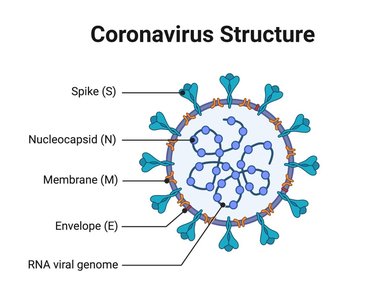
Capsid Shapes
Helical: Hollow tube-like structure.
Icosahedral: Three-dimensional polygonal structure.
Complex: More elaborate structures, often seen in bacteriophages.
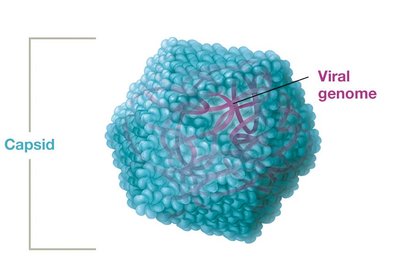
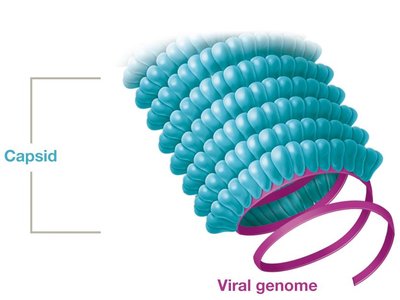
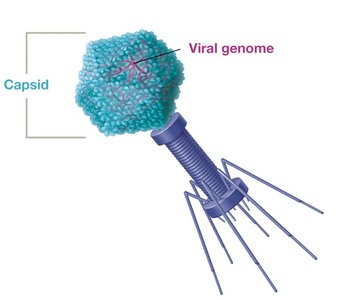
Enveloped vs. Naked Viruses
Enveloped viruses: Surrounded by a lipid membrane; typically less stable outside the host but can evade immune detection more easily.
Naked viruses: Lack an envelope; more stable in the environment and often released by host cell lysis.
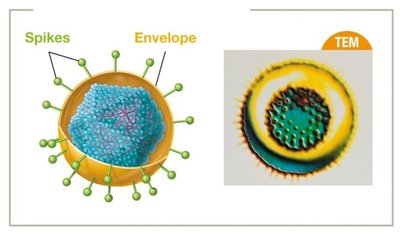
Viral Spikes (Peplomers)
Spikes are glycoproteins that mediate attachment to host cell receptors.
They are often recognized by the host immune system, which produces specific antibodies against them.
Mutations in spike proteins can help viruses evade immune detection (e.g., influenza, SARS-CoV-2).
Viral Genomes
Viral genomes are highly variable and can be composed of DNA or RNA, which may be single-stranded or double-stranded, linear, circular, or segmented. Most viruses have fewer than 300 genes, encoding structural proteins, enzymes for replication, and other factors.
Genome arrangements: Circular, linear, or segmented.
RNA viruses: Tend to mutate more rapidly due to lack of proofreading by RNA polymerases.
DNA viruses: Mutate less frequently due to proofreading by DNA polymerases.
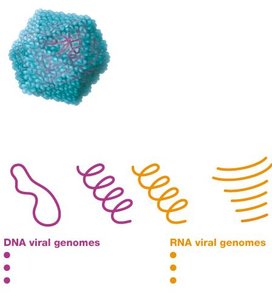
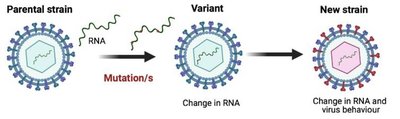
Mutations, Variants, and Strains
Mutation: Change in the viral genome sequence.
Variant: Virus with one or more mutations.
Strain: Variant with distinct physical or biological properties.
Antigenic Drift and Shift
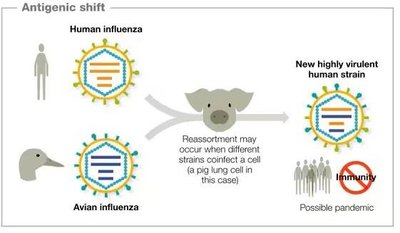
Antigenic drift: Minor changes in viral antigens (e.g., spikes) due to mutations; can lead to new strains that escape immune detection.
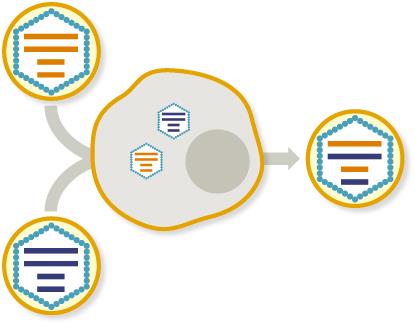
Antigenic shift: Major genetic reassortment when two different strains co-infect a host, resulting in a new virus with mixed genes; can cause pandemics.
Classification of Viruses
Viruses are classified based on several key properties:
Type of nucleic acid (DNA or RNA)
Capsid symmetry (helical, icosahedral, complex)
Presence or absence of an envelope
Genome architecture (e.g., ssDNA, dsRNA, etc.)
Host Range and Tropism
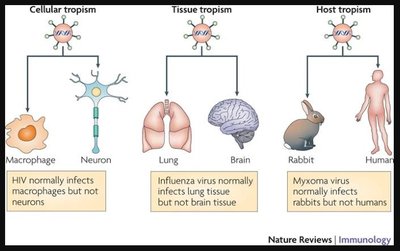
The host range of a virus refers to the collection of species it can infect, while tropism describes the specific tissues, organs, or cell types a virus can target within a host.
Host range: Some viruses infect only one species (e.g., measles virus infects only humans), while others infect multiple species.
Tropism: Can be broad (many cell types) or narrow (specific cell type, e.g., HIV infects CD4 T cells).
Viral Replication Pathways
Bacteriophage Lytic Cycle
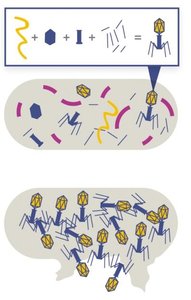
The lytic cycle is a replication pathway in which a bacteriophage infects a bacterial cell, rapidly produces new virions, and lyses the host cell to release progeny.
Attachment: Phage binds to bacterial cell.
Penetration: Phage injects genetic material into the cell.
Replication: Host machinery is used to replicate phage genome and synthesize proteins.
Assembly: New phage particles are assembled.
Release: Host cell lyses, releasing new phages.
Lysogenic Cycle
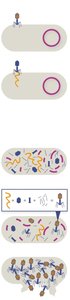
In the lysogenic cycle, the phage genome integrates into the host genome as a prophage and is replicated along with the host cell. Under stress, the prophage may excise and enter the lytic cycle.
Attachment and penetration
Integration: Phage DNA integrates into host genome (prophage)
Cell division: Prophage is copied with host genome
Induction: Under stress, prophage excises and enters lytic cycle
Animal Virus Replication
Animal viruses follow a generalized six-step replication pathway:
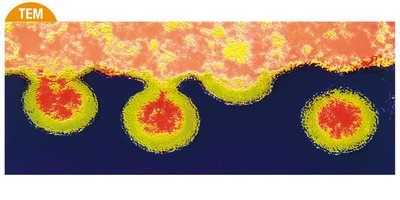
Attachment: Virus binds to host cell receptors (spikes or capsid proteins)
Penetration: Entry via endocytosis or membrane fusion
Uncoating: Capsid is removed, releasing the genome
Replication: Genome is replicated, and viral proteins are synthesized
Assembly: New virions are assembled
Release: Enveloped viruses bud off; naked viruses lyse the cell
Persistent Infections
Some animal viruses establish persistent infections, which can be chronic or latent:
Chronic infection: Continuous release of virions over time (e.g., HIV).
Latent infection: Periods of dormancy with intermittent flare-ups (e.g., herpesvirus).
Chronic infections often involve integration of the viral genome into the host genome (provirus), leading to ongoing production of viral proteins and particles.
Prions
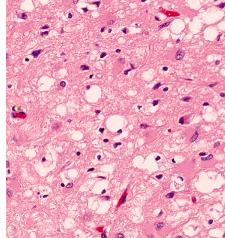
Prions are infectious proteins that cause transmissible spongiform encephalopathies (TSEs) by inducing abnormal folding of normal proteins in the brain. Prions lack genetic material and do not replicate like viruses.
Cause neurodegenerative diseases (e.g., Creutzfeldt-Jakob disease, mad cow disease).
Lead to spongiform changes in brain tissue.
Comparison Table: Viruses, Prokaryotes, and Eukaryotes
Characteristic | Viruses | Prokaryotes | Eukaryotes |
|---|---|---|---|
Cells? | No | Yes, unicellular | Yes, uni- or multicellular |
Considered alive? | No | Yes | Yes |
Relative size | Smaller than prokaryotes; require electron microscopy | Bigger than viruses, smaller than eukaryotes; seen with light microscopy | Bigger than prokaryotes and viruses; visible with light microscopy |
Structure | Protein capsid and nucleic acid | Cells without nucleus or membrane-bound organelles | Cells with nucleus and membrane-bound organelles |
Replication | Needs host cell | Binary fission (asexual) | Mitosis (asexual), meiosis (sexual) |
Metabolism? | No | Yes | Yes |
Genome composition | DNA or RNA, ss or ds, circular, linear, or segmented | dsDNA: 1-3 circular chromosomes | dsDNA: Multiple linear chromosomes |
