 Indietro
Chem 326 Organic Chemistry I – Syllabus and Course Structure Overview
Guida di studio - Note intelligenti
 Appunti personalizzati basati sui tuoi materiali, ampliati con definizioni chiave, esempi e contesto.
Chem 326 Organic Chemistry I – Syllabus and Course Structure Overview
Course Information
This document provides an overview of Chem 326: Organic Chemistry I, including course logistics, expectations, grading, and a detailed schedule. The course covers foundational topics in organic chemistry, including nomenclature, structure, reactivity, mechanisms, synthesis, and spectroscopy, aligning with standard undergraduate organic chemistry curricula.
Instructor and Contact Information
Instructor: George Nora, PhD
Office: 217 Jewett Regional Science Education Center
Email: George.nora@northern.edu
Phone: 605-626-2471
Office Hours: Multiple times weekly and by appointment
Course Description and Prerequisites
Catalog Description: Systematic treatment of the chemistry of carbon compounds, including nomenclature, structure-reactivity relationships, reaction mechanisms, synthesis, and spectroscopy.
Prerequisite: Chem 114
Co-requisite: Chem 326L (Laboratory)
Required Materials
Molecular model set
Textbook: Organic Chemistry (10th ed.) by John McMurry, OpenStax (free PDF provided)
Online Homework: Achieve platform (purchase required)
Accessing Achieve Homework Platform
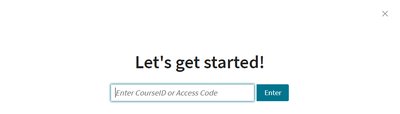
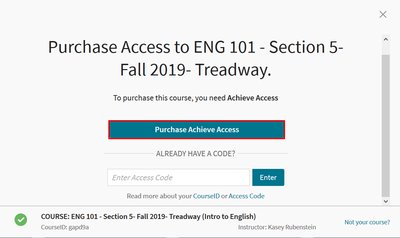
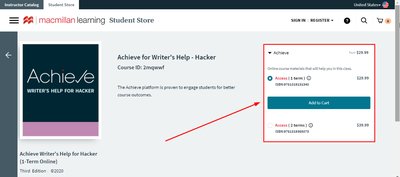
Students must enroll in the Achieve online homework system. Access can be purchased via the Student Store or directly through the Achieve sign-in page. Follow the steps below to enroll:
Go to the Achieve sign-in page and select "I Need to Enroll in a Course."
Enter the course ID provided by your instructor.
Click "Purchase Access" and complete the transaction in the Student Store.
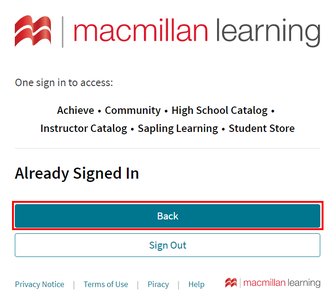
If already signed in, use the "Enroll In A New Course" button.


Attendance and Participation Policy
Active participation in laboratory sessions is mandatory; unexcused absences result in forfeiture of lab points.
More than six absences (excused or unexcused) result in loss of course credit.
Missed exams due to excused absences must be rescheduled in advance.
Instructional Methods
Lecture, group activities, demonstrations, class participation, homework, and tests.
Active classroom discussions and problem-solving are required.
Academic Integrity Policy
Students are expected to adhere to the highest standards of academic honesty. Academic misconduct includes cheating, fabrication, plagiarism, academic interference, and facilitating dishonesty. Sanctions may include grade penalties, assignment repetition, or course withdrawal.
Cheating: Unauthorized assistance, use of prohibited materials, or collaboration without permission.
Fabrication: Falsifying or inventing information or data.
Plagiarism: Using others' ideas or words without proper acknowledgment.
Academic Interference: Tampering with or impeding another student’s work.
Facilitating Dishonesty: Assisting others in academic misconduct.
Course Goals and Student Learning Outcomes
Understand and apply the scientific method in laboratory and classroom settings.
Demonstrate proficiency in organic chemistry concepts, laboratory techniques, and data analysis.
Develop critical thinking, problem-solving, and collaborative skills.
Apply organic chemistry principles to contemporary scientific issues.
Assessment and Grading
Assessment | Points |
|---|---|
Test 1 (Ch. 1-3) | 200 |
Test 2 (Ch. 4-6) | 200 |
Test 3 (Ch. 7-9) | 200 |
Homework (Achieve) | 100 (normalized to 200) |
In-Class Work | 100 |
Final Exam (Ch. 1-9) | 200 |
Total | 1000 |
Grading Scale:
A: 900–1000 pts
B: 800–899 pts
C: 700–799 pts
D: 600–699 pts
F: 0–599 pts
Course Schedule Overview
The course follows a chapter-based schedule, covering the following topics (with associated activities and assignments):
Chapter 1: Lewis structures, charges, dipoles, molecular orbital theory, structure drawing
Chapter 2: Functional groups, dipoles, intermolecular forces, FTIR spectroscopy
Chapter 3: Acids/bases, reaction mechanisms, pKa, arrow pushing
Chapter 4: Nomenclature, isomerism, Newman projections, chair conformations
Chapter 5: Stereochemistry (R/S, E/Z), Fischer projections
Chapter 6: Nucleophilic substitution (SN1/SN2), reaction mechanisms
Chapter 7: Alkenes, elimination reactions (E2), alkynes, spectroscopy prediction
Chapter 8: Alkene and alkyne reactions, spectroscopy prediction
Chapter 9: Mass spectrometry, NMR spectroscopy
Exams are scheduled after every three chapters, with a cumulative final exam at the end of the semester.
Student Support and Accessibility
Student Success Center offers academic advising, tutoring, workshops, and support services.
Accessibility accommodations are available through the Office of Student Accessibility Services.
Additional Policies
Honor and Respect: Mutual respect between students and instructor is expected.
Assignment Make-Up: Absences require a signed note for make-up work; late assignments lose credit.
Regrades: Requests must be submitted within one week with written explanation.
Emergency Communication: Students must keep contact information updated for campus alerts.
Diversity and Academic Freedom: The course values diverse perspectives and upholds academic freedom.
Course Outline and Schedule
Date | Chapter | Activity/Assignment |
|---|---|---|
Aug 24 | Introduction/Ch. 1 | Draw Lewis structures |
Aug 26 | Ch. 1 | Formal charge calculation |
Aug 28 | Ch. 1 | MO diagram |
Aug 31 | Ch. 1 | Draw structure |
Sep 2 | Ch. 1 | Draw structure |
Sep 4 | Ch. 2 | Name that group, HW 1 |
Sep 9 | Ch. 2 | Draw dipoles |
Sep 11 | Ch. 2 | Explain forces |
Sep 14 | Ch. 2 | FTIR data |
Sep 16 | Ch. 3 | Acids/Bases, HW 2 |
Sep 18 | Ch. 3 | Arrow pushing |
Sep 21 | Ch. 3 | pKa reactions |
Sep 23 | Ch. 3 | Mixed activity |
Sep 25 | Test 1 | HW 3 |
Sep 28 | Ch. 4 | Naming |
Sep 30 | Ch. 4 | Naming isomers |
Oct 2 | Ch. 4 | Newman projections |
Oct 5 | Ch. 4 | Chair conformations |
Oct 7 | Ch. 5 | Isomers, HW 4 |
Oct 9 | Ch. 5 | R/S, E/Z |
Oct 14 | Ch. 5 | Draw R/S |
Oct 16 | Ch. 5 | Fischer projections |
Oct 19 | Ch. 6 | Nucleophile, SN2, HW 5 |
Oct 21 | Ch. 6 | SN2/SN1 reactions |
Oct 23 | Ch. 6 | SN1/SN2 names |
Oct 30 | Ch. 6 | Reactions |
Nov 2 | Test 2 | HW 6 |
Nov 4 | Ch. 7 | Alkene reactions |
Nov 6 | Ch. 7 | E2 reactions |
Nov 9 | Ch. 7 | E2 reactions |
Nov 13 | Ch. 7 | Alkynes, predict spectra |
Nov 16 | Ch. 8 | Alkene reactions, HW 7 |
Nov 18 | Ch. 8 | Predict spectra |
Nov 20 | Ch. 8 | Alkene/Alkyne reactions, predict spectra |
Nov 23 | Ch. 9 | Mass Spec, HW 8 |
Nov 30 | Ch. 9 | Intro NMR, identify spectra |
Dec 2 | Ch. 9 | NMR spectra |
Dec 4 | Ch. 9 | NMR spectra |
Dec 7 | Exam 3 | HW 9 |
Dec 16 | Final Exam | 9:45–11:45 am |
Additional info:
This syllabus provides a comprehensive overview of course policies, expectations, and the sequence of topics, but does not include detailed content explanations for each chapter. For in-depth study, refer to the assigned textbook chapters and lecture materials.
