 Indietro
Study Notes: Unsaturated Hydrocarbons – Alkenes, Alkynes, and Aromatic Compounds
Guida di studio - Note intelligenti
 Appunti personalizzati basati sui tuoi materiali, ampliati con definizioni chiave, esempi e contesto.
Unsaturated Hydrocarbons
Introduction to Alkenes, Alkynes, and Aromatic Compounds
Unsaturated hydrocarbons are organic molecules containing carbon-carbon double or triple bonds, or aromatic rings. These functional groups impart unique chemical properties and reactivity patterns, making them central to organic chemistry.
Alkenes: Hydrocarbons with at least one carbon-carbon double bond (C=C).
Alkynes: Hydrocarbons with at least one carbon-carbon triple bond (C≡C).
Aromatic Compounds: Molecules containing benzene-like rings with delocalized π electrons.
Examples: Ethylene (ethene), isoprene (2-methylbuta-1,3-diene), benzene.



Stereoisomerism in Alkenes
Geometric (cis-trans) Isomers
Alkene double bonds cannot rotate due to the presence of a π bond, leading to the possibility of geometric isomers (cis-trans diastereomers). These isomers differ in the spatial arrangement of substituents around the double bond.
Cis Isomer: Substituents on the same side of the double bond.
Trans Isomer: Substituents on opposite sides of the double bond.
Rotation about the double bond would break the π bond, which is energetically unfavorable.

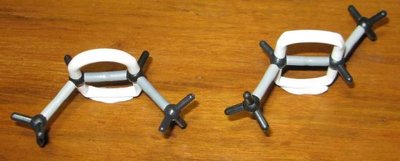
Example: 2-butene exists as cis-2-butene and trans-2-butene.
Double Bond Substitution and E/Z Nomenclature
For tri- and tetra-substituted alkenes, cis/trans nomenclature is insufficient. The E/Z system is used, based on the Cahn-Ingold-Prelog sequence rules:
Z (zusammen): High priority groups on the same side.
E (entgegen): High priority groups on opposite sides.
Priority is determined by atomic number; if atoms are identical, compare atoms further away.
Example: (E)-3-chloro-2-ethylhexa-1,3-diene.
Types of Organic Reactions
Addition, Elimination, and Substitution
Organic reactions involving unsaturated hydrocarbons are classified into three main types:
Addition: Atoms or groups are added to the double or triple bond.
Elimination: Atoms or groups are removed, forming a double or triple bond.
Substitution: One atom or group replaces another.
These reactions involve breaking and forming chemical bonds, often with the aid of reagents or catalysts.
Mechanisms of Organic Reactions
Curved Arrow Notation
Reaction mechanisms illustrate the movement of electrons during bond formation and cleavage. Curved arrows are used to show electron flow:
A lone pair forms a new bond.
A bond breaks to form a lone pair.
Arrows start from electron-rich sites (nucleophiles) and point to electron-poor sites (electrophiles).
Nucleophile (Nu: or Nu–): Electron-rich species that donate electrons.
Electrophile (E+): Electron-poor species that accept electrons.
Addition Reactions of Alkenes
Hydrohalogenation (Addition of HX)
Hydrohalogenation involves the addition of hydrogen halides (HX) to alkenes. The reaction is regioselective, following Markovnikov’s rule:
H adds to the carbon with fewer alkyl substituents.
X (halide) adds to the carbon with more alkyl substituents.
General Equation:
Mechanism:
The alkene acts as a nucleophile, attacking the electrophilic H of HX.
A carbocation intermediate forms, which is then attacked by X–.
Carbocation stability: 3° > 2° > 1° > methyl.
Example: Hydrobromination of 4-methylpent-2-ene.
Hydration of Alkenes
Hydration adds water to an alkene, forming an alcohol. The reaction requires strong acid and high temperature, and follows Markovnikov’s rule.
The acid acts as a catalyst and is regenerated.
Mechanism is similar to hydrohalogenation, with an extra step for alcohol formation.
Halogenation of Alkenes
Halogenation involves the addition of Cl2 or Br2 to alkenes, producing dihalides with anti stereochemistry. The reaction is used industrially, e.g., in PVC synthesis.
The mechanism involves a halonium ion intermediate, explaining anti addition.
Halohydrin Formation
Alkenes treated with halogen and water form halohydrins. The reaction is regioselective and occurs with anti stereochemistry.
X adds to the less substituted carbon.
OH adds to the more substituted carbon.
Mechanism involves halonium ion and nucleophilic attack by water.
Catalytic Hydrogenation
Catalytic hydrogenation reduces alkenes to alkanes with syn stereochemistry, using PtO2 or Pd/C catalysts. The process is heterogeneous.
Alkynes can be partially hydrogenated to cis-alkenes using Lindlar catalyst.
Aromatic rings require super-high pressure for reduction.
Elimination Reactions – Preparation of Alkenes
Dehydration and Dehydrohalogenation
Elimination reactions form alkenes by removing atoms or groups:
Dehydration: Loss of water, typically using concentrated acid.
Dehydrohalogenation: Loss of HX, using bases like hydroxide or alkoxides.
Zaitsev’s Rule: The more highly substituted alkene is the major product.
Aromatic Compounds
Structure and Properties of Benzene
Aromatic compounds contain benzene-like rings with delocalized π electrons. Benzene is planar, forms a perfect hexagon, and has bond angles of 120°.
Bond lengths in benzene are intermediate (139 pm) between single and double bonds.
All carbons are sp2 hybridized, each with three σ bonds and one p orbital.
π electrons are delocalized over the ring, not localized in three distinct double bonds.
Stability: Benzene is more stable and less reactive than alkenes.
Nomenclature of Aromatic Compounds
Benzene rings attached to carbon chains are named as phenyl substituents (Ph–). A benzene ring attached to a CH2 group is called a benzyl group (PhCH2– or Bn–).
Example: 4-methyl-3-phenylheptane, (Z)-3-methyl-4-benzylhex-2-ene.
Reduction and Oxidation in Organic Chemistry
Definitions
Reduction: Increase in hydrogen content or decrease in oxygen content.
Oxidation: Increase in oxygen content or decrease in hydrogen content.
Addition or loss of H2O does not count as oxidation or reduction.
Summary Table: Addition Reactions of Alkenes and Alkynes
Reaction Type | Reagents | Product | Stereochemistry | Regioselectivity |
|---|---|---|---|---|
Hydrohalogenation | HX | Alkyl halide | None | Markovnikov |
Hydration | H2O, acid | Alcohol | None | Markovnikov |
Halogenation | Cl2, Br2 | Dihalide | Anti | None |
Halohydrin formation | X2, H2O | Halohydrin | Anti | Regioselective |
Hydrogenation | H2, PtO2/Pd-C | Alkane | Syn | None |
Additional info:
Exercises and exam questions are included in the original material for practice.
Mechanisms should be drawn with clear electron flow, charges, and intermediates.
Hybridization changes and stereochemistry are important for understanding reaction outcomes.
