Ch. 11 Introduction to the Nervous System and Nervous Tissue
Amerman- Human Anatomy & Physiology 3e
Amerman3rd EditionHuman Anatomy & PhysiologyISBN: 9780138247201, 9780138247928, 9780138201814Non è quello che usi tu?Cambia libro di testo
Capitolo 11, Problema L2.4

Explain why cardiac muscle cells and some smooth muscle cells will continue to contract even when their nerve supply has been removed

Guida verificata passo dopo passo
1
Understand the concept of autorhythmicity: Cardiac muscle cells and some smooth muscle cells have the ability to generate their own action potentials without external nervous system input. This property is known as autorhythmicity, which is driven by specialized pacemaker cells.
Explain the role of pacemaker cells: In cardiac muscle, pacemaker cells located in the sinoatrial (SA) node spontaneously depolarize due to the presence of leaky ion channels. This depolarization triggers action potentials that spread through the heart, causing contraction.
Discuss the role of gap junctions: Cardiac muscle cells are connected by intercalated discs, which contain gap junctions. These gap junctions allow ions to flow directly between cells, enabling the action potential generated by pacemaker cells to propagate throughout the heart muscle, ensuring coordinated contraction.
Relate to smooth muscle: Some smooth muscle cells, such as those in the gastrointestinal tract, also exhibit autorhythmicity. These cells can generate slow waves of depolarization, which may reach threshold and trigger contraction, even in the absence of nervous system input.
Summarize the independence from nerve supply: While the nervous system can modulate the rate and strength of contractions (e.g., through sympathetic or parasympathetic input), the intrinsic ability of these muscle cells to generate action potentials ensures that they can continue to contract even when their nerve supply is removed.

Risposta video verificata per un problema simile:

Questa soluzione video è stata consigliata dai nostri tutor come utile per risolvere questo problema.

Concetti chiave

Ecco i concetti essenziali che devi comprendere per rispondere correttamente alla domanda.

Myogenic Activity

Myogenic activity refers to the ability of certain muscle cells, particularly cardiac muscle cells, to generate their own contractions without external nerve stimulation. This is due to the presence of specialized pacemaker cells in the heart, which initiate electrical impulses that trigger muscle contractions, allowing the heart to beat rhythmically and autonomously.
Video consigliato:
Percorso guidato
02:37
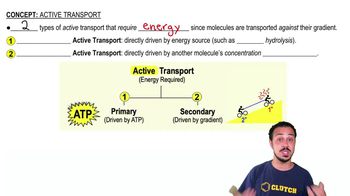
Active Transport

Calcium Ion Role

Calcium ions play a crucial role in muscle contraction. In cardiac and smooth muscle cells, the influx of calcium ions from the extracellular space and the sarcoplasmic reticulum activates the contractile proteins, leading to muscle contraction. This process can occur independently of nerve signals, allowing these muscles to contract even when their nerve supply is compromised.
Video consigliato:
01:55
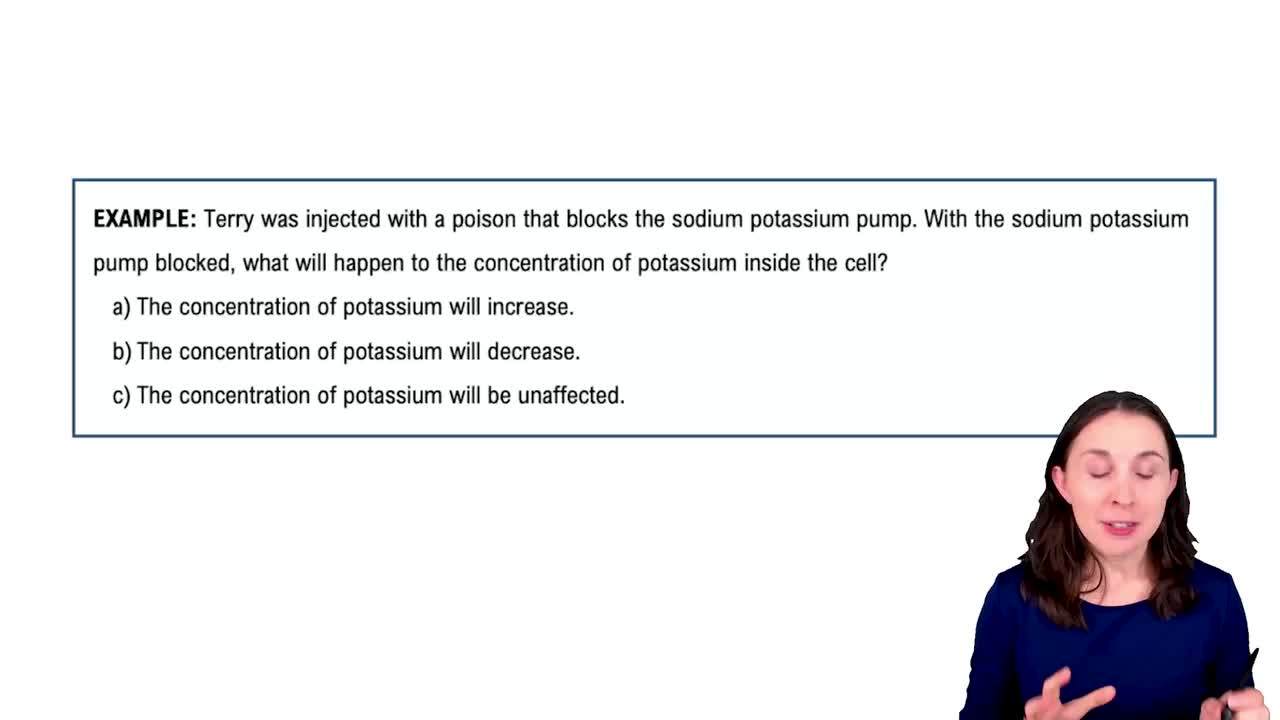
Ions - Sodium and Potassium Example 3

Functional Syncytium

A functional syncytium is a group of cells that function as a single unit due to their interconnections. In cardiac muscle, cells are interconnected by intercalated discs, allowing for rapid transmission of electrical signals and coordinated contractions. This structural feature enables the heart to contract effectively even in the absence of nerve input, as the cells can still communicate and contract together.
Video consigliato:
Percorso guidato
06:04
Functional Groups