Declarative memories are formed by the process of ________ that takes place in the ________, and are stored in the ________.
Ch. 12 The Central Nervous System
Amerman3rd EditionHuman Anatomy & PhysiologyISBN: 9780138247201, 9780138247928, 9780138201814Non è quello che usi tu?Cambia libro di testo
Capitolo 12, Problema 24
Which of the following is not a component of emotion?
a. Visceral motor responses mediated by the hypothalamus
b. Somatic motor responses mediated by the limbic system and the hypothalamus
c. Somatic motor responses mediated by the upper motor neurons of the corticospinal tracts
d. Subjective feelings mediated by the amygdala and the cerebral cortex
Guida verificata passo dopo passo1
Step 1: Understand the components of emotion. Emotions involve multiple systems in the body, including visceral motor responses, somatic motor responses, and subjective feelings. These systems are mediated by different parts of the brain and nervous system.
Step 2: Analyze visceral motor responses. These are involuntary responses controlled by the autonomic nervous system and mediated by the hypothalamus. Examples include changes in heart rate, blood pressure, and respiration during emotional states.
Step 3: Examine somatic motor responses. These are voluntary movements, such as facial expressions or gestures, that are influenced by emotional states. The limbic system and hypothalamus play a role in coordinating these responses.
Step 4: Evaluate the corticospinal tracts. These tracts are responsible for voluntary motor control mediated by upper motor neurons. They are not directly involved in emotional responses but rather in precise, voluntary movements.
Step 5: Consider subjective feelings. These are the conscious experiences of emotion, such as fear or happiness, and are mediated by the amygdala and cerebral cortex. They are integral to the emotional experience.

Risposta video verificata per un problema simile:
Questa soluzione video è stata consigliata dai nostri tutor come utile per risolvere questo problema.
Concetti chiave
Ecco i concetti essenziali che devi comprendere per rispondere correttamente alla domanda.
Components of Emotion
Emotions are typically understood to consist of three main components: physiological responses, behavioral responses, and subjective experiences. Physiological responses involve bodily reactions, such as heart rate changes, while behavioral responses include facial expressions and actions. Subjective experiences refer to the personal feelings associated with emotions, which can vary widely among individuals.
Video consigliato:
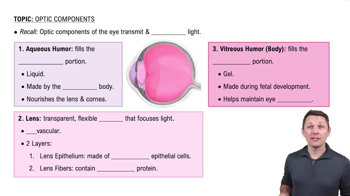
Optic Components
Role of the Hypothalamus
The hypothalamus is a crucial brain structure involved in regulating various autonomic functions, including emotional responses. It mediates visceral motor responses, such as changes in heart rate and blood pressure, which are integral to the physiological aspect of emotions. Understanding its role helps clarify how emotions can trigger physical reactions in the body.
Video consigliato:
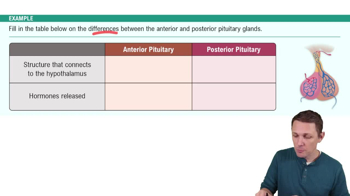
The Hypothalamus and Pituitary Gland Example 3
Limbic System and Emotion
The limbic system, which includes structures like the amygdala and hippocampus, plays a significant role in processing emotions. It is involved in both the generation of emotional responses and the formation of emotional memories. The amygdala, in particular, is key for the emotional significance of stimuli, influencing how we react to different situations.
Video consigliato:
Percorso guidato
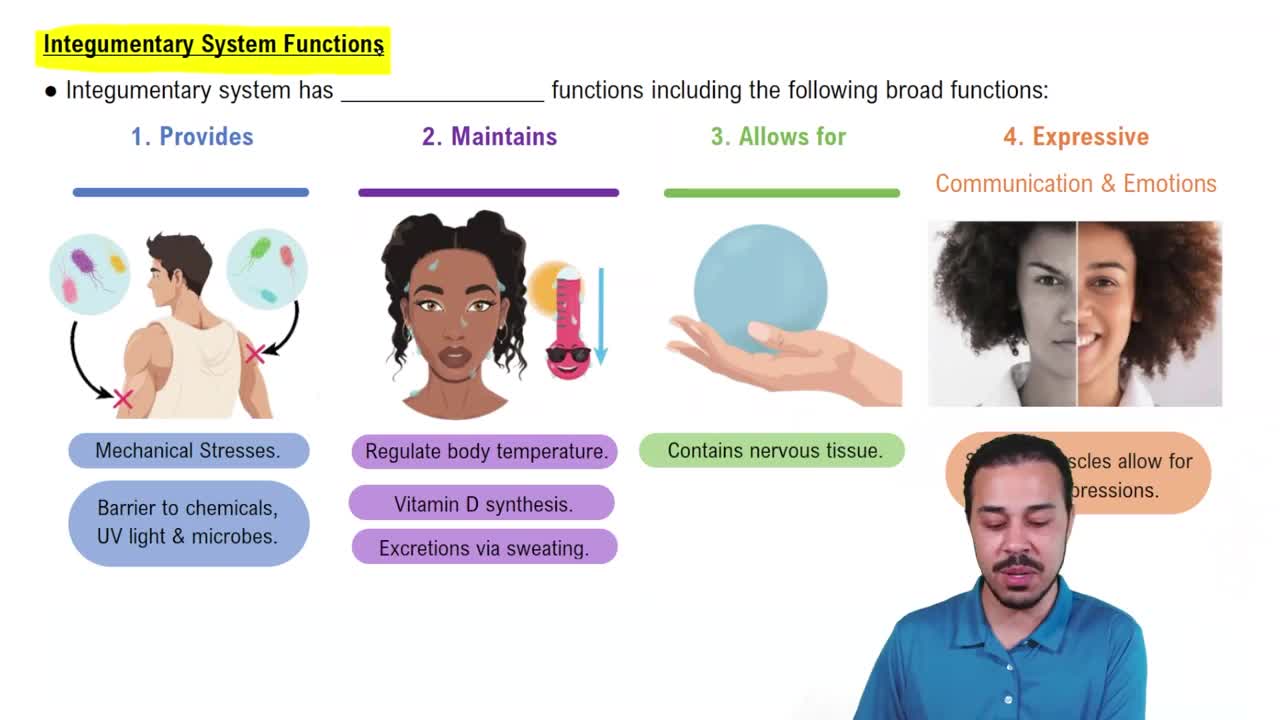
Integumentary System Functions
Pratica correlata
Domanda del libro di testo
1176
views
Domanda del libro di testo
Match the term on the left with its correct description from the column on the right.
____ REM sleep
____ Stage I sleep
____ Delta waves
____ Beta waves
____ Theta waves
____ Stage IV sleep
a. The EEG pattern seen in the deepest stage of sleep
b. The deepest stage of sleep
c. The EEG pattern seen in an alert, awake adult
d. Drowsiness or the lightest stage of sleep
e. The EEG pattern seen in lighter stages of sleep
f. The stage of sleep during which most dreaming takes place
811
views
1
rank
Domanda del libro di testo
The part of the brain responsible for the production of language is known as:
a. Wernicke's area
b. The prefrontal cortex
c. The auditory association area
d. Broca's area
1085
views