Ch. 13 The Peripheral Nervous System
Amerman- Human Anatomy & Physiology 3e
Amerman3rd EditionHuman Anatomy & PhysiologyISBN: 9780138247201, 9780138247928, 9780138201814Non è quello che usi tu?Cambia libro di testo
Capitolo 13, Problema L3.4

Maria is a 3-year-old who has been diagnosed with CIPA, or congenital insensitivity to pain with anhidrosis. This disease results from a genetic mutation that causes essentially all general sensory neurons to not function properly. What types of sensations will Maria be unable to detect (be specific)? Predict what problems she might face from her condition.

Guida verificata passo dopo passo
1
Understand the condition: CIPA (Congenital Insensitivity to Pain with Anhidrosis) is a rare genetic disorder that affects the functioning of general sensory neurons. These neurons are responsible for detecting sensations such as pain, temperature, and certain tactile stimuli.
Identify the types of sensations affected: Since general sensory neurons are non-functional, Maria will be unable to detect pain (nociception), temperature changes (thermoreception), and potentially some aspects of touch, such as pressure or vibration. She may still retain specialized senses like vision, hearing, taste, and smell, as these are processed by different sensory systems.
Explain the consequences of insensitivity to pain: Maria will not feel pain, which is a critical protective mechanism. Pain alerts the body to injury or harm, so Maria may unknowingly sustain injuries, burns, or fractures without realizing it. This can lead to delayed treatment and complications.
Discuss the impact of anhidrosis: Anhidrosis refers to the inability to sweat, which is essential for regulating body temperature. Maria may face challenges in maintaining a stable body temperature, especially in hot environments, leading to risks of overheating or heatstroke.
Predict long-term problems: Without the ability to sense pain or regulate temperature, Maria may face frequent injuries, infections, and difficulty managing her body temperature. Caregivers will need to monitor her closely to prevent harm and ensure her safety in daily activities.

Risposta video verificata per un problema simile:

Questa soluzione video è stata consigliata dai nostri tutor come utile per risolvere questo problema.

Concetti chiave

Ecco i concetti essenziali che devi comprendere per rispondere correttamente alla domanda.

Congenital Insensitivity to Pain with Anhidrosis (CIPA)

CIPA is a rare genetic disorder characterized by the inability to feel pain and temperature, as well as a lack of sweating. This condition arises from mutations affecting the development and function of sensory neurons, which are responsible for transmitting pain and temperature signals to the brain. Individuals with CIPA can suffer severe injuries without realizing it, leading to complications.
Video consigliato:
Percorso guidato
02:25
Enzymes Example 1

Sensory Neurons

Sensory neurons are specialized nerve cells that transmit sensory information from the body to the central nervous system. They play a crucial role in detecting various stimuli, including pain, temperature, touch, and pressure. In Maria's case, the dysfunction of these neurons means she cannot perceive pain or temperature, which can lead to dangerous situations where she may not react to harmful stimuli.
Video consigliato:
04:20
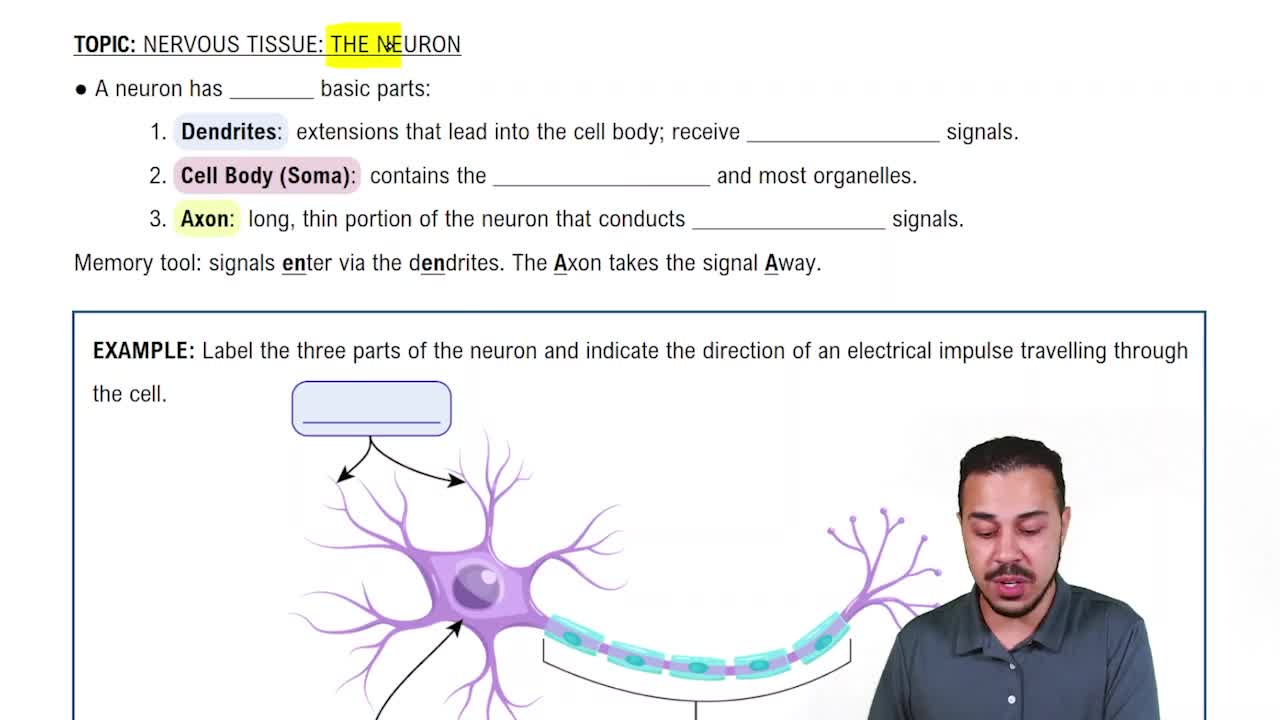
The Neuron

Potential Complications of CIPA

Due to her inability to feel pain and temperature, Maria may face numerous complications, such as unrecognized injuries, burns, or infections. She may also struggle with regulating her body temperature, as she cannot sweat to cool down. These challenges can lead to serious health risks, requiring careful monitoring and preventive measures to ensure her safety.
Video consigliato:
05:55
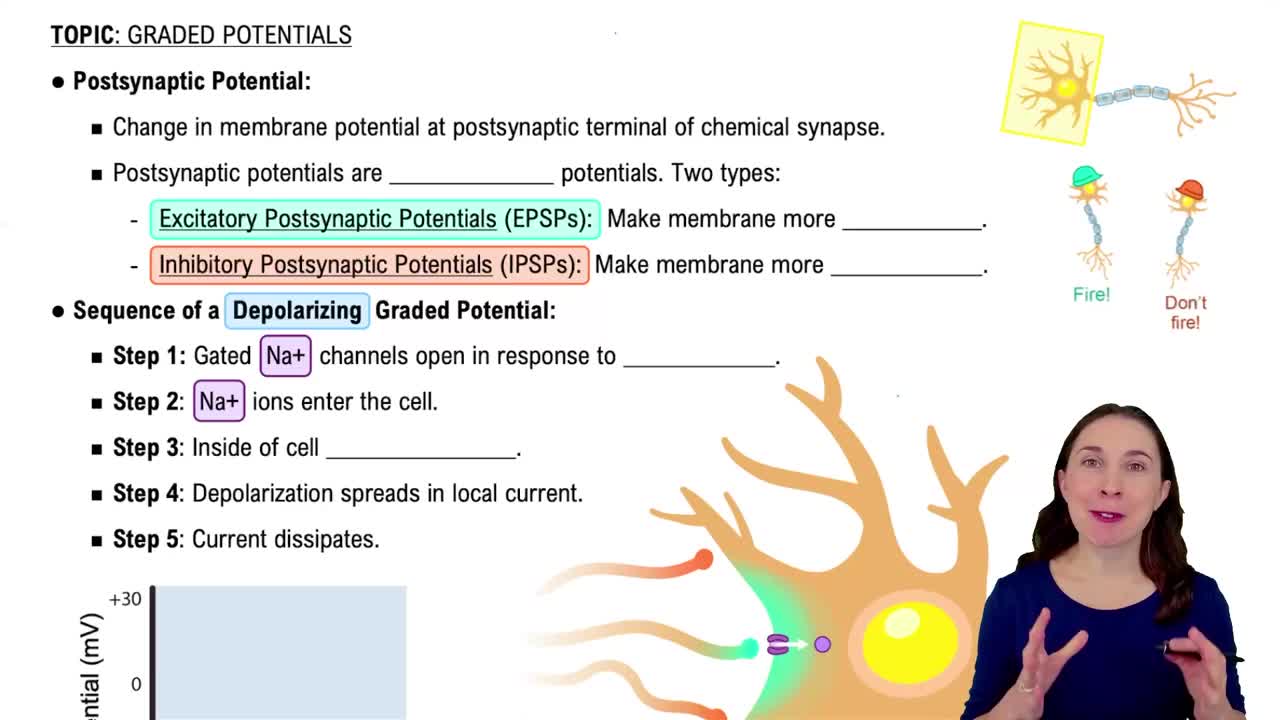
Postsynaptic Potential
Pratica correlata
Domanda del libro di testo

Complaining of muscle weakness, Delia goes to the doctor. Devise a series of physical examination tests that would help to determine if her problem involves upper or lower motor neurons.

556
views

Domanda del libro di testo

Match each type of neuroglial cell with its correct function.

____ Schwann cells    

____ Ependymal cells     

____ Microglial cells    

____ Oligodendrocytes     

____ Satellite cells    

____ Astrocytes

a. Phagocytic cells of the CNS

b. Surround the cell bodies of neurons in the PNS

c. Create the myelin sheath in the PNS

d. Anchor neurons and blood vessels, maintain extracellular environment around neurons, assist in repair of damaged brain tissue

e. Create the myelin sheath in the CNS

f. Ciliated cells in the CNS that produce and circulate the fluid around the brain and spinal cord

1187
views
1
rank
Domanda del libro di testo

Ramin presents for evaluation after a severe shoulder injury during which his entire brachial plexus suffered damage. What effects would you expect Ramin to have from this injury?

70
views
Domanda del libro di testo

Define each of the following terms in your own words, using 20 or fewer words.

a. Peripheral nerve

618
views
Domanda del libro di testo

Define each of the following terms in your own words, using 20 or fewer words.

b. Nerve plexus

630
views
Domanda del libro di testo

When Mr. Dinh goes to the emergency department with pain in the area along the midline of the diaphragm, he worries he is having a heart attack. Could the pain be related to his heart? Could it be related to any other organ(s)? Explain.

58
views