Ch. 14 The Autonomic Nervous System and Homeostasis
Amerman- Human Anatomy & Physiology 3e
Amerman3rd EditionHuman Anatomy & PhysiologyISBN: 9780138247201, 9780138247928, 9780138201814Non è quello che usi tu?Cambia libro di testo
Capitolo 14, Problema 1c

Mark the following statements as true or false. If a statement is false, correct it to make a true statement.
c. The visceral motor division is also known as the autonomic nervous system and maintains homeostasis of many physiological variables.

Guida verificata passo dopo passo
1
Step 1: Understand the terminology in the statement. The visceral motor division refers to the part of the nervous system that controls involuntary functions, such as heart rate, digestion, and respiratory rate. It is commonly referred to as the autonomic nervous system (ANS).
Step 2: Recall the primary function of the autonomic nervous system. The ANS is responsible for maintaining homeostasis, which is the body's ability to regulate internal conditions such as temperature, blood pressure, and other physiological variables.
Step 3: Evaluate the statement provided. The statement claims that the visceral motor division is also known as the autonomic nervous system and maintains homeostasis of many physiological variables. Based on the definitions and functions of the ANS, this statement is true.
Step 4: If the statement were false, identify the incorrect part and correct it. For example, if the statement incorrectly claimed that the visceral motor division does not maintain homeostasis, the correction would be: 'The visceral motor division, also known as the autonomic nervous system, does maintain homeostasis of many physiological variables.'
Step 5: Confirm the accuracy of the statement by cross-referencing with reliable Anatomy & Physiology resources, ensuring the information aligns with established scientific knowledge.

Risposta video verificata per un problema simile:

Questa soluzione video è stata consigliata dai nostri tutor come utile per risolvere questo problema.

Concetti chiave

Ecco i concetti essenziali che devi comprendere per rispondere correttamente alla domanda.

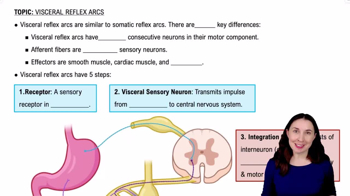
Visceral Motor Division

The visceral motor division, also known as the autonomic nervous system (ANS), is responsible for regulating involuntary physiological functions such as heart rate, digestion, and respiratory rate. It operates without conscious control and is divided into two main branches: the sympathetic and parasympathetic systems, which work together to maintain homeostasis.
Video consigliato:
2:12
Visceral Reflex Arcs

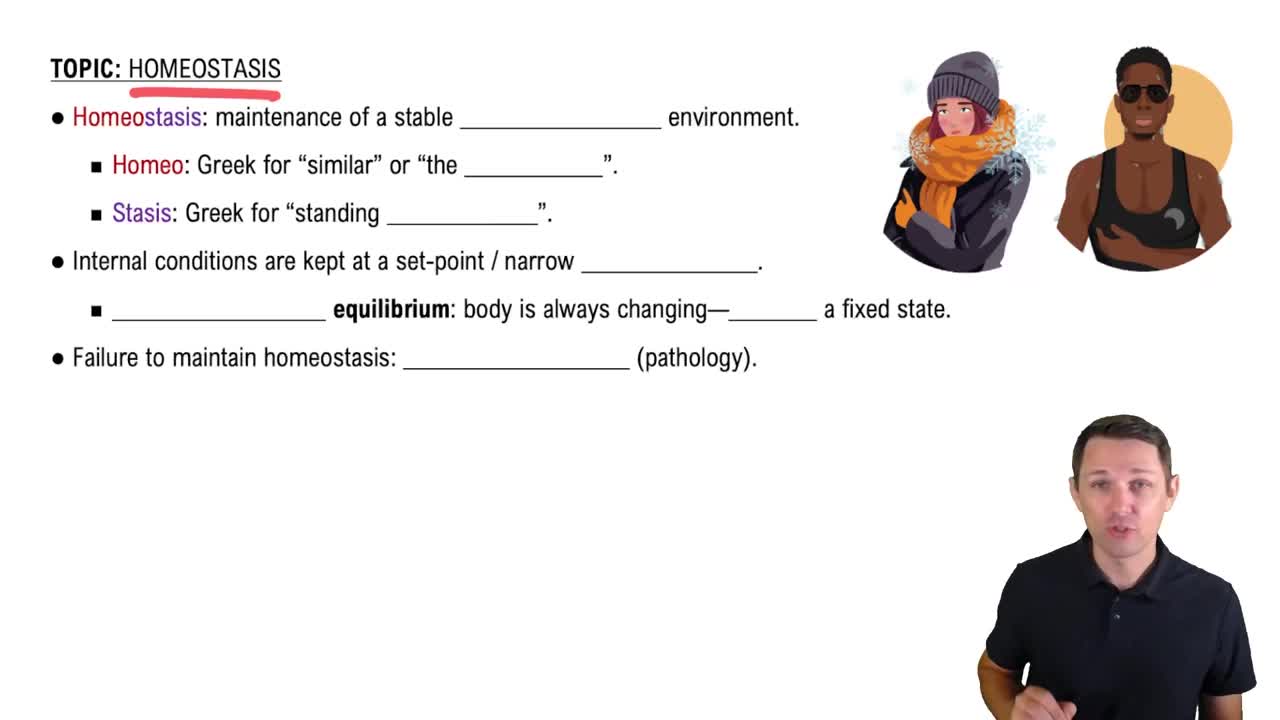
Homeostasis

Homeostasis refers to the body's ability to maintain a stable internal environment despite external changes. This involves the regulation of various physiological parameters, such as temperature, pH, and electrolyte balance, ensuring that the body's systems function optimally. The autonomic nervous system plays a crucial role in achieving and maintaining homeostasis.
Video consigliato:
01:59
Introduction to Homeostasis

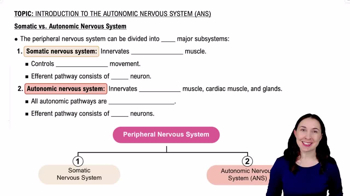
Autonomic Nervous System

The autonomic nervous system (ANS) is a component of the peripheral nervous system that controls involuntary bodily functions. It is further divided into the sympathetic nervous system, which prepares the body for 'fight or flight' responses, and the parasympathetic nervous system, which promotes 'rest and digest' activities. Together, they help regulate essential functions to maintain homeostasis.
Video consigliato:
1:50
Somatic vs. Autonomic Nervous System