
Ch. 16 The Endocrine System
Amerman- Human Anatomy & Physiology 3e
Amerman3rd EditionHuman Anatomy & PhysiologyISBN: 9780138247201, 9780138247928, 9780138201814Non è quello che usi tu?Cambia libro di testo
Capitolo 16, Problema 1c

Mark the following statements as true or false. If a statement is false, correct it to make a true statement.
The pancreas, thyroid gland, and parathyroid glands secrete neurohormones.

Guida verificata passo dopo passo
1
Step 1: Understand the term 'neurohormones.' Neurohormones are hormones released by neurons into the bloodstream to act on distant target cells. Examples include oxytocin and antidiuretic hormone (ADH), which are secreted by the hypothalamus and stored in the posterior pituitary.
Step 2: Identify the glands mentioned in the problem: pancreas, thyroid gland, and parathyroid glands. These are endocrine glands that secrete hormones directly into the bloodstream, but they are not associated with neurons and do not secrete neurohormones.
Step 3: Determine the hormones secreted by each gland: The pancreas secretes insulin and glucagon, the thyroid gland secretes thyroid hormones (T3 and T4), and the parathyroid glands secrete parathyroid hormone (PTH). None of these are neurohormones.
Step 4: Evaluate the statement: Since the pancreas, thyroid gland, and parathyroid glands do not secrete neurohormones, the statement is false.
Step 5: Correct the false statement: The pancreas, thyroid gland, and parathyroid glands secrete hormones, not neurohormones.

Risposta video verificata per un problema simile:

Questa soluzione video è stata consigliata dai nostri tutor come utile per risolvere questo problema.

Concetti chiave

Ecco i concetti essenziali che devi comprendere per rispondere correttamente alla domanda.

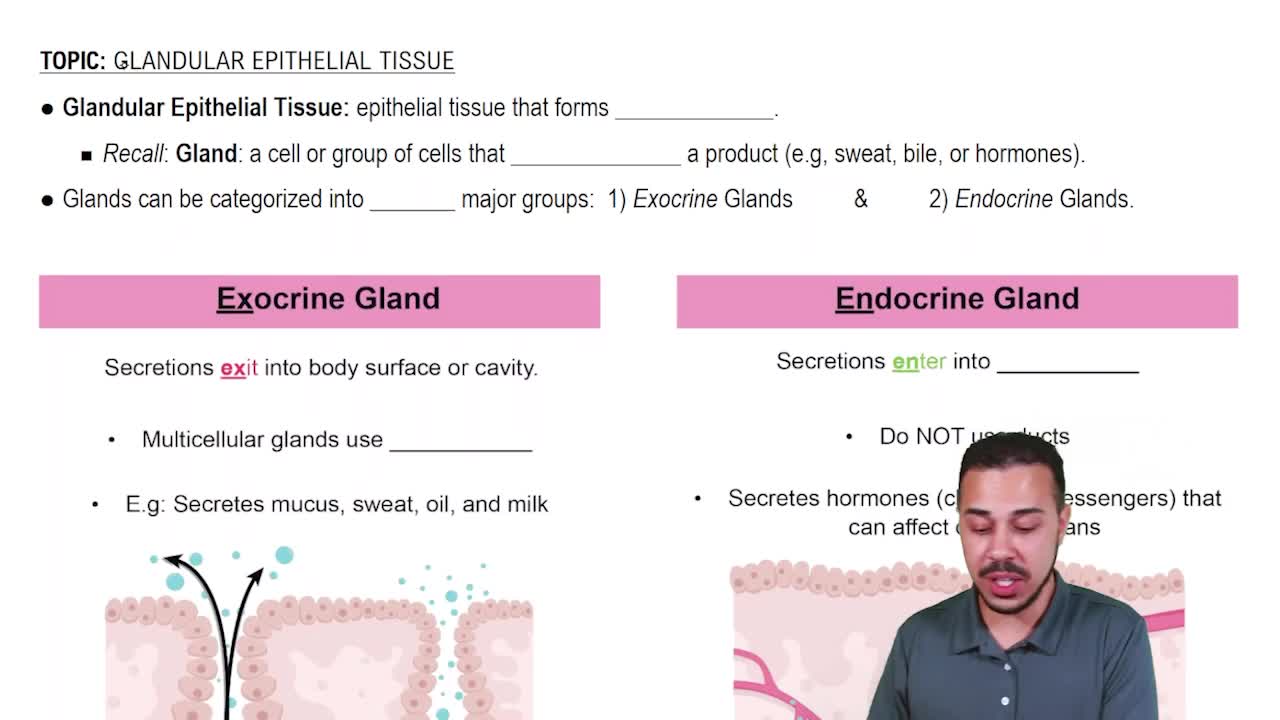
Endocrine Glands

Endocrine glands are specialized organs that secrete hormones directly into the bloodstream. These hormones regulate various bodily functions, including metabolism, growth, and mood. The pancreas, thyroid, and parathyroid glands are key components of the endocrine system, each playing distinct roles in maintaining homeostasis.
Video consigliato:
06:14
Exocrine vs. Endocrine Glands

Neurohormones

Neurohormones are hormones produced by neurosecretory cells in the brain and released into the bloodstream, influencing various physiological processes. They differ from traditional hormones as they are directly linked to the nervous system. Common examples include oxytocin and vasopressin, which are produced in the hypothalamus.

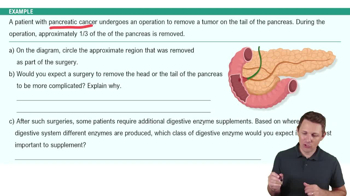
Functions of the Pancreas, Thyroid, and Parathyroid Glands

The pancreas primarily regulates blood sugar levels through insulin and glucagon, while the thyroid gland controls metabolism via thyroid hormones like thyroxine. The parathyroid glands manage calcium levels in the blood through parathyroid hormone. None of these glands secrete neurohormones, which is a key point in correcting the false statement.
Video consigliato:
3:08
Pancreas Example 2