
Ch. 16 The Endocrine System
Amerman- Human Anatomy & Physiology 3e
Amerman3rd EditionHuman Anatomy & PhysiologyISBN: 9780138247201, 9780138247928, 9780138201814Non è quello che usi tu?Cambia libro di testo
Capitolo 16, Problema L2.1

Predict the effects of a pancreatic tumor that secretes insulin. How would the effects change if the tumor secreted glucagon instead?

Guida verificata passo dopo passo
1
Understand the role of insulin: Insulin is a hormone secreted by the pancreas that lowers blood glucose levels by promoting glucose uptake into cells and stimulating glycogen synthesis in the liver and muscles. Excessive secretion of insulin due to a pancreatic tumor would lead to hypoglycemia (low blood sugar levels). Symptoms might include dizziness, confusion, sweating, and even loss of consciousness in severe cases.
Analyze the effects of excessive insulin secretion: Excess insulin would cause an increased uptake of glucose by cells, leaving less glucose available in the bloodstream. This could also lead to increased glycogen storage and fat synthesis, potentially causing weight gain and metabolic imbalances.
Understand the role of glucagon: Glucagon is another hormone secreted by the pancreas that raises blood glucose levels by stimulating glycogen breakdown (glycogenolysis) and glucose production (gluconeogenesis) in the liver. Excessive secretion of glucagon due to a pancreatic tumor would lead to hyperglycemia (high blood sugar levels). Symptoms might include increased thirst, frequent urination, fatigue, and potential long-term complications like damage to blood vessels and organs.
Analyze the effects of excessive glucagon secretion: Excess glucagon would cause the liver to release more glucose into the bloodstream, leading to elevated blood sugar levels. This could also result in the breakdown of fat stores and muscle protein to provide substrates for gluconeogenesis, potentially causing weight loss and muscle wasting.
Compare the effects of insulin-secreting and glucagon-secreting tumors: While an insulin-secreting tumor would lead to hypoglycemia and excessive storage of glucose, a glucagon-secreting tumor would lead to hyperglycemia and excessive glucose release. Both conditions disrupt normal glucose homeostasis and could have serious health consequences if left untreated.

Risposta video verificata per un problema simile:

Questa soluzione video è stata consigliata dai nostri tutor come utile per risolvere questo problema.

Concetti chiave

Ecco i concetti essenziali che devi comprendere per rispondere correttamente alla domanda.

Insulin Function

Insulin is a hormone produced by the pancreas that regulates blood glucose levels by facilitating the uptake of glucose into cells. When insulin is secreted in excess, as in the case of a pancreatic tumor, it can lead to hypoglycemia, characterized by low blood sugar levels, which can cause symptoms like dizziness, confusion, and even loss of consciousness.
Video consigliato:
Percorso guidato
06:04
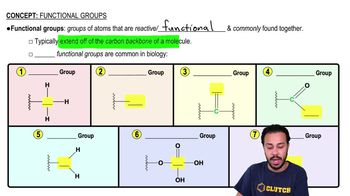
Functional Groups

Glucagon Function

Glucagon is another hormone produced by the pancreas, primarily responsible for raising blood glucose levels. It stimulates the liver to convert stored glycogen into glucose and release it into the bloodstream. If a pancreatic tumor secretes glucagon instead of insulin, it could lead to hyperglycemia, resulting in high blood sugar levels, which can cause symptoms such as increased thirst, frequent urination, and fatigue.
Video consigliato:
Percorso guidato
06:04
Functional Groups

Hormonal Balance

The balance between insulin and glucagon is crucial for maintaining homeostasis in blood glucose levels. Insulin lowers blood sugar, while glucagon raises it, and their interplay ensures that the body responds appropriately to varying energy needs. Disruption of this balance due to a tumor can lead to significant metabolic disturbances, affecting overall health and requiring medical intervention.
Video consigliato:
13:06
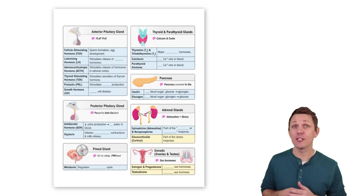
Review of Major Hormones
Pratica correlata
Domanda del libro di testo

Mr. Montez is a patient with type I diabetes mellitus. He presents with dizziness, rapid breathing, confusion, and weakness. You find out that he forgot to inject his normal dose of insulin this morning. Will his blood glucose concentration be normal? Explain. Your colleague suggests that Mr. Montez needs to ingest some sugar. Is this going to help him? Why or why not? 

925
views
Domanda del libro di testo

Which of the following hormones is/are produced by the posterior pituitary?

a. Antidiuretic hormone

b. Oxytocin

c. Both a and b

d. Neither a nor b

858
views
Domanda del libro di testo

Which of the following is not a potential effect that a hormone could have on its target cell?

a. Activating genes in the DNA

b. Stimulating cellular division

c. Altering the permeability of the plasma membrane

d. All of the above are potential effects of a hormone on its target cell.

1083
views
Domanda del libro di testo

Ms. Reczkiewicz has her thyroid gland removed to treat hyperthyroidism. Her condition is stable after surgery, but one day later she develops symptoms of severe hypocalcemia. What has happened? How would you correct this problem?

682
views
Domanda del libro di testo

Females with hormone-secreting tumors of the adrenal cortex occasionally develop male secondary sex characteristics. Explain why this may happen.

934
views
Domanda del libro di testo

A patient has a brain tumor that necessitates removal of his pituitary gland. Will its removal affect production of ADH and oxytocin? Explain.

778
views