Ch. 17 The Cardiovascular System I: The Heart
Amerman- Human Anatomy & Physiology 3e
Amerman3rd EditionHuman Anatomy & PhysiologyISBN: 9780138247201, 9780138247928, 9780138201814Non è quello che usi tu?Cambia libro di testo
Capitolo 17, Problema 8a

Mark the following statements as true or false. If a statement is false, correct it to make a true statement.
The rapid depolarization phase of the contractile cell action potential is due to the opening of voltage-gated potassium ion channels.

Guida verificata passo dopo passo
1
Step 1: Begin by understanding the phases of the contractile cell action potential. The contractile cells in the heart undergo a specific sequence of electrical changes during an action potential: rapid depolarization, initial repolarization, plateau phase, and final repolarization.
Step 2: Focus on the rapid depolarization phase. This phase is characterized by a sudden and significant increase in the membrane potential, which is primarily caused by the influx of ions through specific channels.
Step 3: Recall the role of ion channels during depolarization. The rapid depolarization phase is due to the opening of voltage-gated sodium ion (Na⁺) channels, not potassium ion (K⁺) channels. Sodium ions rush into the cell, causing the membrane potential to become more positive.
Step 4: Evaluate the statement provided in the problem. The statement claims that the rapid depolarization phase is due to the opening of voltage-gated potassium ion channels. This is false because potassium ion channels are primarily involved in repolarization phases, not depolarization.
Step 5: Correct the false statement to make it true. The corrected statement should read: 'The rapid depolarization phase of the contractile cell action potential is due to the opening of voltage-gated sodium ion channels.'

Risposta video verificata per un problema simile:

Questa soluzione video è stata consigliata dai nostri tutor come utile per risolvere questo problema.

Concetti chiave

Ecco i concetti essenziali che devi comprendere per rispondere correttamente alla domanda.

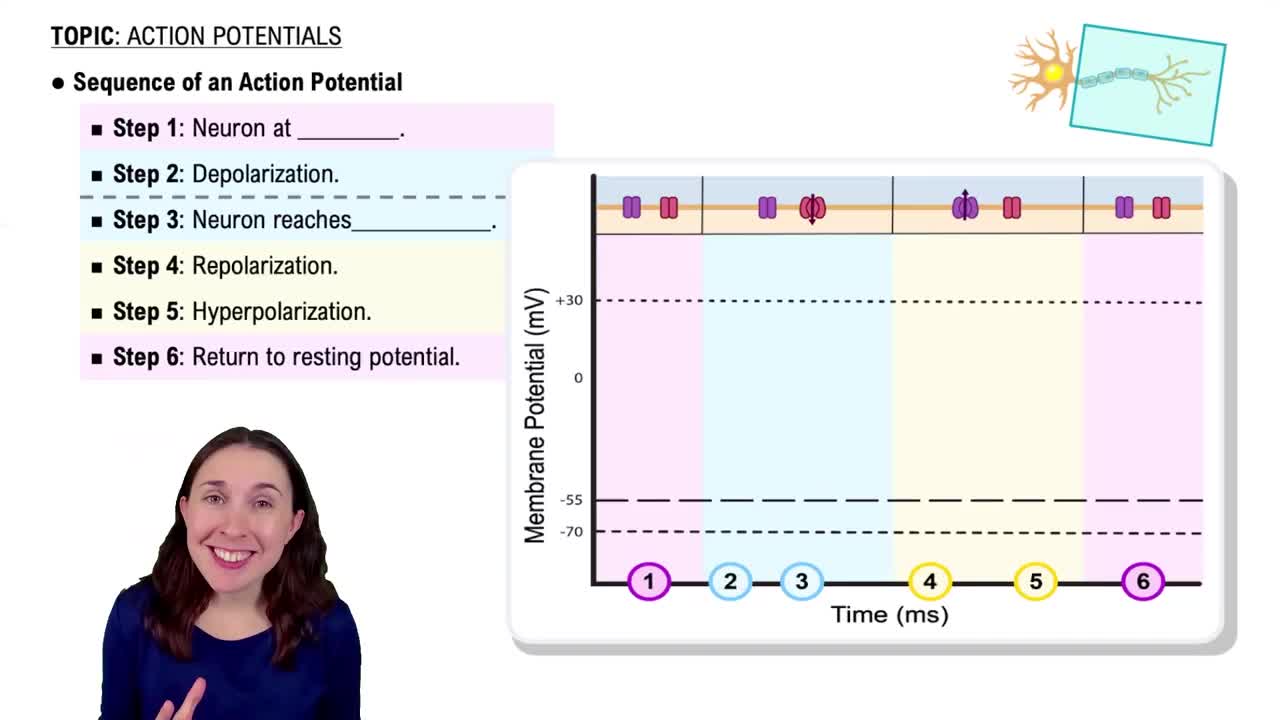
Action Potential

An action potential is a rapid change in membrane potential that occurs in excitable cells, such as neurons and muscle cells. It involves a sequence of depolarization and repolarization phases, which are essential for the transmission of electrical signals. Understanding the phases of action potential is crucial for analyzing cardiac and neural function.
Video consigliato:
03:53
Action Potential

Depolarization

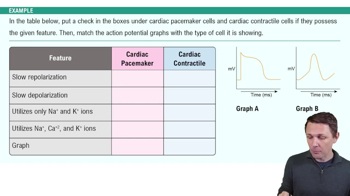
Depolarization refers to the process where the membrane potential becomes less negative (or more positive) due to the influx of positively charged ions, primarily sodium (Na+). In contractile cardiac cells, this phase is primarily driven by the opening of voltage-gated sodium channels, leading to a rapid increase in membrane potential, which is essential for muscle contraction.
Video consigliato:
3:49
Cardiac Action Potentials Example 1

Voltage-Gated Ion Channels

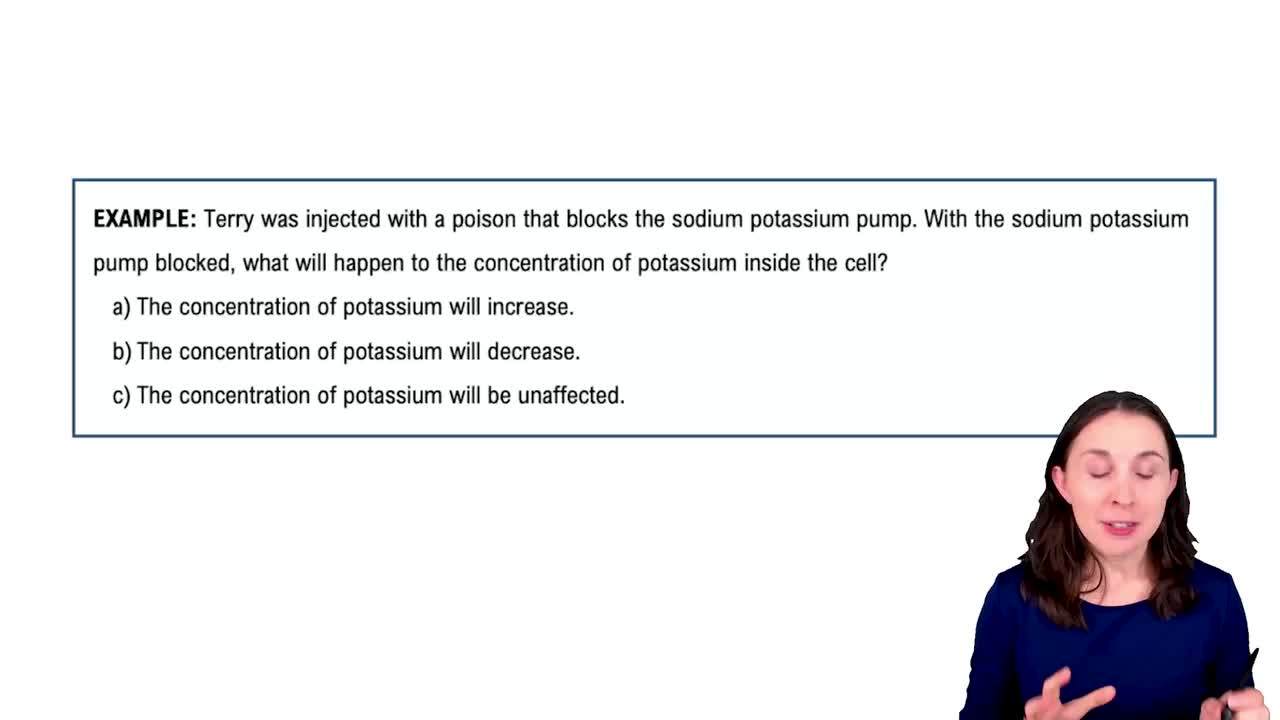
Voltage-gated ion channels are specialized proteins in the cell membrane that open or close in response to changes in membrane potential. These channels are critical for the generation and propagation of action potentials. In the context of cardiac action potentials, the opening of sodium channels during depolarization and potassium channels during repolarization plays a key role in the electrical activity of the heart.
Video consigliato:
01:55
Ions - Sodium and Potassium Example 3