Ch. 19 Blood
Amerman- Human Anatomy & Physiology 3e
Amerman3rd EditionHuman Anatomy & PhysiologyISBN: 9780138247201, 9780138247928, 9780138201814Non è quello che usi tu?Cambia libro di testo
Capitolo 19, Problema L3.3

Ms. Wu, whose blood type is O−, requires a blood transfusion. Her family members volunteer to donate blood. Their blood types are as follows: her son, type B−; her husband, type B+; her daughter, type O+. Which family members could safely donate blood to Ms. Wu? Who could not? Explain.

Guida verificata passo dopo passo
1
Step 1: Understand the compatibility rules for blood transfusions. Blood type compatibility depends on both the ABO blood group system and the Rh factor. Type O− is considered the universal donor but can only receive blood from other O− donors due to the absence of A, B antigens and Rh factor.
Step 2: Analyze Ms. Wu's blood type (O−). Since she is O−, she cannot receive blood from donors with A, B, or AB antigens, nor can she receive blood from Rh-positive donors. This means she can only receive blood from individuals with O− blood type.
Step 3: Evaluate the blood types of her family members. Her son is B−, her husband is B+, and her daughter is O+. None of these blood types match Ms. Wu's O− blood type. Specifically: (a) B− contains the B antigen, which Ms. Wu cannot receive, (b) B+ contains both the B antigen and Rh factor, which Ms. Wu cannot receive, and (c) O+ contains the Rh factor, which Ms. Wu cannot receive.
Step 4: Determine who can safely donate blood to Ms. Wu. Based on the analysis, none of her family members can safely donate blood to her because their blood types are incompatible with her O− blood type.
Step 5: Explain why her family members cannot donate. Blood type compatibility is crucial to prevent immune reactions. If Ms. Wu receives blood with antigens or Rh factors that her immune system does not recognize, it could lead to a severe transfusion reaction. Therefore, she must receive blood from an O− donor.

Risposta video verificata per un problema simile:

Questa soluzione video è stata consigliata dai nostri tutor come utile per risolvere questo problema.

Concetti chiave

Ecco i concetti essenziali che devi comprendere per rispondere correttamente alla domanda.

Blood Type Compatibility

Blood type compatibility is crucial for safe blood transfusions. The ABO blood group system categorizes blood into four types: A, B, AB, and O, based on the presence of antigens. Type O is considered a universal donor for red blood cells, but individuals with type O blood can only receive type O blood. Additionally, the Rh factor (positive or negative) must be considered, as Rh-negative individuals can only receive Rh-negative blood.
Video consigliato:
Percorso guidato
5:34
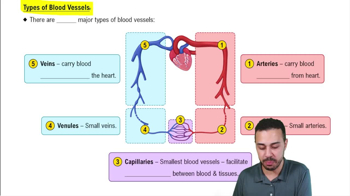
Types of Blood Vessels

ABO Blood Group System

The ABO blood group system classifies blood based on the presence or absence of A and B antigens on the surface of red blood cells. Type O blood lacks both antigens, making it compatible with any ABO type in terms of red blood cell transfusion. However, individuals with type A or B blood have antibodies against the opposite antigens, which can lead to transfusion reactions if incompatible blood is given.
Video consigliato:
Percorso guidato
06:04
Functional Groups

Rh Factor

The Rh factor is a protein that can be present on the surface of red blood cells, leading to two classifications: Rh-positive (presence of the protein) and Rh-negative (absence of the protein). For blood transfusions, Rh-negative individuals can only receive Rh-negative blood to avoid immune reactions. In this scenario, Ms. Wu, being O−, can only accept O− blood, making it essential to consider both ABO and Rh compatibility when determining suitable donors.
Video consigliato:
Percorso guidato
03:48
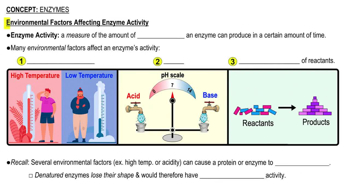
Environmental Factors Affecting Enzyme Activity