
Ch. 20 The Lymphatic System and Immunity
Amerman- Human Anatomy & Physiology 3e
Amerman3rd EditionHuman Anatomy & PhysiologyISBN: 9780138247201, 9780138247928, 9780138201814Non è quello che usi tu?Cambia libro di testo
Capitolo 20, Problema 19

Explain why a patient with AIDS due to HIV is at an increased risk of infection and of developing certain cancers.

Guida verificata passo dopo passo
1
Understand the role of the immune system: The immune system is responsible for defending the body against infections and abnormal cell growth, including cancer. Key components include white blood cells, such as T cells, which coordinate immune responses.
Learn how HIV affects the immune system: HIV specifically targets and destroys CD4+ T cells, a type of white blood cell crucial for immune function. This leads to a weakened immune system, known as immunodeficiency.
Recognize the progression to AIDS: When the number of CD4+ T cells drops below a critical threshold, the patient is diagnosed with AIDS (Acquired Immunodeficiency Syndrome). At this stage, the immune system is severely compromised.
Understand the increased risk of infection: With fewer CD4+ T cells, the body cannot effectively fight off pathogens, making the patient more susceptible to opportunistic infections, which are infections that occur more frequently or are more severe in individuals with weakened immune systems.
Explain the link to cancer: The immune system also plays a role in identifying and destroying abnormal cells that could develop into cancer. A weakened immune system in AIDS patients reduces this surveillance, increasing the risk of certain cancers, such as Kaposi's sarcoma and non-Hodgkin lymphoma.

Risposta video verificata per un problema simile:

Questa soluzione video è stata consigliata dai nostri tutor come utile per risolvere questo problema.

Concetti chiave

Ecco i concetti essenziali che devi comprendere per rispondere correttamente alla domanda.

HIV and the Immune System

HIV (Human Immunodeficiency Virus) attacks the immune system, specifically targeting CD4 T cells, which are crucial for coordinating the body's immune response. As the virus progresses, it leads to a decrease in these cells, weakening the immune system's ability to fight off infections and diseases, making individuals more susceptible to opportunistic infections and certain cancers.
Video consigliato:
Percorso guidato
6:08
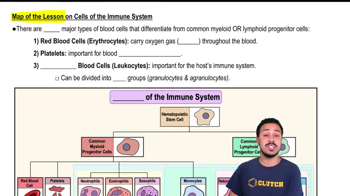
Map of the Lesson on Cells of the Immune System

Opportunistic Infections

Opportunistic infections are infections that occur more frequently and are more severe in individuals with weakened immune systems, such as those with AIDS. Common examples include pneumonia, tuberculosis, and certain fungal infections, which take advantage of the compromised immune defenses in patients with low CD4 counts, leading to increased morbidity and mortality.
Video consigliato:
Percorso guidato
2:38
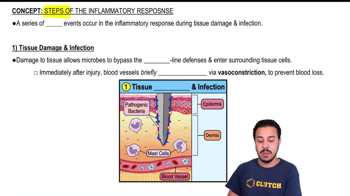
Step 1: Tissue Damage & Infection

Cancer Risk in Immunocompromised Patients

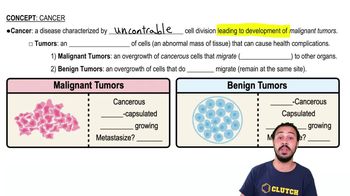
Patients with AIDS are at a higher risk of developing certain cancers, known as AIDS-related cancers, due to their compromised immune systems. The lack of effective immune surveillance allows for the proliferation of cancerous cells and the reactivation of oncogenic viruses, such as Kaposi's sarcoma-associated herpesvirus and Epstein-Barr virus, which are linked to specific malignancies in these patients.
Video consigliato: