
Ch. 22 The Digestive System
Amerman- Human Anatomy & Physiology 3e
Amerman3rd EditionHuman Anatomy & PhysiologyISBN: 9780138247201, 9780138247928, 9780138201814Non è quello che usi tu?Cambia libro di testo
Capitolo 22, Problema L3.3

Individuals experiencing prolonged vomiting lose a great deal of hydrochloric acid with the vomitus. Predict the effect this loss of acid will have on the pH of the blood. How will the respiratory system respond to the change in pH?

Guida verificata passo dopo passo
1
Understand that hydrochloric acid (HCl) is a strong acid, and its loss from the body during prolonged vomiting reduces the concentration of hydrogen ions (H⁺) in the blood, leading to a condition called metabolic alkalosis (an increase in blood pH).
Recall that pH is a measure of hydrogen ion concentration, calculated as pH = -log[H⁺]. A decrease in H⁺ concentration results in an increase in pH, making the blood more alkaline.
Recognize that the respiratory system compensates for changes in blood pH through the regulation of carbon dioxide (CO₂) levels. CO₂ combines with water (H₂O) in the blood to form carbonic acid (H₂CO₃), which dissociates into H⁺ and bicarbonate ions (HCO₃⁻). This reaction is represented as: CO₂ + H₂O ⇌ H₂CO₃ ⇌ H⁺ + HCO₃⁻.
In response to metabolic alkalosis, the respiratory system decreases the rate and depth of breathing (hypoventilation). This causes CO₂ to accumulate in the blood, shifting the equilibrium of the above reaction to produce more H⁺ ions, thereby lowering the pH back toward normal levels.
Conclude that the respiratory system's response to the loss of HCl and the resulting alkalosis is a compensatory mechanism aimed at restoring acid-base balance by adjusting CO₂ levels through changes in ventilation.

Risposta video verificata per un problema simile:

Questa soluzione video è stata consigliata dai nostri tutor come utile per risolvere questo problema.

Concetti chiave

Ecco i concetti essenziali che devi comprendere per rispondere correttamente alla domanda.

Acid-Base Balance

Acid-base balance refers to the mechanisms the body uses to maintain the pH of blood and other fluids within a narrow range, typically around 7.35 to 7.45. This balance is crucial for normal cellular functions and is influenced by the concentration of hydrogen ions (H+) in the blood. Prolonged vomiting leads to a loss of hydrochloric acid, which can result in a higher pH, indicating alkalosis.
Video consigliato:
Percorso guidato
01:29
Acids and Bases

Metabolic Alkalosis

Metabolic alkalosis is a condition characterized by an increase in blood pH due to a loss of acid or an excess of bicarbonate. In the context of prolonged vomiting, the loss of hydrochloric acid decreases the concentration of H+ ions, leading to a rise in pH. This condition can cause symptoms such as muscle twitching, hand tremors, and confusion, and requires physiological compensation to restore balance.
Video consigliato:
Percorso guidato
02:17
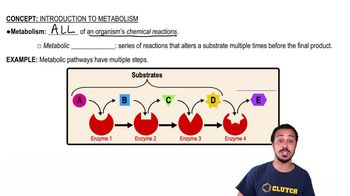
Introduction to Metabolism

Respiratory Compensation

Respiratory compensation is the process by which the respiratory system adjusts breathing rates to help regulate blood pH. In response to metabolic alkalosis, the body may decrease the rate and depth of breathing to retain carbon dioxide (CO2), which can increase H+ ion concentration and lower pH. This compensatory mechanism helps to counteract the effects of alkalosis and restore acid-base balance.
Video consigliato:
Percorso guidato
1:38
Secondary Lymphoid Organs: The Spleen Example 1
Pratica correlata
Domanda del libro di testo

A surgical procedure known as gastric bypass involves creating a small upper stomach pouch and attaching part of the small intestine to this pouch, “bypassing” the rest of the stomach and part of the duodenum.

How would bypassing a significant portion of the stomach affect absorption of vitamin B12? Explain.

119
views
Domanda del libro di testo

A surgical procedure known as gastric bypass involves creating a small upper stomach pouch and attaching part of the small intestine to this pouch, “bypassing” the rest of the stomach and part of the duodenum.

Ms. Anthony has undergone gastric bypass. She goes out to dinner and eats an extremely large meal. Explain what will happen in her small and large intestines following this meal.

70
views
Domanda del libro di testo

Mr. Williams presents to your clinic with a complaint of abdominal pain in the right upper quadrant. He says that the pain worsens when he eats, particularly when he eats fatty meals. He has noticed that his stool has been an unusual clay color recently. You perform an ultrasound of his abdomen and find that gallstones are blocking his common bile duct, preventing bile from entering the duodenum.

You test Mr. Williams's stool and find high amounts of undigested fats. Explain this finding.

645
views
Domanda del libro di testo

Mark the following statements as true or false. If a statement is false, correct it to make a true statement.

The muscularis externa of most of the alimentary canal consists of inner circular and outer longitudinal layers of smooth muscle.

850
views
Domanda del libro di testo

Mr. Williams presents to your clinic with a complaint of abdominal pain in the right upper quadrant. He says that the pain worsens when he eats, particularly when he eats fatty meals. He has noticed that his stool has been an unusual clay color recently. You perform an ultrasound of his abdomen and find that gallstones are blocking his common bile duct, preventing bile from entering the duodenum.

Explain why his feces have become a clay color instead of a normal brown color.

640
views
Domanda del libro di testo

Mark the following statements as true or false. If a statement is false, correct it to make a true statement.

The mucosa from the stomach to the anus consists of an inner layer of stratified columnar epithelium.

1013
views