Ch. 25 Fluid, Electrolyte, and Acid-Base Homeostasis
Amerman- Human Anatomy & Physiology 3e
Amerman3rd EditionHuman Anatomy & PhysiologyISBN: 9780138247201, 9780138247928, 9780138201814Non è quello che usi tu?Cambia libro di testo
Capitolo 25, Problema 10d

Mark the following statements as true or false. If a statement is false, correct it to make a true statement.
d. Hypocalcemia causes neurons to become hyperexcitable, leading to potential tetanic contractions.

Guida verificata passo dopo passo
1
Understand the term 'hypocalcemia': Hypocalcemia refers to a condition where there is a lower-than-normal level of calcium in the blood. Calcium plays a critical role in muscle contraction, nerve signaling, and maintaining the stability of cell membranes.
Analyze the effect of hypocalcemia on neurons: Calcium ions are essential for stabilizing the resting membrane potential of neurons. A deficiency in calcium (hypocalcemia) reduces the threshold for action potential generation, making neurons more excitable.
Relate hyperexcitability to tetanic contractions: Hyperexcitable neurons can lead to excessive stimulation of muscles, potentially causing sustained muscle contractions, also known as tetanic contractions.
Evaluate the statement: The statement 'Hypocalcemia causes neurons to become hyperexcitable, leading to potential tetanic contractions' is true because it accurately describes the physiological effects of low calcium levels on neuronal and muscular activity.
Conclude the assessment: Since the statement is true, no correction is needed. If it were false, the correction would involve explaining the role of calcium in stabilizing neuronal activity and preventing hyperexcitability.

Risposta video verificata per un problema simile:

Questa soluzione video è stata consigliata dai nostri tutor come utile per risolvere questo problema.

Concetti chiave

Ecco i concetti essenziali che devi comprendere per rispondere correttamente alla domanda.

Hypocalcemia

Hypocalcemia refers to a condition characterized by low levels of calcium in the blood. Calcium is crucial for various physiological functions, including muscle contraction and neurotransmitter release. When calcium levels drop, it can disrupt normal cellular activities, particularly in neurons and muscle cells, leading to increased excitability and potential complications.
Video consigliato:
0:52
Renal Physiology Step 2: Tubular Reabsorption Example 6

Neuronal Excitability

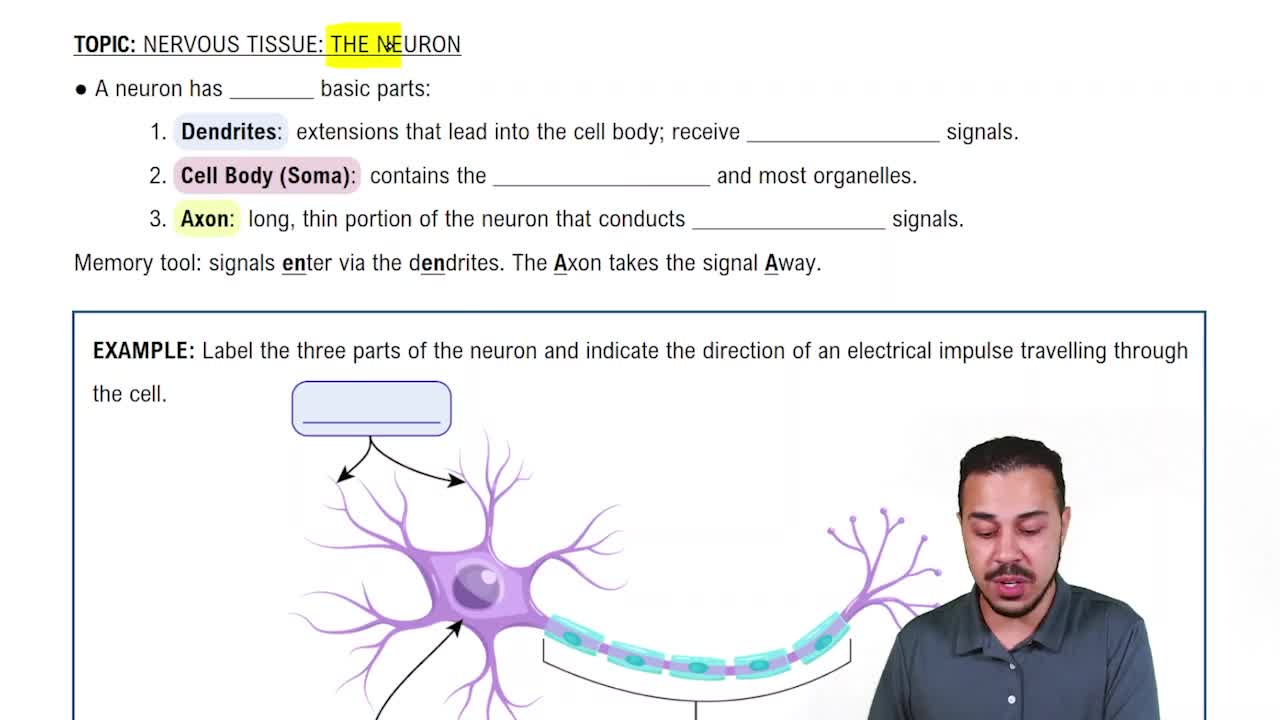
Neuronal excitability is the ability of neurons to respond to stimuli and generate action potentials. Changes in ion concentrations, such as calcium, sodium, and potassium, significantly influence this excitability. In the case of hypocalcemia, the reduced calcium levels can lead to increased neuronal firing, which may result in symptoms like muscle spasms or tetany.
Video consigliato:
04:20
The Neuron

Tetany

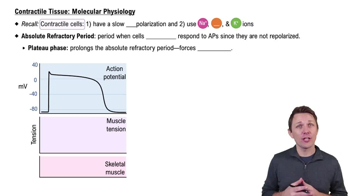
Tetany is a condition characterized by involuntary muscle contractions and spasms, often resulting from electrolyte imbalances, including low calcium levels. In hypocalcemia, the heightened excitability of neurons can lead to sustained muscle contractions, causing symptoms such as cramps and spasms. Understanding the relationship between calcium levels and muscle function is essential for recognizing and treating tetany.
Video consigliato:
9:39
Contractile Tissue: Molecular Physiology