
Ch. 25 Fluid, Electrolyte, and Acid-Base Homeostasis
Amerman- Human Anatomy & Physiology 3e
Amerman3rd EditionHuman Anatomy & PhysiologyISBN: 9780138247201, 9780138247928, 9780138201814Non è quello che usi tu?Cambia libro di testo
Capitolo 25, Problema L3.3

Ms. Johanssen is a patient in the hospital. The nurse examines her laboratory reports and notices that she has developed hyperkalemia and acidosis over the past several days. On closer examination of her medical chart, the nurse also sees that her physician recently doubled her dose of spironolactone, an aldosterone-blocking diuretic. How does this explain her laboratory findings?

Guida verificata passo dopo passo
1
Understand the role of aldosterone: Aldosterone is a hormone that promotes sodium reabsorption and potassium excretion in the kidneys. It also helps regulate acid-base balance by promoting hydrogen ion excretion. Spironolactone, as an aldosterone-blocking diuretic, inhibits these processes.
Explain hyperkalemia: By blocking aldosterone, spironolactone reduces potassium excretion in the kidneys. This leads to an accumulation of potassium in the blood, a condition known as hyperkalemia.
Explain acidosis: Aldosterone also promotes the excretion of hydrogen ions in the kidneys. When aldosterone is blocked by spironolactone, hydrogen ions are retained, leading to a decrease in blood pH, which is referred to as acidosis.
Connect the findings to the medication dose: The doubling of the spironolactone dose would amplify its aldosterone-blocking effects, further reducing potassium and hydrogen ion excretion. This explains the worsening hyperkalemia and acidosis observed in Ms. Johanssen's laboratory reports.
Summarize the physiological impact: The combination of hyperkalemia and acidosis is a direct result of the increased spironolactone dose, which disrupts the normal balance of potassium and hydrogen ions regulated by aldosterone in the kidneys.

Risposta video verificata per un problema simile:

Questa soluzione video è stata consigliata dai nostri tutor come utile per risolvere questo problema.

Concetti chiave

Ecco i concetti essenziali che devi comprendere per rispondere correttamente alla domanda.

Hyperkalemia

Hyperkalemia refers to an elevated level of potassium in the blood, which can lead to serious cardiac and muscular complications. It often occurs when the kidneys are unable to excrete sufficient potassium, or when potassium intake exceeds the body's ability to eliminate it. In the context of diuretics, certain medications, like spironolactone, can cause potassium retention, contributing to hyperkalemia.
Video consigliato:
0:52
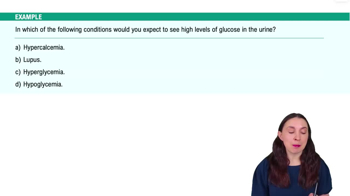
Renal Physiology Step 2: Tubular Reabsorption Example 6

Acidosis

Acidosis is a condition characterized by an excess of acid in the body fluids, leading to a decrease in blood pH. It can result from various factors, including respiratory issues or metabolic disturbances. In patients with hyperkalemia, acidosis can occur as potassium ions shift from the intracellular to the extracellular space, causing hydrogen ions to move into cells, thus increasing acidity in the blood.
Video consigliato:
03:46
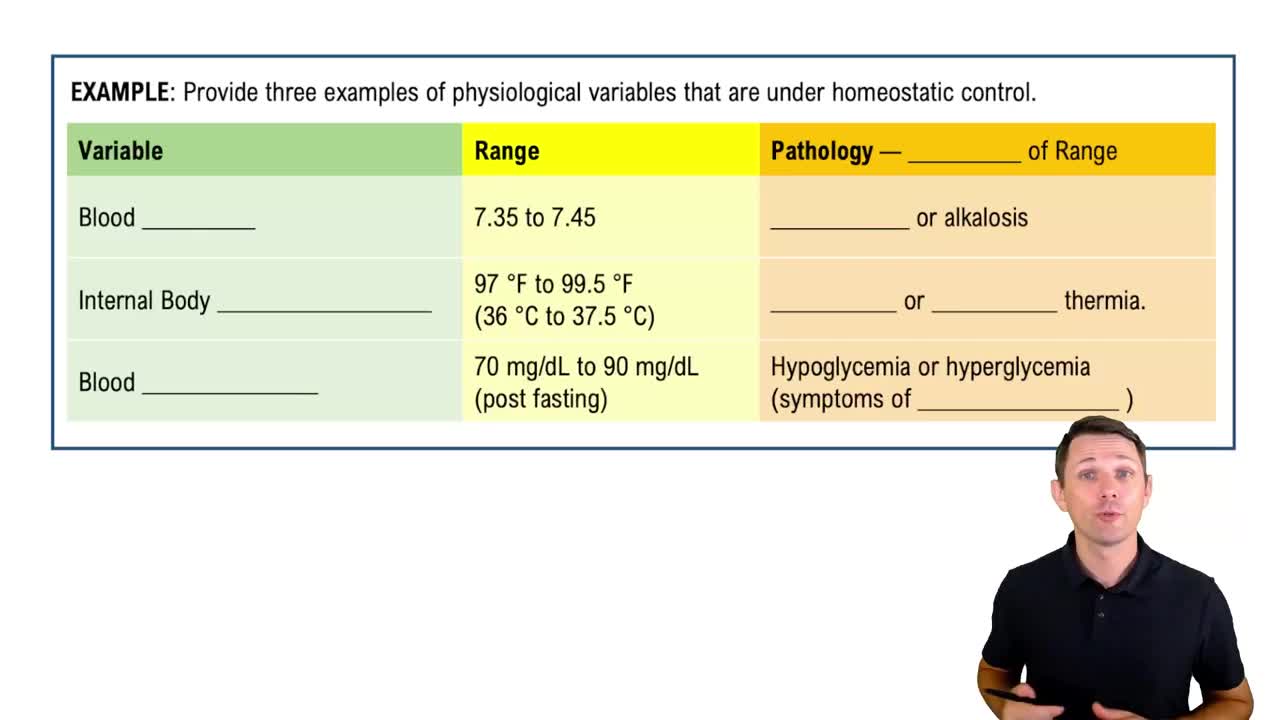
Homeostasis Example 1

Spironolactone

Spironolactone is a potassium-sparing diuretic that works by blocking the action of aldosterone, a hormone that promotes sodium retention and potassium excretion. By inhibiting aldosterone, spironolactone leads to increased sodium excretion while retaining potassium. This mechanism can explain the patient's hyperkalemia, especially after the recent increase in her medication dosage, which may have exacerbated her potassium levels.
Pratica correlata
Domanda del libro di testo

Elise Anderson is a 6-year-old girl who presents to the emergency department with a history of vomiting for the past 3 days. The nurse notices that her respiratory rate is abnormally low. What is the likely reason for this change in ventilation? Predict what Elise's arterial blood gas values would show.

359
views
Domanda del libro di testo

What do you think has happened to Elise's ECF volume and osmolarity over the past 3 days? Will this lead to a change in the volume of water in the cytosol of her cells? Explain.

472
views
Domanda del libro di testo

As a percentage of body weight, the total body water tends to be higher in ________ and lower in ________ .

a. infants; men

b. women; men

c. men; infants

d. infants; women

471
views
Domanda del libro di testo

A laboratory printout of arterial blood gases indicates that a patient has an increased Pco₂ , decreased pH, and normal bicarbonate ion concentration. Is this patient in acidosis or alkalosis? Is the pH disturbance respiratory or metabolic in nature? Explain your reasoning. How long do you think the patient has had this pH disturbance? (Hint: Look at the bicarbonate ion concentration. What system controls the concentration of bicarbonate ions, and how quickly does it compensate for pH disturbances?)

361
views
Domanda del libro di testo

What happens to the concentration of sodium ions in the ECF if you consume a large amount of salt without consuming any water? How will this affect the osmotic pressure of the ECF? Why could this lead to an elevation in blood pressure?

628
views
Domanda del libro di testo

What happens to the pH of a solution when hydrogen ions are added?

a. The pH increases.

b. The pH decreases.

c. The pH does not change.

d. The pH does not measure hydrogen ion concentration.

797
views