Ch. 4 Histology
Amerman- Human Anatomy & Physiology 3e
Amerman3rd EditionHuman Anatomy & PhysiologyISBN: 9780138247201, 9780138247928, 9780138201814Non è quello che usi tu?Cambia libro di testo
Capitolo 4, Problema 1

Explain how connective tissues differ from epithelial tissues in structure and function.

Guida verificata passo dopo passo
1
Connective tissues are characterized by having a large amount of extracellular matrix, which is composed of protein fibers (like collagen and elastin) and ground substance, whereas epithelial tissues are tightly packed cells with minimal extracellular matrix.
Epithelial tissues form continuous sheets that cover surfaces, line cavities, and form glands, while connective tissues provide support, protection, and binding of other tissues and organs.
Epithelial tissues are avascular (lack blood vessels) and rely on diffusion from underlying connective tissues for nutrients, whereas connective tissues are typically vascularized (except for cartilage).
The cells in connective tissues are more scattered and include specialized types such as fibroblasts, adipocytes, and macrophages, while epithelial tissues consist of uniform cell types like squamous, cuboidal, or columnar cells arranged in layers.
Epithelial tissues primarily function in protection, absorption, secretion, and filtration, while connective tissues function in structural support, energy storage, immune defense, and repair of tissues.

Risposta video verificata per un problema simile:

Questa soluzione video è stata consigliata dai nostri tutor come utile per risolvere questo problema.

Concetti chiave

Ecco i concetti essenziali che devi comprendere per rispondere correttamente alla domanda.

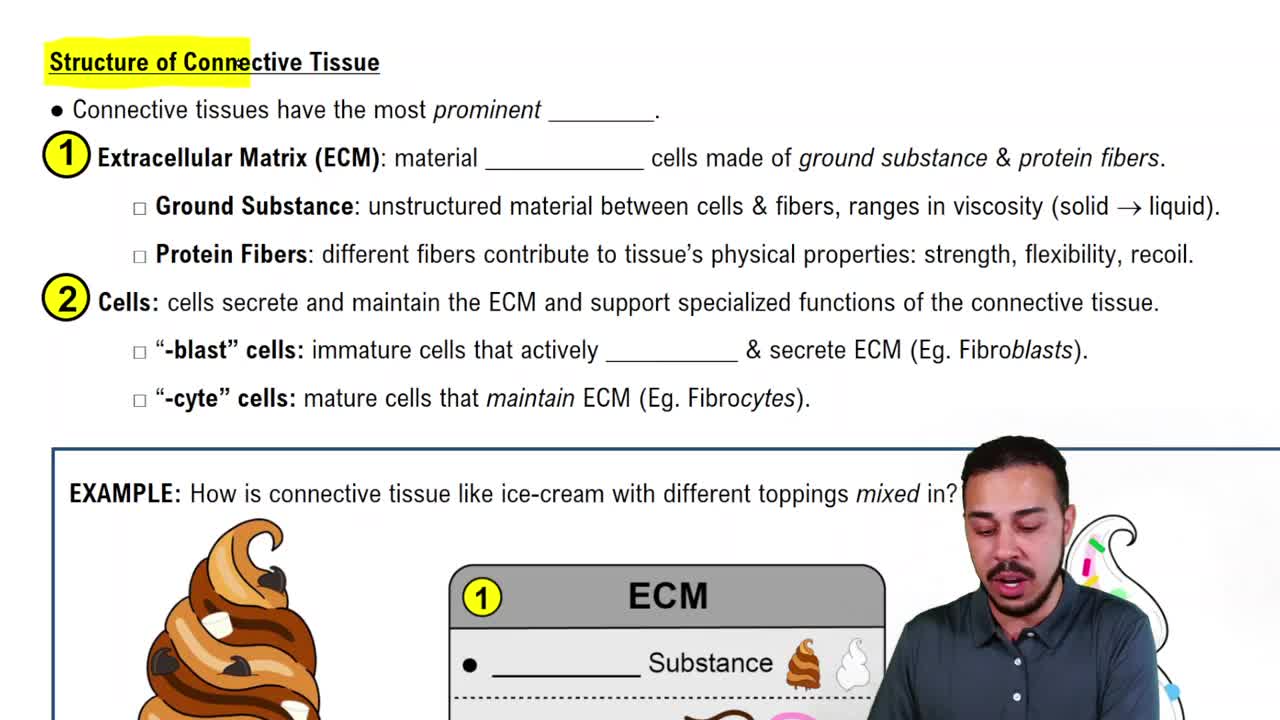
Connective Tissue Structure

Connective tissues are characterized by a diverse composition that includes cells, fibers, and a matrix. The matrix can be liquid, gel-like, or solid, providing structural support and facilitating the transport of nutrients and waste. Unlike epithelial tissues, which are tightly packed, connective tissues have more space between cells, allowing for flexibility and strength.
Video consigliato:
08:24
Structure of Connective Tissue

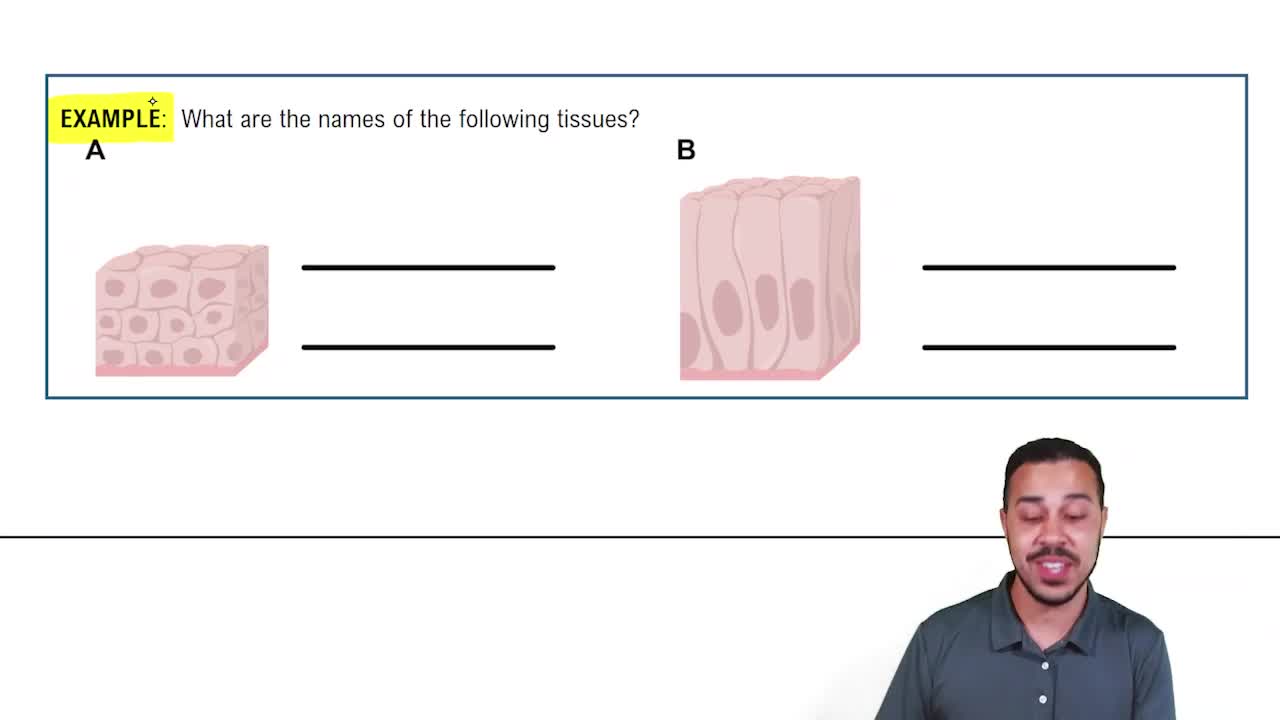
Epithelial Tissue Structure

Epithelial tissues consist of closely packed cells with minimal extracellular matrix, forming continuous sheets that cover surfaces and line cavities. They are anchored to underlying connective tissues by a basement membrane. This structure allows epithelial tissues to serve as protective barriers and facilitate absorption, secretion, and sensation.
Video consigliato:
02:41
Structural Naming of Epithelial Tissue Example 1

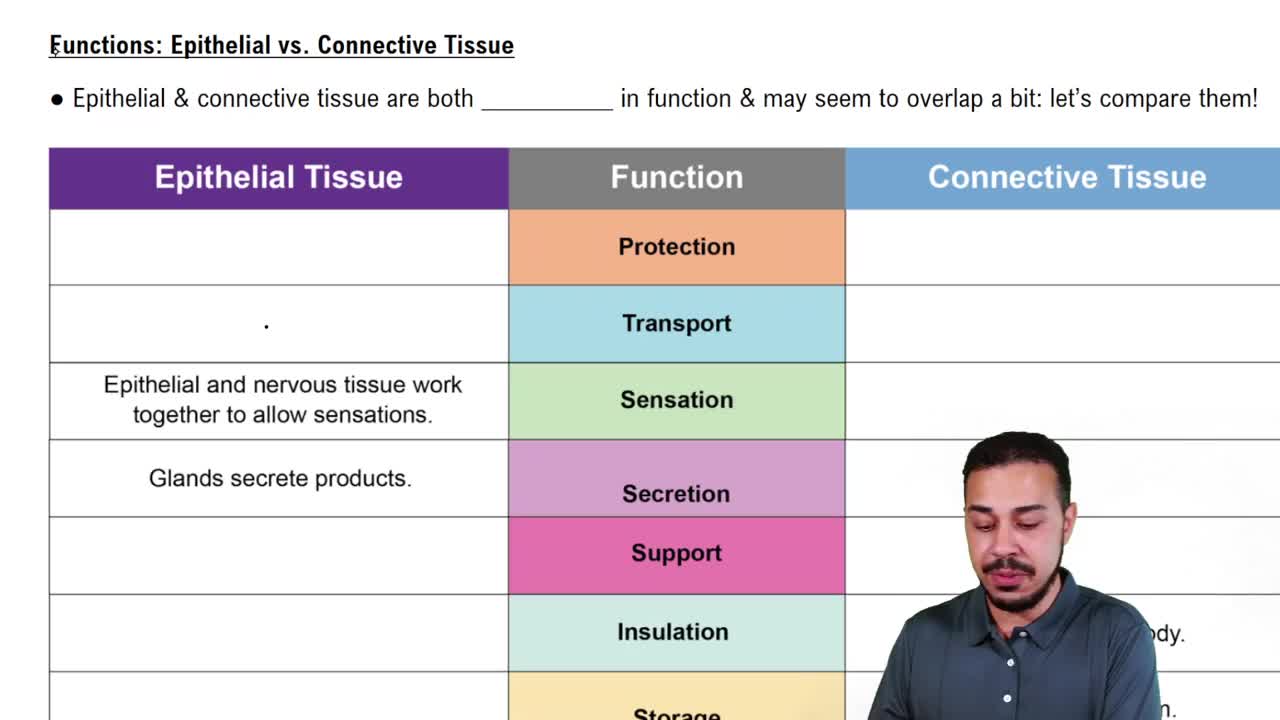
Function of Connective vs. Epithelial Tissues

The primary function of connective tissues is to support, bind, and protect other tissues and organs, as well as to store energy and transport substances. In contrast, epithelial tissues primarily function in protection, absorption, secretion, and sensation. This functional distinction is closely tied to their structural differences, with connective tissues providing support and epithelial tissues forming protective layers.
Video consigliato:
08:54
Functions: Epithelial vs. Connective Tissue