Ch. 10 Blood
Marieb - Essentials of Human Anatomy & Physiology 13th Edition
Marieb13th EditionEssentials of Human Anatomy & PhysiologyISBN: 9780135624340Non è quello che usi tu?Cambia libro di testo
Capitolo 10, Problema 14

Name as many different categories of substances carried in plasma as you can.

Guida verificata passo dopo passo
1
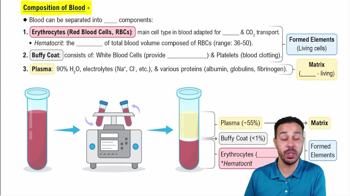
Understand that plasma is the liquid component of blood, making up about 55% of its total volume. It serves as a transport medium for various substances throughout the body.
Identify the major categories of substances carried in plasma, which include proteins such as albumin, globulins, and fibrinogen. These proteins play roles in maintaining osmotic pressure, immune responses, and blood clotting.
Recognize that plasma also carries nutrients like glucose, amino acids, fatty acids, and vitamins, which are essential for cellular metabolism and energy production.
Note that plasma transports waste products such as urea, creatinine, and bilirubin, which are destined for excretion by the kidneys or liver.
Include other categories such as electrolytes (e.g., sodium, potassium, calcium, chloride), hormones, gases (e.g., oxygen and carbon dioxide), and water, which are vital for maintaining homeostasis and physiological functions.

Risposta video verificata per un problema simile:

Questa soluzione video è stata consigliata dai nostri tutor come utile per risolvere questo problema.
Durata del video:
2m

Concetti chiave

Ecco i concetti essenziali che devi comprendere per rispondere correttamente alla domanda.

Plasma Composition

Plasma is the liquid component of blood, making up about 55% of its total volume. It consists primarily of water, electrolytes, proteins, hormones, nutrients, and waste products. Understanding plasma composition is essential for identifying the various substances it carries, which play critical roles in bodily functions.
Video consigliato:
Percorso guidato
7:49
Composition of Blood

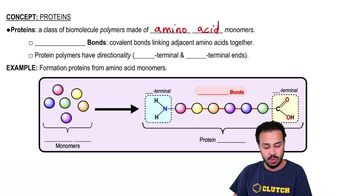
Proteins in Plasma

Plasma proteins, such as albumin, globulins, and fibrinogen, are vital for maintaining osmotic pressure, immune responses, and blood clotting. Each type of protein has specific functions, and their concentrations can indicate various health conditions. Recognizing these proteins helps in understanding the overall functionality of plasma.
Video consigliato:

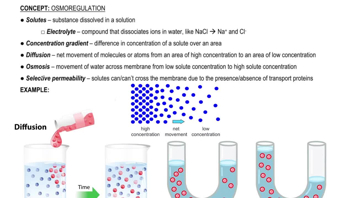
Electrolytes and Nutrients

Electrolytes, including sodium, potassium, calcium, and bicarbonate, are essential for maintaining fluid balance, nerve function, and muscle contraction. Additionally, plasma carries nutrients like glucose, amino acids, and lipids, which are crucial for energy production and cellular function. Identifying these substances is key to understanding plasma's role in homeostasis.
Video consigliato:
Percorso guidato
07:59
Osmosis and Osmolarity