Ch. 11 Cardiovascular System
Marieb - Essentials of Human Anatomy & Physiology 13th Edition
Marieb13th EditionEssentials of Human Anatomy & PhysiologyISBN: 9780135624340Non è quello che usi tu?Cambia libro di testo
Capitolo 11, Problema 14

More than one choice may apply.
An increase in BP would be caused by all of the following except
a. Increase in SV
b. Increase in heart rate
c. Hemorrhage
d. Vasoconstriction of the arterioles

Guida verificata passo dopo passo
1
Understand the question: The problem is asking which of the listed options would NOT cause an increase in blood pressure (BP). Blood pressure is influenced by factors such as stroke volume (SV), heart rate, blood volume, and vascular resistance.
Review the physiological concepts: Blood pressure is determined by the equation: BP = CO × TPR, where CO (cardiac output) = SV × HR (heart rate), and TPR (total peripheral resistance) is influenced by the diameter of blood vessels. An increase in any of these factors typically raises BP.
Analyze each option: a) An increase in stroke volume (SV) increases cardiac output, which raises BP. b) An increase in heart rate (HR) also increases cardiac output, raising BP. c) Hemorrhage reduces blood volume, which decreases BP. d) Vasoconstriction of arterioles increases TPR, which raises BP.
Identify the exception: Based on the analysis, hemorrhage (option c) is the only factor that would decrease BP rather than increase it.
Conclude: The correct answer is 'c. hemorrhage,' as it does not cause an increase in BP, unlike the other options.

Risposta video verificata per un problema simile:

Questa soluzione video è stata consigliata dai nostri tutor come utile per risolvere questo problema.
Durata del video:
1m

Concetti chiave

Ecco i concetti essenziali che devi comprendere per rispondere correttamente alla domanda.

Blood Pressure (BP)

Blood pressure is the force exerted by circulating blood on the walls of blood vessels, typically measured in millimeters of mercury (mmHg). It is influenced by cardiac output, blood volume, and vascular resistance. Understanding BP is crucial for assessing cardiovascular health and diagnosing conditions like hypertension.
Video consigliato:
6:12
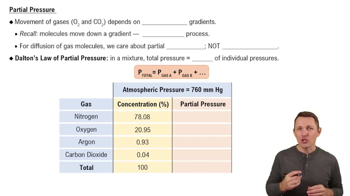
Partial Pressure

Stroke Volume (SV)

Stroke volume refers to the amount of blood ejected by the heart with each beat. An increase in stroke volume can lead to higher cardiac output, which typically raises blood pressure. Factors affecting stroke volume include heart muscle contractility, preload, and afterload, making it a key component in understanding blood pressure dynamics.
Video consigliato:
6:28
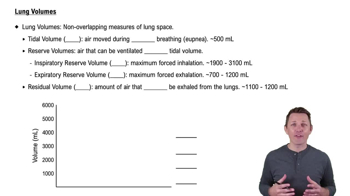
Lung Volumes

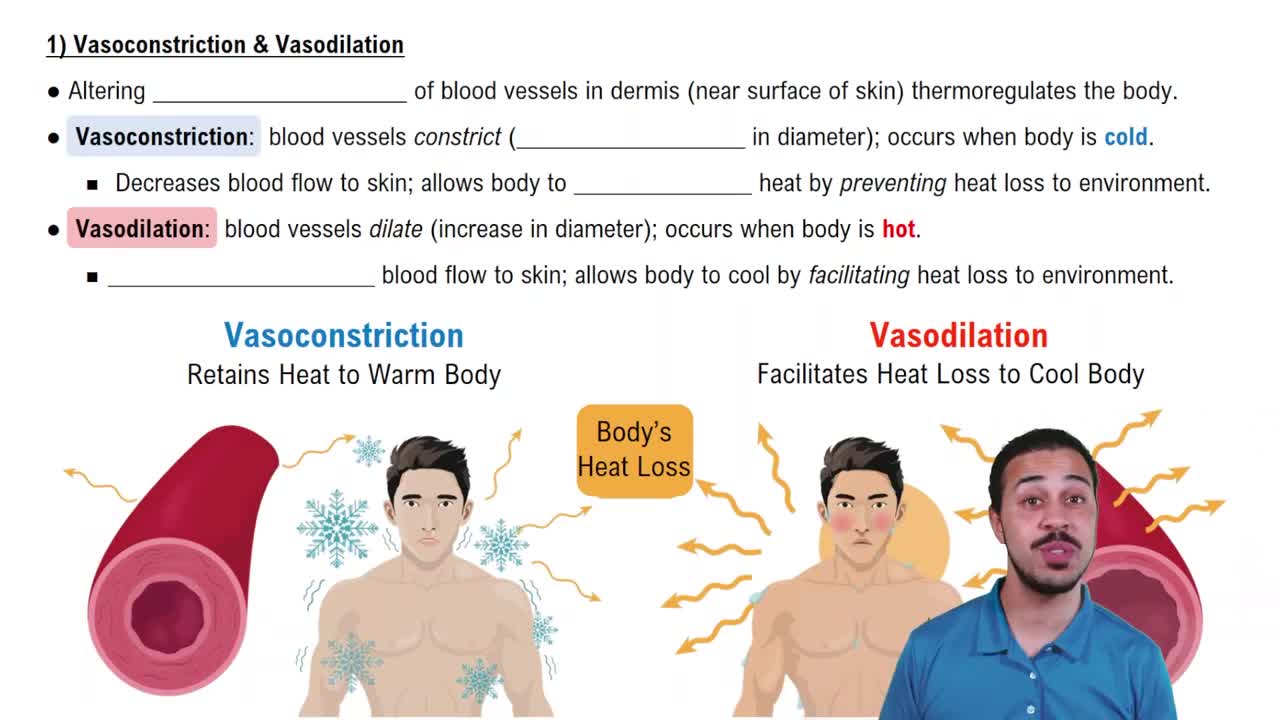
Vasoconstriction

Vasoconstriction is the narrowing of blood vessels, which increases vascular resistance and can lead to an increase in blood pressure. This physiological response is often triggered by factors such as stress, cold temperatures, or certain hormones. Understanding vasoconstriction is essential for analyzing how blood pressure can be regulated in various physiological and pathological states.
Video consigliato:
Percorso guidato
05:07
Vasoconstriction & Vasodilation