Ch. 15 The Urinary System
Marieb - Essentials of Human Anatomy & Physiology 13th Edition
Marieb13th EditionEssentials of Human Anatomy & PhysiologyISBN: 9780135624340Non è quello che usi tu?Cambia libro di testo
Capitolo 15, Problema 25

A 55-year-old woman is awakened by an excruciating pain that radiates from her right abdomen to her flank on the same side. The pain is not continuous, but it recurs every 3 to 4 minutes. Diagnose this patient's problem, and cite factors that might favor its occurrence. Explain why this woman's pain comes in 'waves.'

Guida verificata passo dopo passo
1
Step 1: Recognize the symptoms described in the problem. The excruciating pain radiating from the right abdomen to the flank, recurring every few minutes, is characteristic of renal colic, which is often caused by kidney stones (nephrolithiasis). Kidney stones can obstruct the flow of urine, leading to intense pain.
Step 2: Understand the factors that might favor the occurrence of kidney stones. These include dehydration (leading to concentrated urine), dietary factors (high intake of oxalates, calcium, or purines), genetic predisposition, certain medical conditions (e.g., hyperparathyroidism or gout), and urinary tract infections.
Step 3: Explain the mechanism behind the 'waves' of pain. The intermittent nature of the pain is due to the movement of the kidney stone within the ureter. As the stone moves or causes spasms in the ureter, it temporarily obstructs urine flow, leading to increased pressure and pain. When the stone shifts or the ureter relaxes, the pain subsides briefly.
Step 4: Discuss the anatomy involved. The ureter is a muscular tube that connects the kidney to the bladder. It has peristaltic movements to propel urine. When a kidney stone obstructs the ureter, these movements can intensify, causing severe pain that radiates along the path of the ureter.
Step 5: Suggest diagnostic and management approaches. Diagnosis typically involves imaging studies such as ultrasound or CT scan to confirm the presence and location of the stone. Management may include pain relief, hydration to help pass the stone, and possibly medical or surgical intervention depending on the size and location of the stone.

Risposta video verificata per un problema simile:

Questa soluzione video è stata consigliata dai nostri tutor come utile per risolvere questo problema.
Durata del video:
3m

Concetti chiave

Ecco i concetti essenziali che devi comprendere per rispondere correttamente alla domanda.

Renal Colic

Renal colic is a type of pain caused by the obstruction of the urinary tract, often due to kidney stones. The pain typically originates in the flank and can radiate to the abdomen or groin. It is characterized by its intermittent nature, often described as coming in waves, which corresponds to the movement of the stone and the resulting spasms of the ureter.
Video consigliato:
4:58
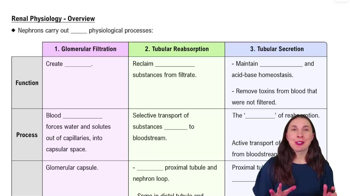
Overview of Renal Physiology

Pain Pathophysiology

The pathophysiology of pain involves the activation of nociceptors, which are sensory receptors that respond to potentially damaging stimuli. In the case of renal colic, the obstruction causes increased pressure in the renal pelvis, leading to the release of inflammatory mediators that stimulate these receptors. This results in the characteristic sharp, episodic pain as the body reacts to the obstruction and attempts to expel the stone.
Video consigliato:
1:36
The Cerebrum Example 3

Risk Factors for Kidney Stones

Several factors can increase the likelihood of developing kidney stones, including dehydration, dietary habits, obesity, and certain medical conditions like hyperparathyroidism. Understanding these risk factors is crucial for prevention and management. In this case, identifying the patient's lifestyle and medical history can provide insights into why she may be experiencing renal colic.
Video consigliato:
1:00
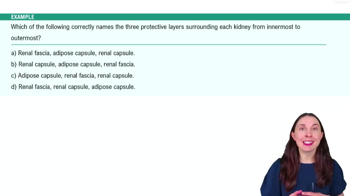
The Kidneys Example 1