Ch. 15 The Urinary System
Marieb - Essentials of Human Anatomy & Physiology 13th Edition
Marieb13th EditionEssentials of Human Anatomy & PhysiologyISBN: 9780135624340Non è quello che usi tu?Cambia libro di testo
Capitolo 15, Problema 28

Mr. Jessup, a 55-year-old man, is operated on for a cerebral tumor. About one month later, he complains that he is excessively thirsty and that he has been voiding almost continuously. A urine sample is collected, and its specific gravity is 1.001. What is your diagnosis of Mr. Jessup's problem, and how might it be related to his previous surgery?

Guida verificata passo dopo passo
1
Step 1: Begin by analyzing the symptoms presented by Mr. Jessup. Excessive thirst (polydipsia) and frequent urination (polyuria) are hallmark signs of a condition affecting water balance in the body. These symptoms suggest a possible issue with the regulation of antidiuretic hormone (ADH).
Step 2: Evaluate the urine sample's specific gravity. A specific gravity of 1.001 indicates very dilute urine, which is consistent with the inability of the kidneys to concentrate urine. This further supports the hypothesis of impaired ADH function.
Step 3: Consider the connection between Mr. Jessup's recent cerebral tumor surgery and his current symptoms. The hypothalamus and posterior pituitary gland, which are responsible for producing and releasing ADH, may have been affected during the surgery. Damage to these areas can lead to a condition called diabetes insipidus.
Step 4: Understand the mechanism of diabetes insipidus. In this condition, either the production of ADH is reduced (central diabetes insipidus) or the kidneys fail to respond to ADH (nephrogenic diabetes insipidus). Given the surgical history, central diabetes insipidus is more likely.
Step 5: Recommend further diagnostic tests to confirm the diagnosis. These may include measuring blood and urine osmolality, conducting a water deprivation test, and assessing ADH levels. Treatment typically involves addressing the underlying cause and administering desmopressin, a synthetic form of ADH, if central diabetes insipidus is confirmed.

Risposta video verificata per un problema simile:

Questa soluzione video è stata consigliata dai nostri tutor come utile per risolvere questo problema.
Durata del video:
3m

Concetti chiave

Ecco i concetti essenziali che devi comprendere per rispondere correttamente alla domanda.

Diabetes Insipidus

Diabetes Insipidus (DI) is a condition characterized by excessive thirst and the excretion of large volumes of dilute urine. It occurs due to a deficiency of the antidiuretic hormone (ADH), which regulates water balance in the body. In Mr. Jessup's case, the symptoms of excessive thirst and low urine specific gravity suggest that he may be experiencing DI, potentially as a complication following his cerebral surgery.
Video consigliato:
Percorso guidato
1:38
Secondary Lymphoid Organs: The Spleen Example 1

Cerebral Surgery Complications

Cerebral surgery can lead to various complications, including damage to the hypothalamus or pituitary gland, which are crucial for hormone regulation. If the surgery affected areas responsible for ADH production or release, it could result in DI. Understanding the relationship between the surgical site and hormonal control is essential for diagnosing Mr. Jessup's condition.
Video consigliato:
3:13
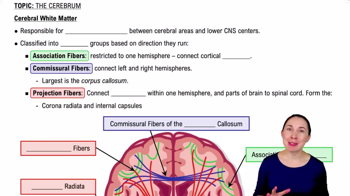
Cerebral White Matter

Urine Specific Gravity

Urine specific gravity is a measure of the concentration of solutes in urine, indicating the kidney's ability to concentrate urine. A normal specific gravity ranges from 1.005 to 1.030. Mr. Jessup's urine specific gravity of 1.001 indicates very dilute urine, which aligns with the symptoms of DI and suggests that his kidneys are not reabsorbing water effectively, further supporting the diagnosis.
Video consigliato:
Percorso guidato
03:25
Water’s High Specific Heat