The parents of 14-year-old Megan are concerned about her height because she is only 4 feet tall and they are both close to 6 feet tall. After tests by their doctor, certain hormones are prescribed for the girl. What is the probable diagnosis? What hormones are prescribed, and why might the girl expect to reach normal height?
Ch. 9 The Endocrine System

Marieb13th EditionEssentials of Human Anatomy & PhysiologyISBN: 9780135624340Non è quello che usi tu?Cambia libro di testo
Capitolo 9, Problema 21
Melissa, age 40, comes to the clinic, troubled by swelling in her face and unusual fat deposition on her back and abdomen. She reports that she bruises easily. Blood tests show an elevated glucose level. What is your diagnosis, and which glands might be causing the problem?
Guida verificata passo dopo passo1
Step 1: Begin by analyzing Melissa's symptoms, which include swelling in her face, unusual fat deposition on her back and abdomen, easy bruising, and elevated glucose levels. These symptoms are characteristic of a condition known as Cushing's syndrome.
Step 2: Understand the underlying cause of Cushing's syndrome. It is typically caused by prolonged exposure to high levels of cortisol, a hormone produced by the adrenal glands. Excess cortisol can result from overproduction by the adrenal glands or from external sources such as corticosteroid medications.
Step 3: Investigate the glands involved. The adrenal glands are directly responsible for producing cortisol. However, the pituitary gland may also play a role if it produces excessive adrenocorticotropic hormone (ACTH), which stimulates the adrenal glands to produce cortisol. This condition is known as Cushing's disease.
Step 4: Consider diagnostic tests to confirm the cause. Blood tests measuring cortisol levels, ACTH levels, and glucose levels can help pinpoint the source of the problem. Imaging studies such as CT or MRI scans may be used to check for abnormalities in the adrenal or pituitary glands.
Step 5: Discuss potential treatments. If the issue is caused by a tumor in the adrenal or pituitary glands, surgical removal may be necessary. Medications to control cortisol production or manage symptoms may also be prescribed. Lifestyle changes, such as managing blood glucose levels, can help mitigate complications.

Risposta video verificata per un problema simile:
Questa soluzione video è stata consigliata dai nostri tutor come utile per risolvere questo problema.
Durata del video:
2mConcetti chiave
Ecco i concetti essenziali che devi comprendere per rispondere correttamente alla domanda.
Cushing's Syndrome
Cushing's Syndrome is a hormonal disorder caused by prolonged exposure to high levels of cortisol. Symptoms include weight gain, particularly in the abdomen and face, easy bruising, and skin changes. It can result from various factors, including tumors on the adrenal glands or pituitary gland, which lead to excess cortisol production.
Video consigliato:
Anatomical Terms for the Leg and Foot Example 2
Adrenal Glands
The adrenal glands are small, triangular-shaped glands located on top of each kidney. They produce hormones such as cortisol, adrenaline, and aldosterone, which are crucial for regulating metabolism, immune response, and blood pressure. Dysfunction in these glands can lead to conditions like Cushing's Syndrome, characterized by excessive hormone production.
Video consigliato:
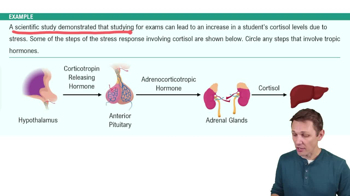
The Hypothalamus and Pituitary Gland Example 1
Glucose Metabolism
Glucose metabolism refers to the process by which the body converts glucose into energy. Elevated glucose levels, as seen in Melissa's blood tests, can indicate insulin resistance or diabetes, often associated with hormonal imbalances. In Cushing's Syndrome, excess cortisol can impair glucose metabolism, leading to hyperglycemia.
Video consigliato:
Percorso guidato
Introduction to Metabolism
Pratica correlata
Domanda del libro di testo
919
views
Domanda del libro di testo
Two hormones are closely involved in the regulation of the fluid and electrolyte balance of the body. Name them, and explain their effects on their common target organ.
799
views
Domanda del libro di testo
Mr. Flores brings his wife to the clinic, concerned about her nervousness, heart palpitations, and excessive sweating. Tests show hyperglycemia and hypertension. What hormones are probably being hypersecreted? What is the cause? What physical factors allow you to rule out thyroid problems?
865
views
