Ch. 12 Nervous Tissue
Martini - Fundamentals of Anatomy & Physiology 11th Edition
Martini, Nath, Bartholomew11th EditionFundamentals of Anatomy & PhysiologyISBN: 9780136874089Non è quello che usi tu?Cambia libro di testo
Capitolo 12, Problema 22

Harry has a kidney condition that causes changes in his body's electrolyte levels (concentration of ions in the extracellular fluid). As a result, he is exhibiting tachycardia, an abnormally fast heart rate. Which ion is involved, and how does a change in its concentration cause Harry's symptoms?

Guida verificata passo dopo passo
1
Identify the key ions involved in cardiac muscle function, focusing on sodium (Na\^+), potassium (K\^+), calcium (Ca\^{2+}), and chloride (Cl\^-), as these ions influence the electrical activity of the heart.
Understand that potassium (K\^+) plays a critical role in setting the resting membrane potential of cardiac cells and in repolarization during the cardiac action potential.
Recognize that changes in extracellular potassium concentration can alter the resting membrane potential: increased K\^+ levels (hyperkalemia) can depolarize the membrane, while decreased K\^+ levels (hypokalemia) can hyperpolarize it.
Explain how altered potassium levels affect heart rate: hyperkalemia can lead to faster depolarization and potentially tachycardia, while hypokalemia can cause arrhythmias and other cardiac issues.
Summarize that in Harry's case, an abnormal potassium concentration in the extracellular fluid disrupts the normal electrical signaling in the heart, leading to tachycardia.

Risposta video verificata per un problema simile:

Questa soluzione video è stata consigliata dai nostri tutor come utile per risolvere questo problema.
Durata del video:
6m

Concetti chiave

Ecco i concetti essenziali che devi comprendere per rispondere correttamente alla domanda.

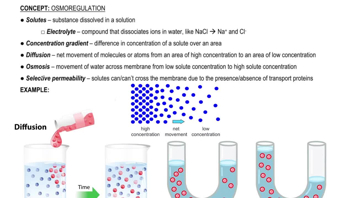
Electrolyte Balance and Extracellular Fluid

Electrolytes are ions like sodium, potassium, calcium, and chloride that maintain fluid balance and electrical activity in the body. Changes in their concentration in the extracellular fluid can disrupt normal cellular functions, especially in excitable tissues like the heart.
Video consigliato:
Percorso guidato
07:59
Osmosis and Osmolarity

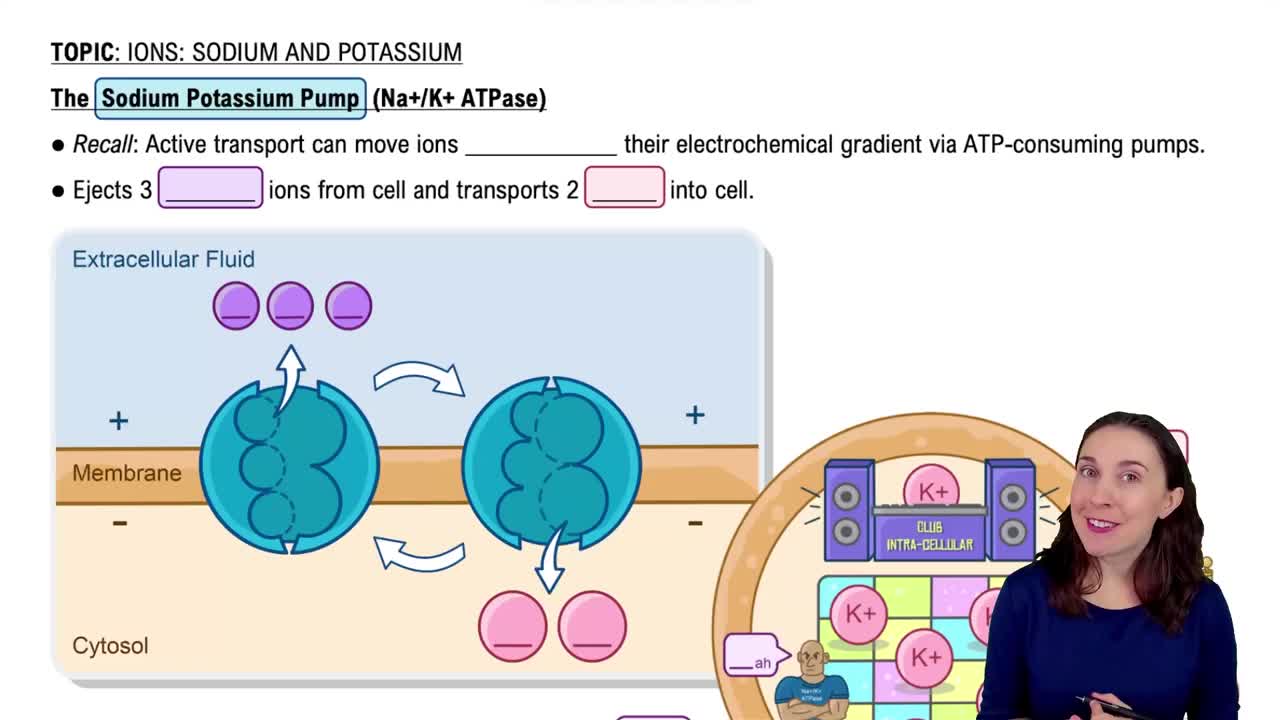
Role of Potassium in Cardiac Function

Potassium ions are critical for maintaining the resting membrane potential of cardiac cells. Abnormal potassium levels, particularly hypokalemia or hyperkalemia, can alter heart rhythm by affecting the electrical conduction system, potentially causing arrhythmias such as tachycardia.
Video consigliato:
03:40
The Sodium Potassium Pump

Mechanism of Tachycardia Due to Electrolyte Imbalance

Tachycardia occurs when the heart beats faster than normal, often triggered by electrolyte disturbances that affect ion channels and action potentials in cardiac cells. For example, low potassium can increase excitability, leading to rapid heart rates as seen in some kidney disorders.
Video consigliato:
Percorso guidato
07:59
Osmosis and Osmolarity