Ch. 14 The Brain and Cranial Nerves
Martini - Fundamentals of Anatomy & Physiology 11th Edition
Martini, Nath, Bartholomew11th EditionFundamentals of Anatomy & PhysiologyISBN: 9780136874089Non è quello che usi tu?Cambia libro di testo
Capitolo 14, Problema 26

A cerebrovascular accident occurs when
(a) The reticular activating system fails to function
(b) The prefrontal lobe is damaged
(c) The blood supply to a portion of the brain is cut off
(d) A descending tract in the spinal cord is severed
(e) Brainstem nuclei hypersecrete dopamine

Guida verificata passo dopo passo
1
Step 1: Understand the term 'cerebrovascular accident' (CVA), which is commonly known as a stroke. It involves an interruption of blood flow to a part of the brain.
Step 2: Review each option to see which one describes a condition related to blood flow or vascular issues in the brain.
Step 3: Option (a) mentions the reticular activating system failing, which affects consciousness but is not specifically about blood supply.
Step 4: Option (b) involves damage to the prefrontal lobe, which affects cognitive functions but does not directly describe a vascular event.
Step 5: Option (c) states that the blood supply to a portion of the brain is cut off, which matches the definition of a cerebrovascular accident.

Risposta video verificata per un problema simile:

Questa soluzione video è stata consigliata dai nostri tutor come utile per risolvere questo problema.

Concetti chiave

Ecco i concetti essenziali che devi comprendere per rispondere correttamente alla domanda.

Cerebrovascular Accident (Stroke)

A cerebrovascular accident, commonly known as a stroke, occurs when the blood supply to a part of the brain is interrupted or reduced, depriving brain tissue of oxygen and nutrients. This can result from a blockage (ischemic stroke) or bleeding (hemorrhagic stroke), leading to brain cell damage or death.
Video consigliato:
3:44
Steps of Muscle Contraction Example 5

Blood Supply to the Brain

The brain relies on a continuous supply of oxygenated blood delivered through arteries like the carotid and vertebral arteries. Any disruption in this blood flow, such as a clot or hemorrhage, can cause brain dysfunction or damage, highlighting the importance of vascular health in neurological function.
Video consigliato:
6:37
Blood Supply to the Kidneys

Neurological Functions of Brain Regions

Different brain areas have specific roles: the reticular activating system regulates consciousness, the prefrontal lobe manages decision-making, and brainstem nuclei control vital functions. Damage to these areas causes distinct symptoms, but a stroke specifically involves impaired blood flow rather than direct damage to these structures alone.
Video consigliato:
3:10
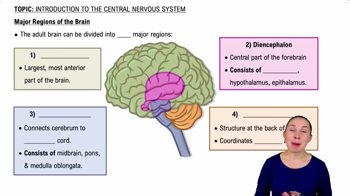
Major Regions of the Brain
Pratica correlata
Domanda del libro di testo

What are the principal functional differences between the right and left cerebral hemispheres?

939
views

Domanda del libro di testo

Colleen falls down a flight of stairs and bumps her head several times. Soon after, she develops a headache and blurred vision. Diagnostic tests at the hospital reveal an epidural hematoma in the temporoparietal area. The hematoma is pressing against the brainstem. What other signs and symptoms might she experience as a result of the injury?

702
views
Domanda del libro di testo

What kinds of problems are associated with the presence of lesions in the Wernicke's area and the Broca's area?

746
views
Domanda del libro di testo

A police officer has just stopped Bill on suspicion of driving while intoxicated. The officer asks Bill to walk the yellow line on the road and then to place the tip of his index finger on the tip of his nose. How would these activities indicate Bill's level of sobriety? Which part of the brain is being tested by these activities?

696
views
Domanda del libro di testo

Damage to the vestibular nucleus would lead to

(a) Loss of sight

(b) Loss of hearing

(c) Inability to sense pain

(d) Difficulty in maintaining balance

(e) Inability to swallow

705
views
Domanda del libro di testo

Which structure in the brain is your A&P instructor referring to when talking about a nucleus that resembles a sea horse and that is important in the storage and retrieval of long-term memories? In which functional system of the brain is it located?

744
views