List the names of the 12 pairs of cranial nerves. (Hint: use the mnemonic device 'Oh, Once One Takes The Anatomy Final, Very Good Vacations Are Heavenly.' )
Ch. 14 The Brain and Cranial Nerves
Martini, Nath, Bartholomew11th EditionFundamentals of Anatomy & PhysiologyISBN: 9780136874089Non è quello che usi tu?Cambia libro di testo
Tutti i libri di testo
Martini, Nath, Bartholomew 11th Edition
Ch. 14 The Brain and Cranial Nerves
Problema 13
Martini, Nath, Bartholomew 11th Edition
Ch. 14 The Brain and Cranial Nerves
Problema 13Capitolo 14, Problema 13
The two cerebral hemispheres are functionally different, even though anatomically they appear the same.
(a) True
(b) False
Guida verificata passo dopo passo1
Understand the concept of cerebral hemispheres: The brain is divided into two halves called the left and right cerebral hemispheres.
Recognize that although the two hemispheres look similar anatomically, they have different functional specializations, a concept known as lateralization of brain function.
Recall examples of functional differences: for instance, the left hemisphere is typically associated with language and analytical tasks, while the right hemisphere is more involved in spatial abilities and creativity.
Based on this knowledge, determine whether the statement 'The two cerebral hemispheres are functionally different, even though anatomically they appear the same' is true or false.
Conclude that the statement is true because the hemispheres have distinct functions despite their similar anatomical structure.

Risposta video verificata per un problema simile:
Questa soluzione video è stata consigliata dai nostri tutor come utile per risolvere questo problema.
Durata del video:
2mConcetti chiave
Ecco i concetti essenziali che devi comprendere per rispondere correttamente alla domanda.
Cerebral Hemispheres
The brain is divided into two halves called cerebral hemispheres, left and right, which are anatomically similar but can have different functions. Each hemisphere controls opposite sides of the body and processes information differently.
Video consigliato:
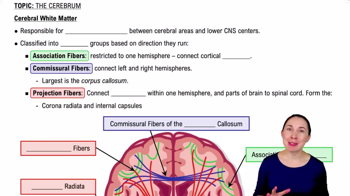
Cerebral White Matter
Functional Lateralization
Functional lateralization refers to the specialization of each cerebral hemisphere for certain tasks, such as language typically in the left hemisphere and spatial abilities in the right. This explains why the hemispheres differ functionally despite similar anatomy.
Video consigliato:
Percorso guidato
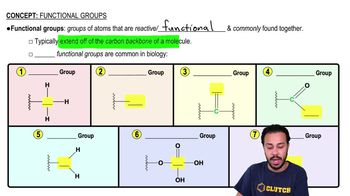
Functional Groups
Anatomical Symmetry vs Functional Asymmetry
Although the two hemispheres look alike structurally (anatomical symmetry), they perform different roles (functional asymmetry). This distinction is key to understanding brain organization and how different cognitive processes are managed.
Video consigliato:
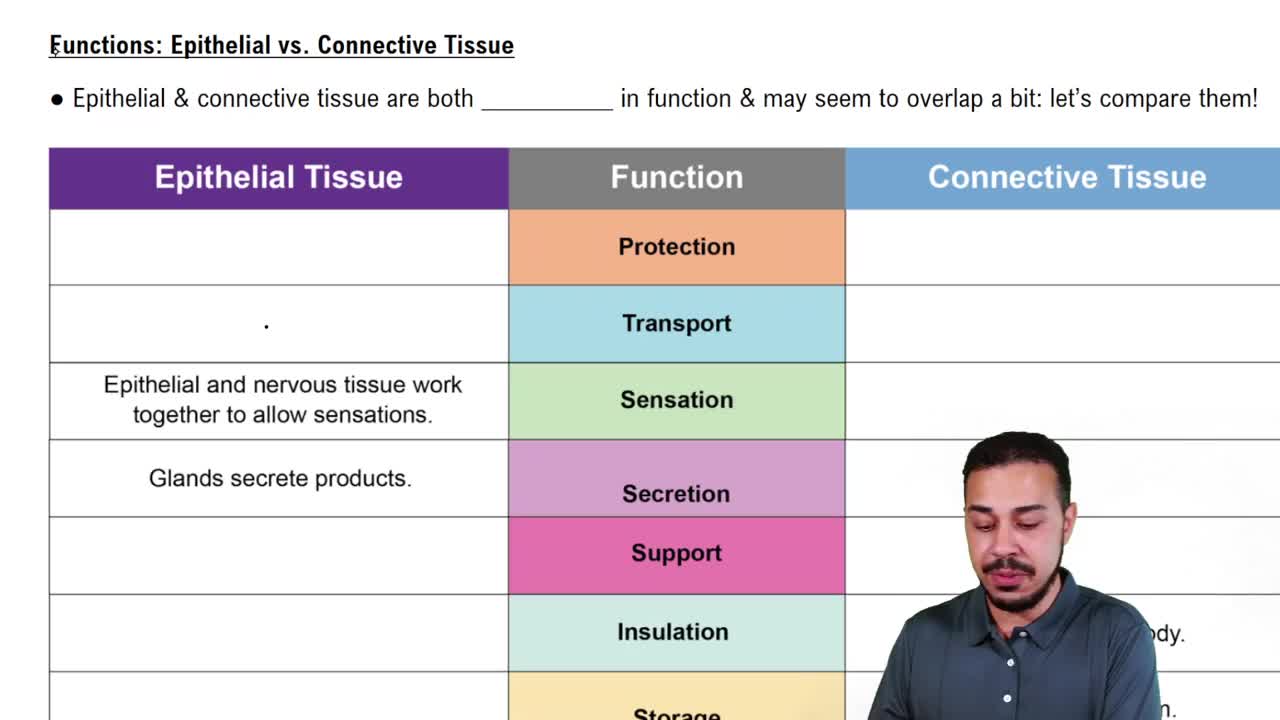
Functions: Epithelial vs. Connective Tissue
Pratica correlata
Domanda del libro di testo
1950
views
Domanda del libro di testo
The centers in the pons that modify the activity of the respiratory rhythmicity centers in the medulla oblongata are the:
(a) Apneustic and pneumotaxic centers
(b) Inferior and superior peduncles
(c) Cardiac and vasomotor centers
(d) Gracile nucleus and cuneate nucleus
1214
views
Domanda del libro di testo
Briefly summarize the overall function of the cerebellum.
1013
views
Domanda del libro di testo
Coordination of learned movement patterns at the subconscious level is performed by
(a) The cerebellum
(b) The substantia nigra
(c) Association fibers
(d) The hypothalamus
793
views
Domanda del libro di testo
The only cranial nerves that are attached to the cerebrum are the____ nerves.
(a) optic
(b) oculomotor
(c) trochlear
(d) olfactory
(e) abducens
1850
views
Domanda del libro di testo
The establishment of emotional states is a function of the:
(a) Limbic system
(b) Tectum
(c) Mammillary bodies
(d) Thalamus
679
views