What are the principal functional differences between the right and left cerebral hemispheres?
Ch. 14 The Brain and Cranial Nerves
Martini, Nath, Bartholomew11th EditionFundamentals of Anatomy & PhysiologyISBN: 9780136874089Non è quello che usi tu?Cambia libro di testo
Tutti i libri di testo
Martini, Nath, Bartholomew 11th Edition
Ch. 14 The Brain and Cranial Nerves
Problema 21
Martini, Nath, Bartholomew 11th Edition
Ch. 14 The Brain and Cranial Nerves
Problema 21Capitolo 14, Problema 21
What varied roles does the hypothalamus play in the body?
Guida verificata passo dopo passo1
Step 1: Understand that the hypothalamus is a small but crucial part of the brain located below the thalamus and above the brainstem, playing a central role in maintaining homeostasis.
Step 2: Recognize that one major role of the hypothalamus is regulating the autonomic nervous system, which controls involuntary bodily functions such as heart rate, blood pressure, and digestion.
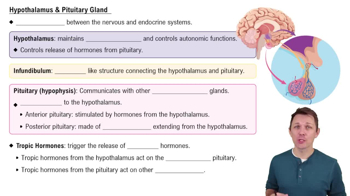
Step 3: Identify that the hypothalamus controls the endocrine system by producing releasing and inhibiting hormones that regulate the pituitary gland, which in turn controls other endocrine glands.
Step 4: Note that the hypothalamus is involved in regulating body temperature, hunger and thirst, sleep-wake cycles, and emotional responses, integrating signals from the body and environment to maintain balance.
Step 5: Summarize that the hypothalamus acts as a command center linking the nervous system to the endocrine system and coordinating vital physiological processes essential for survival and well-being.

Risposta video verificata per un problema simile:
Questa soluzione video è stata consigliata dai nostri tutor come utile per risolvere questo problema.
Durata del video:
2mConcetti chiave
Ecco i concetti essenziali che devi comprendere per rispondere correttamente alla domanda.
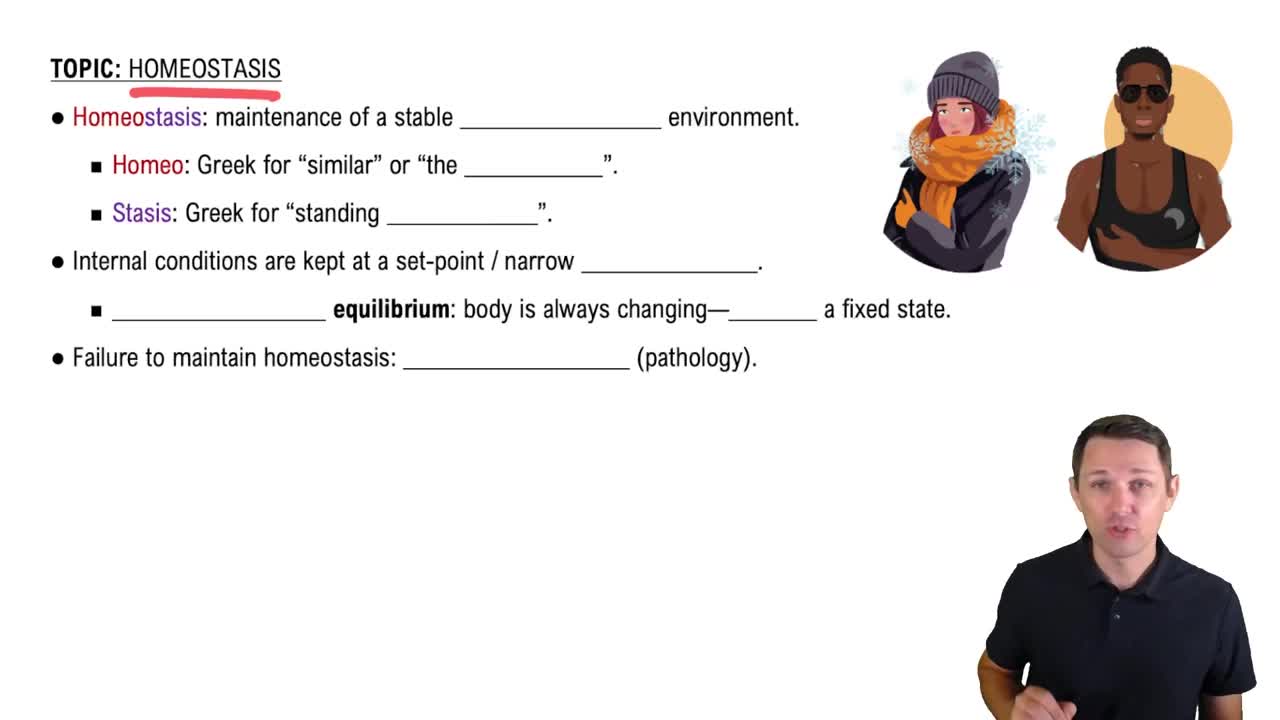
Hypothalamus and Homeostasis
The hypothalamus is a brain region that maintains the body's internal balance, or homeostasis, by regulating temperature, hunger, thirst, and sleep cycles. It acts as a control center, ensuring stable conditions necessary for survival.
Video consigliato:
Introduction to Homeostasis
Endocrine Regulation via the Pituitary Gland
The hypothalamus controls the pituitary gland, often called the 'master gland,' by releasing hormones that regulate growth, metabolism, and reproductive functions. This connection links the nervous system to the endocrine system.
Video consigliato:
Hypothalamus & Pituitary Gland
Autonomic Nervous System Control
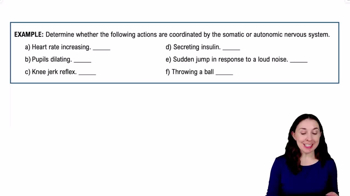
The hypothalamus influences the autonomic nervous system, which manages involuntary bodily functions like heart rate, blood pressure, and digestion. It helps coordinate physiological responses to stress and environmental changes.
Video consigliato:
Introduction to the Autonomic Nervous System Example 1
Pratica correlata
Domanda del libro di testo
939
views
Domanda del libro di testo
If symptoms characteristic of Parkinson's disease appear, which part of the midbrain is inhibited from secreting a neurotransmitter? Which neurotransmitter is it?
686
views
Domanda del libro di testo
Briefly summarize the overall function of the cerebellum.
1013
views
Domanda del libro di testo
Stimulation of which part of the brain would produce sensations of hunger and thirst?
779
views
Domanda del libro di testo
The only cranial nerves that are attached to the cerebrum are the____ nerves.
(a) optic
(b) oculomotor
(c) trochlear
(d) olfactory
(e) abducens
1850
views
Domanda del libro di testo
Which structure in the brain is your A&P instructor referring to when talking about a nucleus that resembles a sea horse and that is important in the storage and retrieval of long-term memories? In which functional system of the brain is it located?
744
views