Domanda del libro di testo
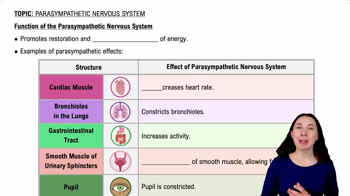
Which six plexuses in the thoracic and abdominopelvic cavities innervate visceral organs, and what are the effects of sympathetic versus parasympathetic stimulation?
665
views
 Martini, Nath, Bartholomew 11th EditionCh. 16 The Autonomic Nervous System and Higher-Order FunctionsProblema 20
 Guida verificata passo dopo passo
 02:35
02:35
 1:56
1:56 6:13
6:13Which six plexuses in the thoracic and abdominopelvic cavities innervate visceral organs, and what are the effects of sympathetic versus parasympathetic stimulation?
Damage to the hippocampus, a component of the limbic system, leads to
(a) A loss of emotion due to forgetfulness
(b) A loss of consciousness
(c) A loss of long-term memory
(d) An immediate loss of short-term memory
Why does sympathetic function remain intact even when the anterior roots of the cervical spinal nerves are damaged?
What two distinctive results are produced by the stimulation of sympathetic ganglionic neurons?
During sympathetic stimulation, a person may begin to feel 'on edge'; this is the result of
(a) Increased energy metabolism by muscle tissue
(b) Increased cardiovascular activity
(c) Stimulation of the reticular activating system
(d) Temporary insensitivity to painful stimuli
(e) Decreased levels of epinephrine in the blood
Which four pairs of cranial nerves are associated with the cranial segment of the parasympathetic division of the ANS?