List the specific functions of each of the body's primary and secondary lymphoid tissues and organs.
Ch. 22 The Lymphatic System and Immunity
Martini, Nath, Bartholomew11th EditionFundamentals of Anatomy & PhysiologyISBN: 9780136874089Non è quello che usi tu?Cambia libro di testo
Tutti i libri di testo
Martini, Nath, Bartholomew 11th Edition
Ch. 22 The Lymphatic System and Immunity
Problema 13
Martini, Nath, Bartholomew 11th Edition
Ch. 22 The Lymphatic System and Immunity
Problema 13Capitolo 22, Problema 13
Give a function for each of the following:
(l) Interleukins
(m) Tumor necrosis factor
(n) Colony-stimulating factors
Guida verificata passo dopo passo1
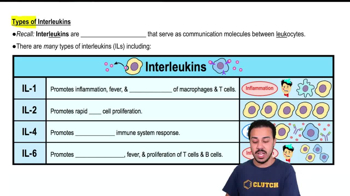
Step 1: Understand the role of interleukins. Interleukins are a group of cytokines (small proteins) that play a crucial role in the immune system. They are primarily involved in communication between white blood cells (leukocytes) to regulate immune responses, inflammation, and hematopoiesis. For example, interleukin-1 (IL-1) promotes inflammation, while interleukin-2 (IL-2) stimulates the growth and differentiation of T cells.
Step 2: Explore the function of tumor necrosis factor (TNF). TNF is another type of cytokine that is involved in systemic inflammation and is part of the acute phase reaction. It is produced mainly by macrophages and T cells. TNF helps regulate immune cells, induces fever, and can lead to apoptosis (programmed cell death) in certain cells. It is also implicated in autoimmune diseases when overproduced.
Step 3: Investigate the role of colony-stimulating factors (CSFs). CSFs are cytokines that stimulate the production and differentiation of blood cells in the bone marrow. For example, granulocyte colony-stimulating factor (G-CSF) promotes the production of neutrophils, while macrophage colony-stimulating factor (M-CSF) stimulates the production of macrophages.
Step 4: Compare and contrast the functions of these cytokines. Interleukins primarily mediate communication between immune cells, TNF is heavily involved in inflammation and apoptosis, and CSFs focus on hematopoiesis and the production of specific blood cell types.
Step 5: Relate these functions to clinical applications. For instance, interleukins and TNF are targets for drugs used to treat autoimmune diseases like rheumatoid arthritis, while CSFs are used therapeutically to boost white blood cell counts in patients undergoing chemotherapy.

Risposta video verificata per un problema simile:
Questa soluzione video è stata consigliata dai nostri tutor come utile per risolvere questo problema.
Concetti chiave
Ecco i concetti essenziali che devi comprendere per rispondere correttamente alla domanda.
Interleukins
Interleukins are a group of cytokines that play crucial roles in the immune system by facilitating communication between cells. They are produced by leukocytes and act on various immune cells to regulate growth, differentiation, and activation. Different interleukins have specific functions, such as promoting inflammation or enhancing the response of T and B cells.
Video consigliato:
Percorso guidato
Types of Interleukins
Tumor Necrosis Factor (TNF)
Tumor Necrosis Factor (TNF) is a cytokine involved in systemic inflammation and is part of the body's immune response. It is primarily produced by macrophages and plays a key role in regulating immune cells, inducing fever, and promoting apoptosis (cell death) in certain cells. TNF is also implicated in various diseases, including autoimmune disorders and cancer.
Video consigliato:
Percorso guidato
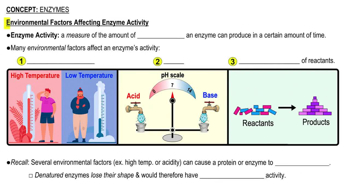
Environmental Factors Affecting Enzyme Activity
Colony-Stimulating Factors (CSFs)
Colony-Stimulating Factors (CSFs) are glycoproteins that stimulate the production and differentiation of blood cells in the bone marrow. They are essential for hematopoiesis, the process of forming new blood cells, and are classified into various types, such as Granulocyte-CSF (G-CSF) and Macrophage-CSF (M-CSF), each targeting specific lineages of blood cells to enhance immune responses.
Video consigliato:
Percorso guidato
Environmental Factors Affecting Enzyme Activity
Pratica correlata
Domanda del libro di testo
1022
views
Domanda del libro di testo
CD4 markers are associated with
(a) Cytotoxic T cells
(b) Regulatory T cells
(c) Helper T cells
(d) All of these
1340
views
Domanda del libro di testo
The most beneficial effect of fever is that it
(a) Inhibits the spread of some bacteria and viruses
(b) Increases the metabolic rate by up to 10 percent
(c) Stimulates the release of pyrogens
(d) Achieves a and b
1196
views
Domanda del libro di testo
Give a function for each of the following:
(a) Cytotoxic T cells
(b) Helper T cells
(c) Regulatory T cells
(d) Plasma cells
(e) NK cells
1085
views
Domanda del libro di testo
Give a function for each of the following:
(f) Stromal cells
(g) Epithelial reticular cells
(h) Interferons
(i) Pyrogens
(j) T cells
(k) B cells
1100
views
Domanda del libro di testo
What are the three classes of lymphocytes, and where does each class originate?
1268
views